RIYADH: Magnah bread, which is native to Baha, is growing in popularity among tourists to the region, and was a popular attraction for visitors to the recent heritage festival.
Each region of the Kingdom has developed recipes and culinary traditions that tell the story of its local history and society. This cultural heritage has become an important part of local festivals and celebrations around Saudi Arabia.
Like many dishes that Baha has to offer, magnah bread is unique and is made using a traditional recipe that involves wheat flour.
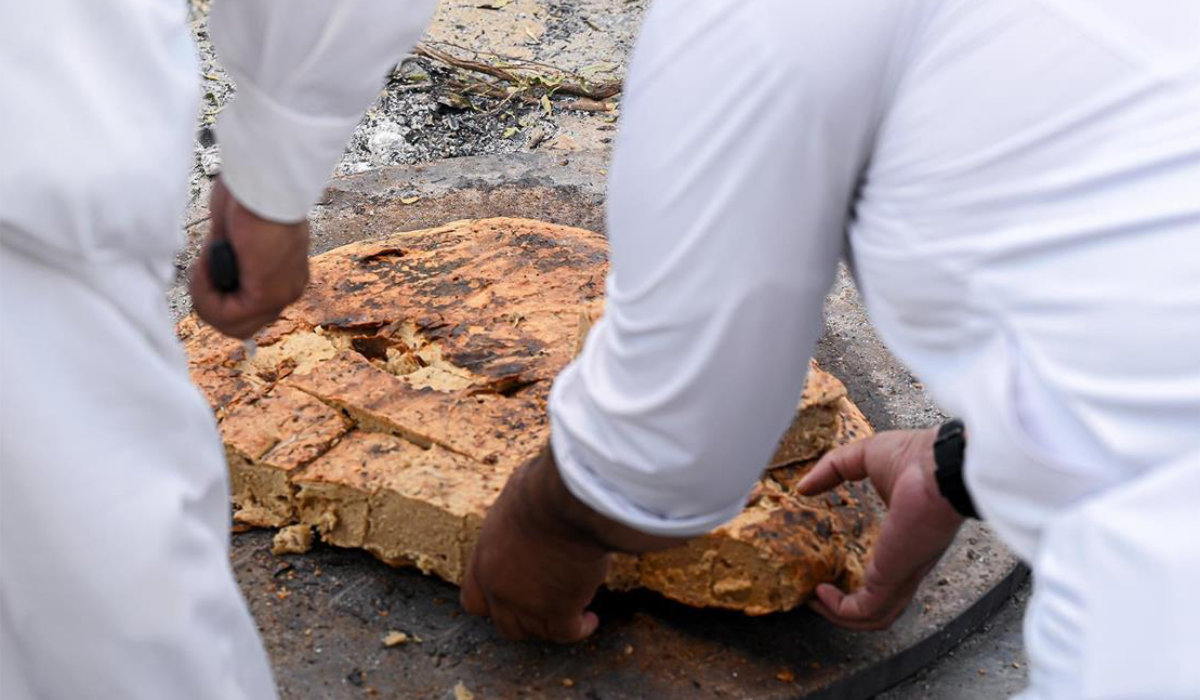
The leaves of dodonaea tree are used as firewood and the resulting smoke adds flavor to magnah bread while it cooks. (SPA)
Popular dishes in the region depend heavily on local agriculture. Its agricultural terraces are considered the region’s food baskets and the main source of food for its residents.
Approximately 7 kg of wheat flour are kneaded with water to make this special bread. Grains are extracted from seasonal plants, such as cumin and cress, while salt is added to the dough.
HIGHLIGHTS
• Magnah bread is native to Baha and is made using a traditional recipe that involves wheat flour.
• The cooking technique has an effect similar to baking in modern kitchen ovens.
• The bread is eaten with honey and ghee.
After kneading the ingredients together, the dough is placed on top of a round stone, which has a diameter of about a meter.
It is covered with an iron cover shaped like a dome while it cooks. Another fire is lit on top of the iron cover to heat the dough from the top. The technique is similar to baking bread in an oven.
The smoke from the burning leaves of dodonaea trees adds flavor to the bread while it cooks for a few hours.
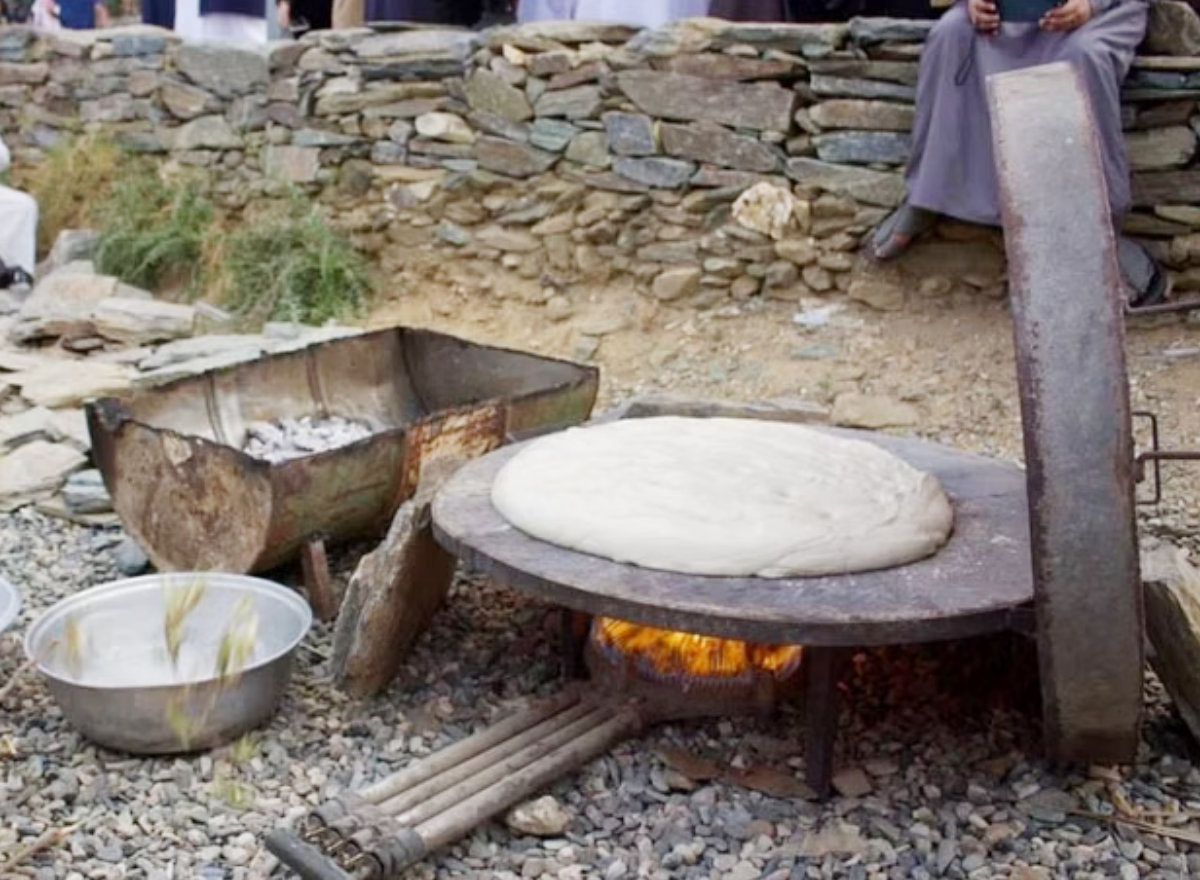
The leaves of dodonaea tree are used as firewood and the resulting smoke adds flavor to magnah bread while it cooks. (Supplied)
Galia Al-Zahrani, a resident in Dammam whose grandmother was originally from Al-Baha, told Arab News that she remembers how her grandmother used to bake magnah bread when she was younger. She recalled she would make the dough using wholewheat flour and water, without bread yeast, and would bake it on either charcoal or wood.
Al-Zahrani added: “You have to eat it with honey and ghee. The meal won’t be complete without that.”
Magnah bread is important to the people of the region and is often served at events or on special occasions.
Serving the bread is a mark of hospitality and people compete to provide the largest loaf to their guests.
Some locals rent venues to serve magnah bread during celebrations due to its importance in the local culture.