Oman Investment Authority’s assets surge 12% to $46.5bn

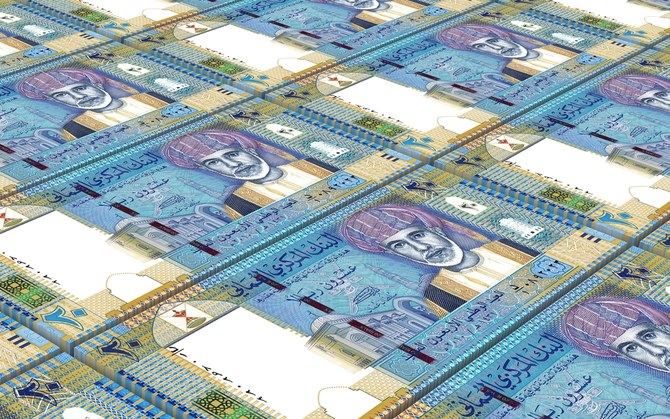
The Oman Investment Authority saw an 8.8 percent return on investment for 2022 (Shutterstock)
Short Url
Updated 03 August 2023
Follow

Oman Investment Authority’s assets surge 12% to $46.5bn

RIYADH: Total assets of Oman’s sovereign wealth fund increased 12 percent to nearly 17.9 billion Omani rials ($46.50 billion) in 2022 compared to 15.98 billion rials in 2021, according to a report issued by the country’s investment authority, on Wednesday.   

The Oman Investment Authority said in its annual report that the return on investment for 2022 was 8.8 percent, which contributed 5.6 billion rials in dividends to the Finance Ministry.

According to Finance Minister Sultan bin Salim Al-Habsi, also the chairman of OIA, a resurgence in the economic and investment scenario in the aftermath of the coronavirus disease pandemic changed the fortunes of OIA in 2022.

“OIA is not immune to the impact of world events, but they did not pose an obstacle to our ongoing journey toward growing Oman’s economy and achieving financial sustainability,” said Al-Habsi.

He added: “The National Development Portfolio, which includes more than 160 OIA companies, continues to grow. Performance has also improved, and production has increased, bringing profits to more than 1.4 billion rials.”

The minister said one of Oman’s Vision 2040 priorities is to remain focused on empowering the private sector to eventually be at the forefront of the country’s economy.

Meanwhile, Abdulsalam Al-Murshidi, the president of OIA, pointed out that while 2022 was full of both opportunities and challenges, they dealt with them with thoughtful planning.

“We made sound investment decisions in response to international developments and ultimately achieved excellent results,” he said.

Commenting on their plans to enhance the country’s Future Generations Fund, which represents 40 percent of OIA’s assets, Al-Murshidi said: “We entered a number of new investments, including the pioneering company Group 14, which manufactures silicon anode batteries; Crusoe Energy, which has developed an innovative technology that captures flare gas emitted from oil and gas fields to generate clean energy; and Ascend Elements, which has introduced state-of-the-art technology to recycle lithium-ion batteries,”

He added that they also invested in 13 private investment funds in Europe, Asia, and North America.

According to the OIA report, 60.5 percent of the authority’s assets are allocated in rials, 34 percent in US dollars, 3 percent in euros, 1.5 percent in pound sterling, and 1 percent in other currencies.

The report also stated that the number of employees in OIA and its companies exceeded 38,000, with a nationalization rate of 78 percent. It added that OIA and its companies created 800 new jobs for Omanis in 2022.


Saudi POS spending jumps 28% in final week of Jan: SAMA

Updated 06 February 2026
Follow

Saudi POS spending jumps 28% in final week of Jan: SAMA

RIYADH: Saudi Arabia’s point-of-sale spending climbed sharply in the final week of January, rising nearly 28 percent from the previous week as consumer outlays increased across almost all sectors. 

POS transactions reached SR16 billion ($4.27 billion) in the week ending Jan. 31, up 27.8 percent week on week, according to the Saudi Central Bank. Transaction volumes rose 16.5 percent to 248.8 million, reflecting stronger retail and service activity. 

Spending on jewelry saw the biggest uptick at 55.5 percent to SR613.69 million, followed by laundry services which saw a 44.4 percent increase to SR62.83 million. 

Expenditure on personal care rose 29.1 percent, while outlays on books and stationery increased 5.1 percent. Hotel spending climbed 7.4 percent to SR377.1 million. 

Further gains were recorded across other categories. Spending in pharmacies and medical supplies rose 33.4 percent to SR259.19 million, while medical services increased 13.7 percent to SR515.44 million. 

Food and beverage spending surged 38.6 percent to SR2.6 billion, accounting for the largest share of total POS value. Restaurants and cafes followed with a 20.4 percent increase to SR1.81 billion. Apparel and clothing spending rose 35.4 percent to SR1.33 billion, representing the third-largest share during the week. 

The Kingdom’s key urban centers mirrored the national surge. Riyadh, which accounted for the largest share of total POS spending, saw a 22 percent rise to SR5.44 billion from SR4.46 billion the previous week. The number of transactions in the capital reached 78.6 million, up 13.8 percent week on week. 

In Jeddah, transaction values increased 23.7 percent to SR2.16 billion, while Dammam reported a 22.2 percent rise to SR783.06 million. 

POS data, tracked weekly by SAMA, provides an indicator of consumer spending trends and the ongoing growth of digital payments in Saudi Arabia.  

The data also highlights the expanding reach of POS infrastructure, extending beyond major retail hubs to smaller cities and service sectors, supporting broader digital inclusion initiatives.  

The growth of digital payment technologies aligns with Saudi Arabia’s Vision 2030 objectives, promoting electronic transactions and contributing to the Kingdom’s broader digital economy.