

Iraq expels Swedish envoy as Qur’an is desecrated again

1 / 6
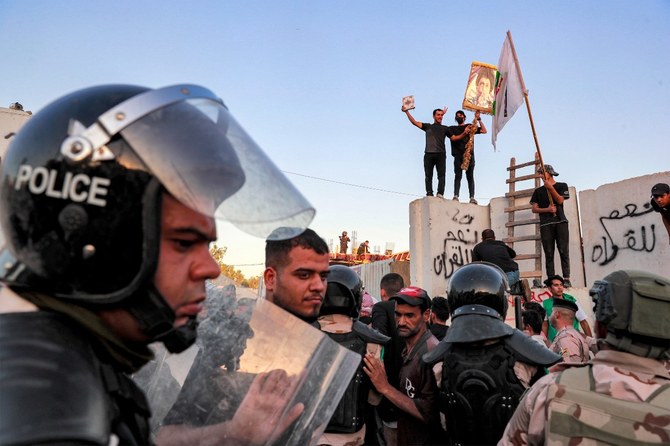
Protestor Salwan Momika appears outside the Iraqi embassy in Stockholm on July 20, 2023, where he plans to burn a copy of the Qur’an and the Iraqi flag. (TT via AP)
2 / 6
Iraq has warned it will cut ties with Sweden if Qur’an burning repeated. (AFP)
3 / 6
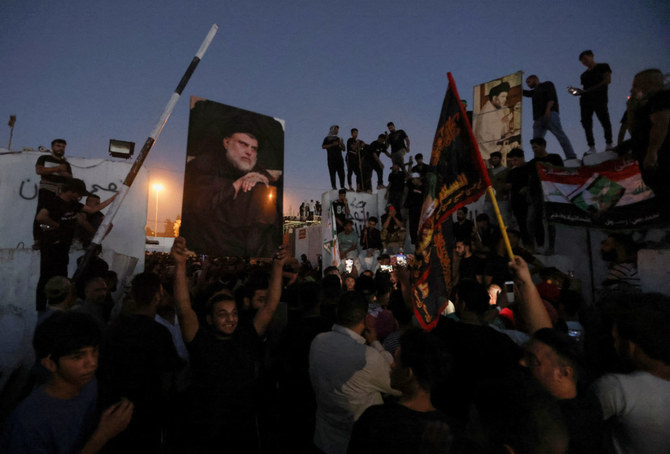
Protesters gather near the Swedish embassy in Baghdad on July 20, 2023, hours after the embassy was stormed and set on fire ahead of an expected Qur'an burning in Stockholm, Sweden. (REUTERS/Ahmed Saad)
4 / 6
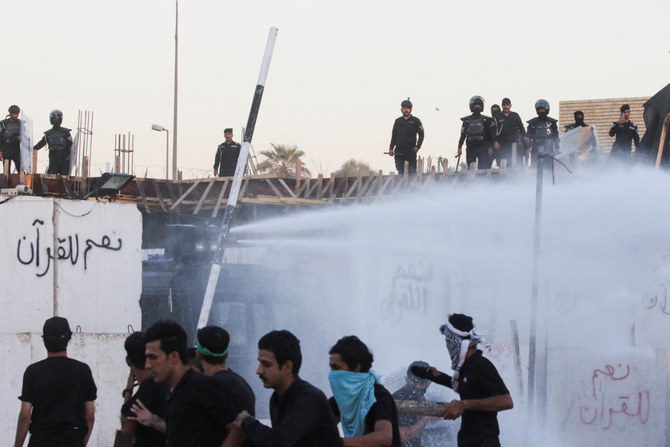
Firefighters spray water on the Swedish embassy in Baghdad to put out a fire as protesters gather on July 20, 2023. (REUTERS)
5 / 6
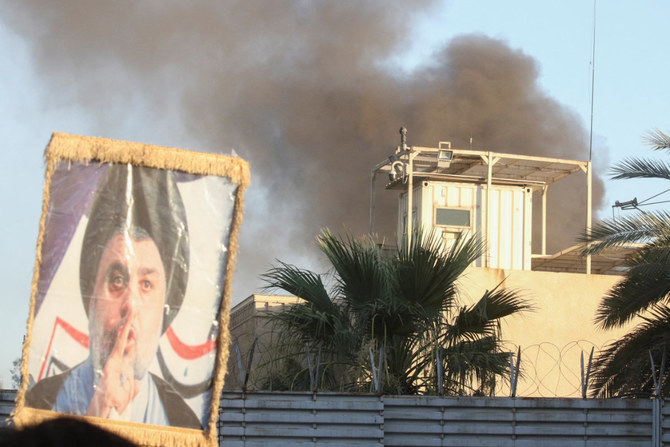
A protester holds up a portrait of Iraqi Shi'ite cleric Moqtada al-Sadr as smoke rises from the Swedish embassy building during a protest on July 20, 2023. (REUTERS)
6 / 6
Firefighters spray water on the Swedish embassy in Baghdad to put out a fire as protesters gather on July 20, 2023. (REUTERS)
Short Url
Updated 21 July 2023
Follow

Iraq expels Swedish envoy as Qur’an is desecrated again

  • Iraqi refugee Salwan Momika stomps on, kicks the Qur’an but leaves protest without burning it
  • Al-Sadr supporters storm diplomatic mission in Bahgdad as another Stockholm ‘protest’ allowed

JEDDAH: Iraq expelled the Swedish ambassador and protesters torched the Swedish embassy in Baghdad on Thursday after authorities again gave permission for the Qur’an to be burned in the Swedish capital.
The Iraqi government also recalled its charge d’affaires in Sweden, and banned the Swedish telecoms giantEricsson from operating in Iraqi.
Protesters including Salwan Momika, the Iraqi immigrant to Sweden who burned the Koran outside a Stockholm mosque in June, had received permission from Swedish police to burn the Qur’an outside the Iraqi embassy on Thursday.
In fact, the protesters kicked and partially destroyed a book they said was the Qur’an but left the area after an hour without setting it alight.

Earlier in Baghdad, the Swedish embassy was stormed by hundreds of supporters of the powerful Shi'ite cleric Muqtada Al-Sadr. Video footage showed smoke rising from a building in the embassy complex and protesters standing on its roof.
By dawn on Thursday, security forces had deployed inside the embassy and firefighters extinguished what was left of the fire.

The Iraqi government strongly condemned the storming of the embassy. It said the attack was a security breach and vowed to protect diplomatic missions. However, Baghdad also “informed the Swedish government ... that any recurrence of the incident involving the burning of the Holy Qur’an on Swedish soil would necessitate severing diplomatic relations.”

The Iraqi decision to recall the charge d’affaires to Sweden came after the protest in Stockholm had started but before the protesters had left without burning the Qur’an.

Swedish Foreign Minister Tobias Billstrom said the attack was completely unacceptable. “The government is in contact with high-level Iraqi representatives to express our dismay,” he said.
The US State Department strongly condemned the attack on the embassy and criticized Iraq’s security forces for failing to prevent it. The EU said it looked forward to “swift adoption of the necessary security measures” by Iraq to avoid further incidents.
However, a defiant Al-Sadr said the US had “no right to condemn the burning of the Swedish embassy but should have condemned the burning of the Qur’an.”

Turkiye strongly condemned the “despicable attack,” and called on Sweden to take “decisive measures to prevent this hate crime” against Islam, the foreign ministry said.
“We strongly condemn the despicable attack targeting our sacred book, the Qur’an in front of Iraq’s Stockholm Embassy,” a statement from the foreign ministry said.
Iran’s foreign ministry summoned Sweden’s ambassador in Tehran to “strongly protest against the desecration of the holy Qur'an,” state media reported
As in the previous case, Swedish police authorized Thursday’s proposed Qur’an burning under the country’s wide-ranging freedom of speech laws, which are protected by the constitution. Prime Minister Ulf Kristersson described the incident in June as “legal, but inappropriate.” The government is considering legal changes that would allow police to stop public burnings if they endangered Sweden’s security.

(With Agencies)


Amnesty says Algeria unlawfully returned Tunisia asylum seeker

Updated 4 sec ago
Follow

Amnesty says Algeria unlawfully returned Tunisia asylum seeker

  • Amnesty International said Makhlouf was handed over to Tunisian police on January 18 without prior notice to him or his lawyers, in a move the group called “unlawful refoulement”

TUNIS: Global rights group Amnesty accused Algerian authorities on Monday of breaching international law by forcibly returning a political dissident to Tunisia, even though he was a registered asylum seeker.
Seifeddine Makhlouf, a former parliamentarian and critic of Tunisian President Kais Saied, was reportedly sentenced to prison for “plotting against state security” before his return to the North African country.
Makhlouf, who is the leader of the Al Karama party, sought asylum in Algeria in July 2024 after facing detention in Tunisia, and registered as an asylum seeker with the UN refugee agency UNHCR.
Amnesty International said Makhlouf was handed over to Tunisian police on January 18 without prior notice to him or his lawyers, in a move the group called “unlawful refoulement.”
“Makhlouf’s forced return is a violation of the principle of non-refoulement,” Amnesty’s MENA deputy chief Sara Hashash said in a statement published by the group.
“By handing him over to Tunisian authorities without allowing him any opportunity to contest the decision or assessing the risks he faces in Tunisia... Algeria has breached its obligations under international human rights law, including the Refugee Convention,” she added.
Saied froze parliament in July 2021 and seized far-reaching executive powers in what critics have called a “coup.”
Since then, local and international NGOs have denounced a regression of rights and freedoms in Tunisia.
Amnesty said Makhlouf was later imprisoned in Algeria for irregular entry and placed in administrative detention, during which he was denied access to the UN refugee agency.
The rights group said Makhlouf was arrested upon his arrival in Tunisia to serve sentences handed down in his absence.
Reports said a Tunisian court sentenced Makhlouf on January 13 to five years in prison for “plotting against state security.”
The Amnesty statement called for “verdicts rendered in absentia to be quashed and for a new and fair trial to be held before an independent and impartial court.”
Hashash warned that Makhlouf’s case reflects wider regional repression, calling his extradition “particularly alarming given the escalating crackdown on dissent in Tunisia, where the judiciary has been increasingly weaponized to silence political opposition.”
She said that Algeria’s actions “set a dangerous precedent,” adding that “bilateral cooperation now takes precedence over the most fundamental principles of international human rights and refugee law.”