WASHINGTON: Kamala Harris, who made history as the first woman or person of color to serve as vice president, has made history again by matching the record for most tiebreaking votes in the Senate.
Her 31st such vote, on Wednesday, advanced the nomination of Kalpana Kotagal to the Equal Employment Opportunity Commission. The only other vice president to cast so many was John C. Calhoun, vice president from 1825 to 1832.
“It is a moment and I think that there’s still so much left that we have yet to do,” Harris told reporters afterward.
“My mother gave me great advice, which is that I may be the first to do many things,” she added. “I’m going to make sure I’m not the last.”
Unlike Calhoun, who spent eight years accumulating his total, Harris reached 31 in 2 1/2 years. It’s a reflection of her unique circumstances, with a narrowly divided Senate and a sharply partisan atmosphere.
“It really says more about our time, and our political climate, than it does about anything else,” said Joel K. Goldstein, a vice presidential historian. “Our politics is so polarized that, even on the sort of matters that in the past would have flown through, it takes the vice president to cast a tiebreaking vote.”
The occasion was hardly memorable or particularly ceremonial. Harris spent only a few minutes in the chamber, reciting a brief script to record her vote, and then received congratulations from Senate Majority Leader Chuck Schumer, D-N.Y.
Under the Constitution, presiding over the Senate and breaking ties is one of the only constitutional duties of the vice president. Schumer described it as an “immense burden,” and he said Harris has “carried out her duties with supreme excellence” in the midst of “all the other demands she faces” in her job.
Harris had expected to get a reprieve from that role after the midterm elections, when Democrats expanded their majority from 50 to 51 votes.
But circumstances intervened. Sen. John Fetterman, a newly elected Democrat from Pennsylvania, was hospitalized for clinical depression. Sen. Dianne Feinstein, D-Calif., contracted shingles and was hospitalized as well.
The absences revived Harris’ string of tiebreakers. Earlier this year she helped confirm two federal judges, one in Massachusetts and the other in California.
Both Fetterman and Feinstein have returned to the Senate, but contested nominations can still require Harris’ presence, such as on Wednesday.
Harris did not seem eager to make history with tiebreaker votes when she became vice president. Before taking office, she wrote in the San Francisco Chronicle that “it is my hope that rather than come to the point of a tie, the Senate will instead find common ground and do the work of the American people.”
But tiebreakers swiftly became a core part of her job. The task could prove frustrating at times, limiting her travel and keeping her tethered to unpredictable events on Capitol Hill.
However, it also meant that Harris cast deciding votes on issues like the American Rescue Plan, a $1.9-trillion pandemic relief measure, and the Inflation Reduction Act, which limited the costs of prescription drugs and created financial incentives or clean energy.
“It’s a blessing,” Goldstein said, “because it associates her with some important accomplishments of the Biden administration.”


![]()
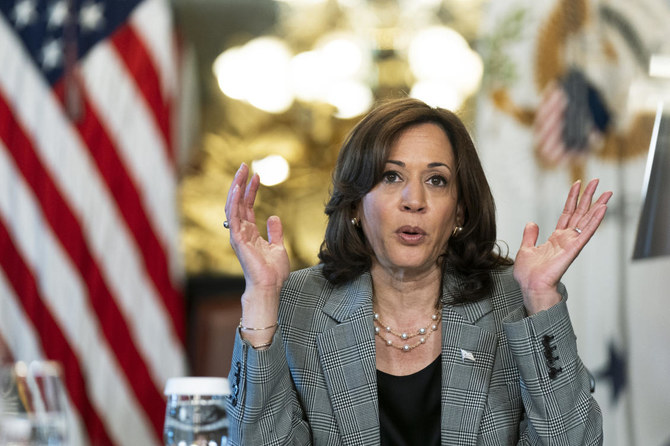
Vice President Kamala Harris matches record for tiebreaking votes in Senate

Short Url
https://arab.news/r5nu6
Vice President Kamala Harris matches record for tiebreaking votes in Senate
- Her 31st such vote, on Wednesday, advanced the nomination of Kalpana Kotagal to the Equal Employment Opportunity Commission
- “It is a moment and I think that there’s still so much left that we have yet to do,” Harris told reporters afterward


Latest updates


Recommended


© 2026 SAUDI RESEARCH & PUBLISHING COMPANY, All Rights Reserved And subject to Terms of Use Agreement.