

Saudi, Kuwaiti women embark on quest of a lifetime

1 / 2
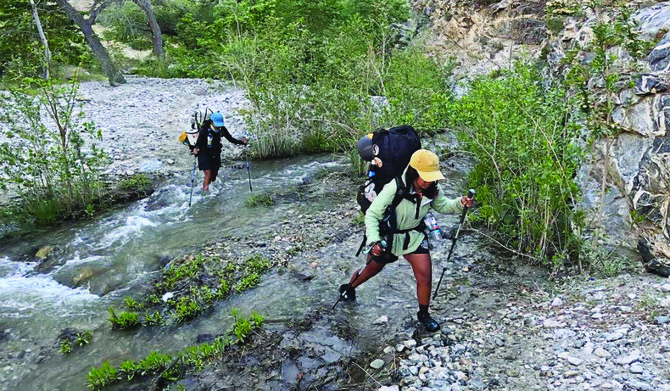
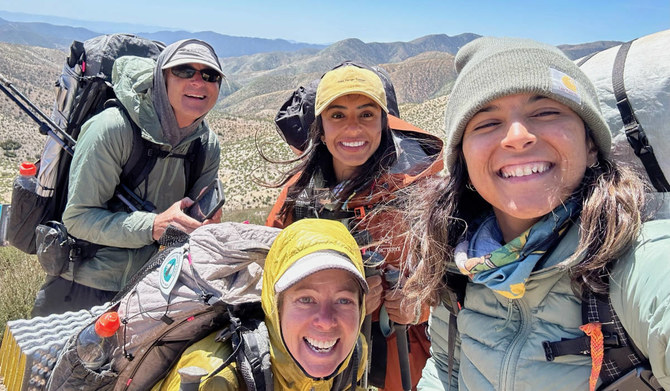
Haya Al- Samari and Fai Al-Omran are making their way through the Pacific Crest Trail, a journey they hope will establish Arab women as a powerhouse in the world. (Photo/Instagram/ mykindofridays)
2 / 2
They are aiming to finish the PCT by the end of September or in the beginning of October by averaging 32 km per day. (Supplied)
Short Url
Updated 13 July 2023
Follow

Saudi, Kuwaiti women embark on quest of a lifetime

  • The 2 friends are hiking the Pacific Crest Trail, which spans 4,265 km of the US

JEDDAH: Saudi Haya Al-Samari and Kuwaiti Fai Al-Omran are longtime friends who believe their once-in-a-lifetime adventure hiking the Pacific Crest Trail will inspire others and play a critical role in establishing Arab women as a leading powerhouse in the world of adventure.

Well known in the Gulf region for their enthusiasm for activities like running, freediving, surfing, skydiving, hiking and camping, the two women are now taking on the PCT, one of the world’s longest thru-hikes spanning the west coast of the US from the Mexican to Canadian borders.

The hike will take five to six months to complete and will cover 4,265 km, 26 national forests, seven national parks, five state parks and 33 federally mandated wildernesses. They are aiming to finish the PCT by the end of September or in the beginning of October by averaging 32 km per day.
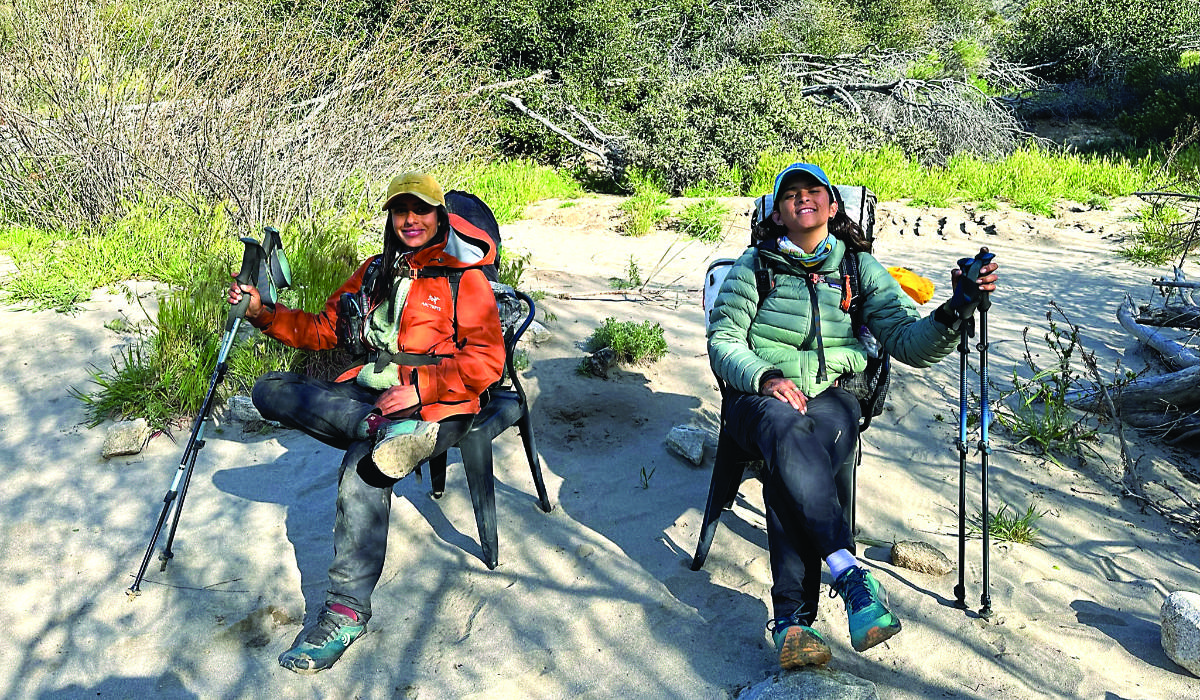


Haya Al- Samari and Fai Al-Omran are making their way through the Pacific Crest Trail, a journey they hope will establish Arab women as a powerhouse
in the world. (Photo/Instagram/ mykindofridays)

Going from Mexico to Canada through the states of California, Oregon and Washington, the Pacific Crest Trail is regarded as the second-longest of the Triple Crown long trails. In search of a challenge, adventurous hikers travel the high route via the Sierra Nevada and Cascade ranges, passing through some of the most picturesque and diverse landscapes in the US, from scorching deserts to snowy mountains.

Like many others, Al-Samari and Al-Omran began their adventure at the Campo Trail near the US-Mexico border, on the first of April.

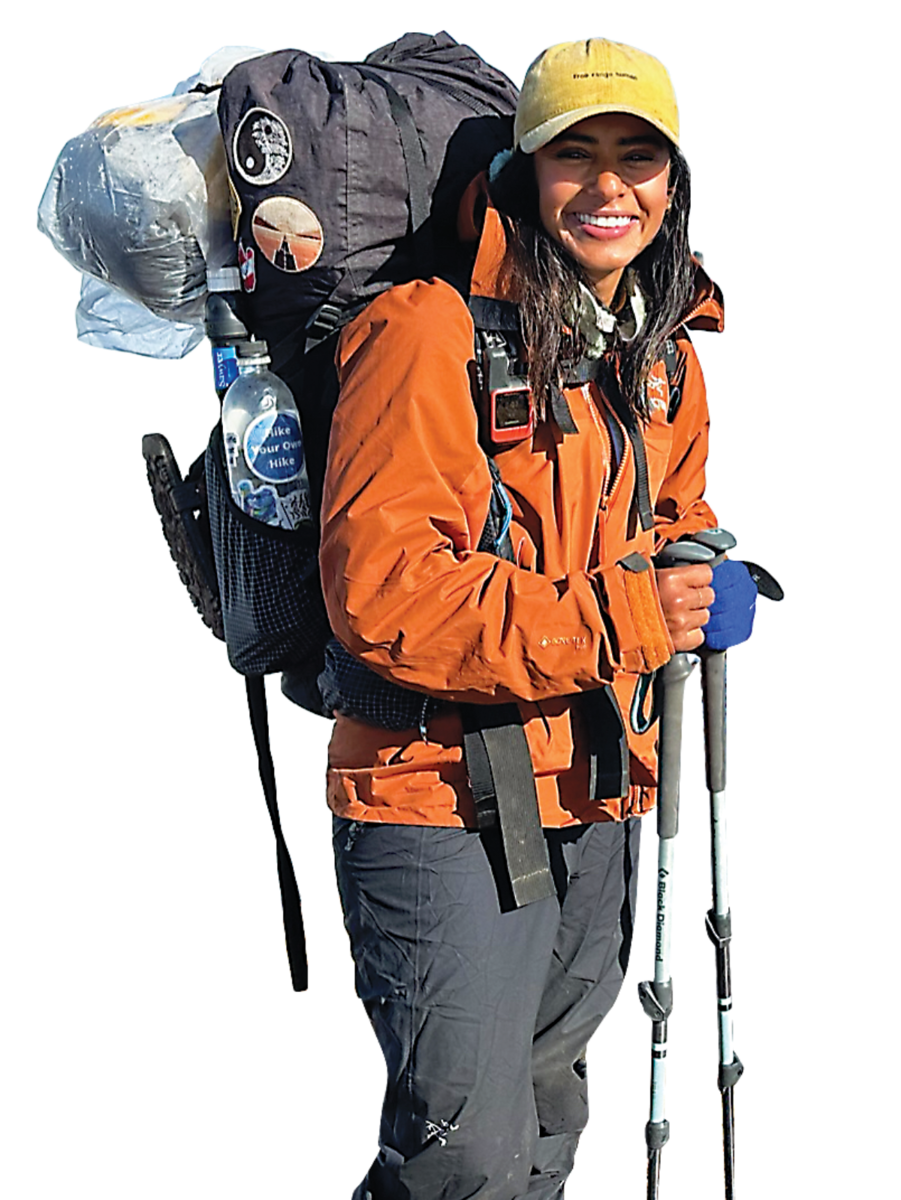
Sports and nature are my life, my passion and my form of stress relief ... I’ve been through some rough situations that required extreme mental and physical grit to get through. But what really sets the Pacific Crest Trail apart is that it’s a long-term project that requires a complete mindset shift.

Haya Al-Samari, Saudi adventurer

The duo are documenting their hike on their social media platforms including Instagram, where Al-Samari, @mykindoffridays, has more than 63,000 followers and Al-Omran, @laughwithfai, has over 11,000. They share details of their life on the trail, creating content about everything, from how they sleep to what they eat, and the surprises and beautiful scenes of nature along the way.


Haya Al-Samari, Saudi adventurer

The female hikers said that they had received “loads of encouragement” from friends and family before they set off.

While the two are on the adventure of a lifetime, it is not their first trip together as they have undertaken various long journeys over the past seven years.

Speaking about the origins of their PCT quest, Al-Samari said: “Fai is a great travel partner; she’s always up for an adventure. I was dreaming of doing the Pacific Crest Trail for almost 10 years now, but never had a timeline for it. One day Fai and I talked about it and realized we both share this crazy dream.
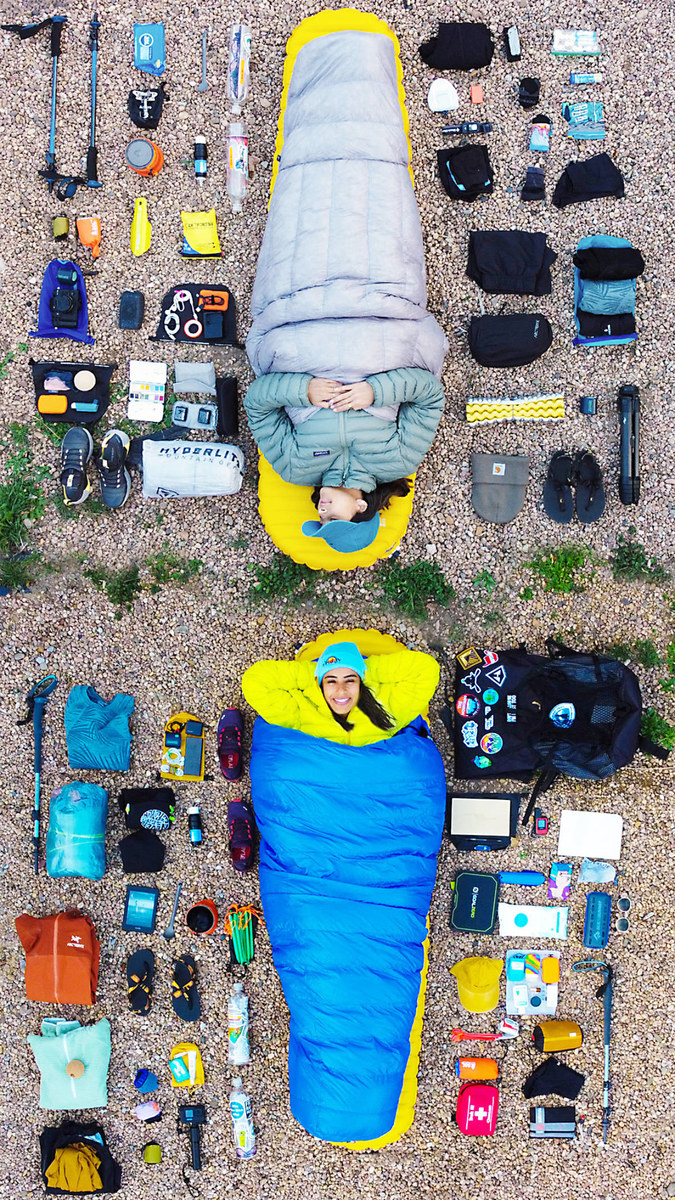


Haya Al- Samari and Fai Al-Omran are making their way through the Pacific Crest Trail, a journey they hope will establish Arab women as a powerhouse in the world. (Photo/Instagram/ mykindofridays)

“So when things got serious from my end, I threw the idea and Fai was more than ready to receive it … travel, for me, means adventure.”

Al-Samari and Al-Omran told Arab News that when they reached Mount Shasta and Mount Etna in California they wanted to go on the next adventure.

Al-Samari, who loves extreme adventures said: “I’ve been hiking for more than 10 years now. I love hiking and trail running. I love challenging my physical body surrounded by nature, feeling the freedom on my skin. Sports and nature are my life, my passion and my form of stress relief.”
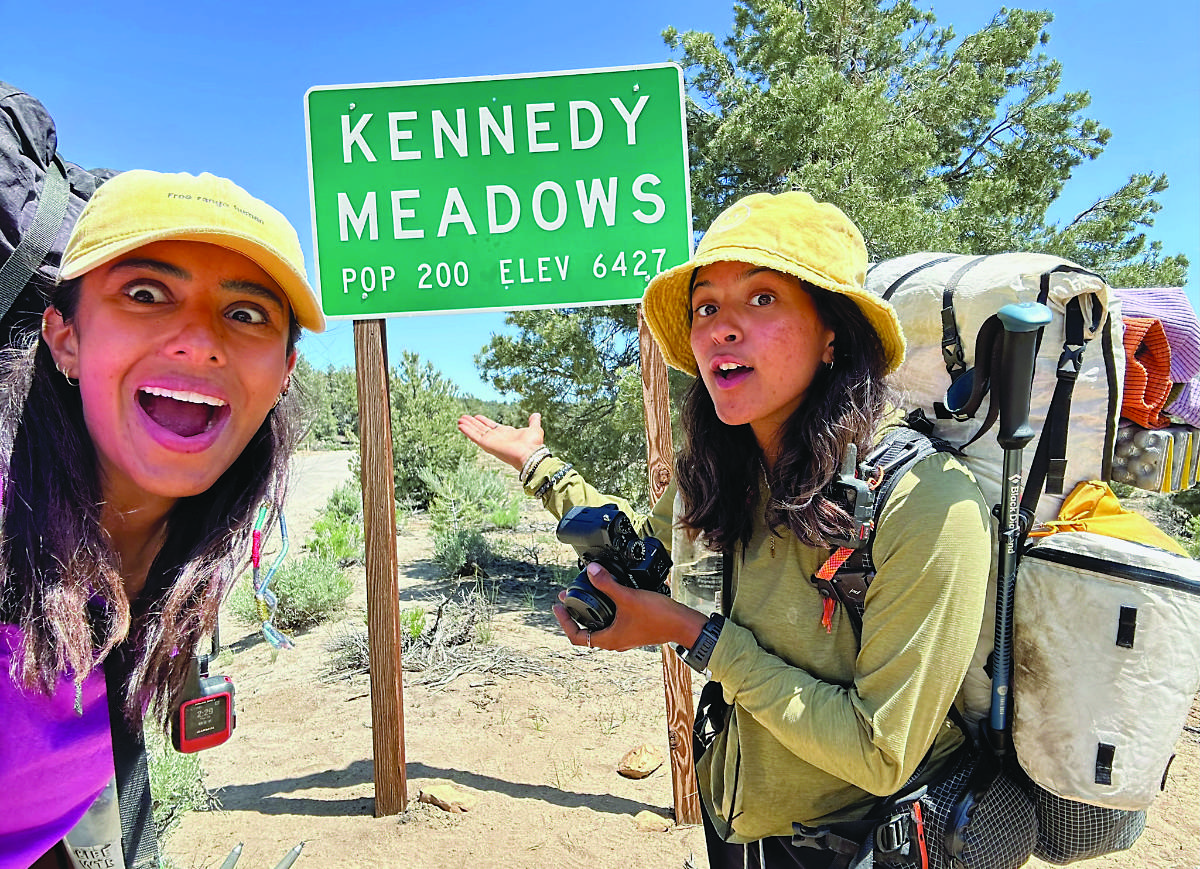


Haya Al- Samari and Fai Al-Omran are making their way through the Pacific Crest Trail, a journey they hope will establish Arab women as a powerhouse in the world. (Photo/Instagram/ mykindofridays)

Speaking about the trail, she added: “I’ve been through some rough situations that required extreme mental and physical grit to get through. But what really sets the Pacific Crest Trail apart is that it’s a long-term project that requires a complete mindset shift.

“It’s not a quick adventure that lasts a day or two. It’s a journey that lasts weeks and weeks on end. Nothing even comes close to the extreme nature of this adventure.”

Meanwhile, Al-Omran, who calls herself a lover of the sea and a child of the desert, told Arab News that she had many adventures in the past but this is her first thru-hike: “I’ve always had a love for the outdoors, from being in the sea to camping in the desert, to hiking through forests. Each adventure has its charm and connecting with nature has always been a big part of my life.
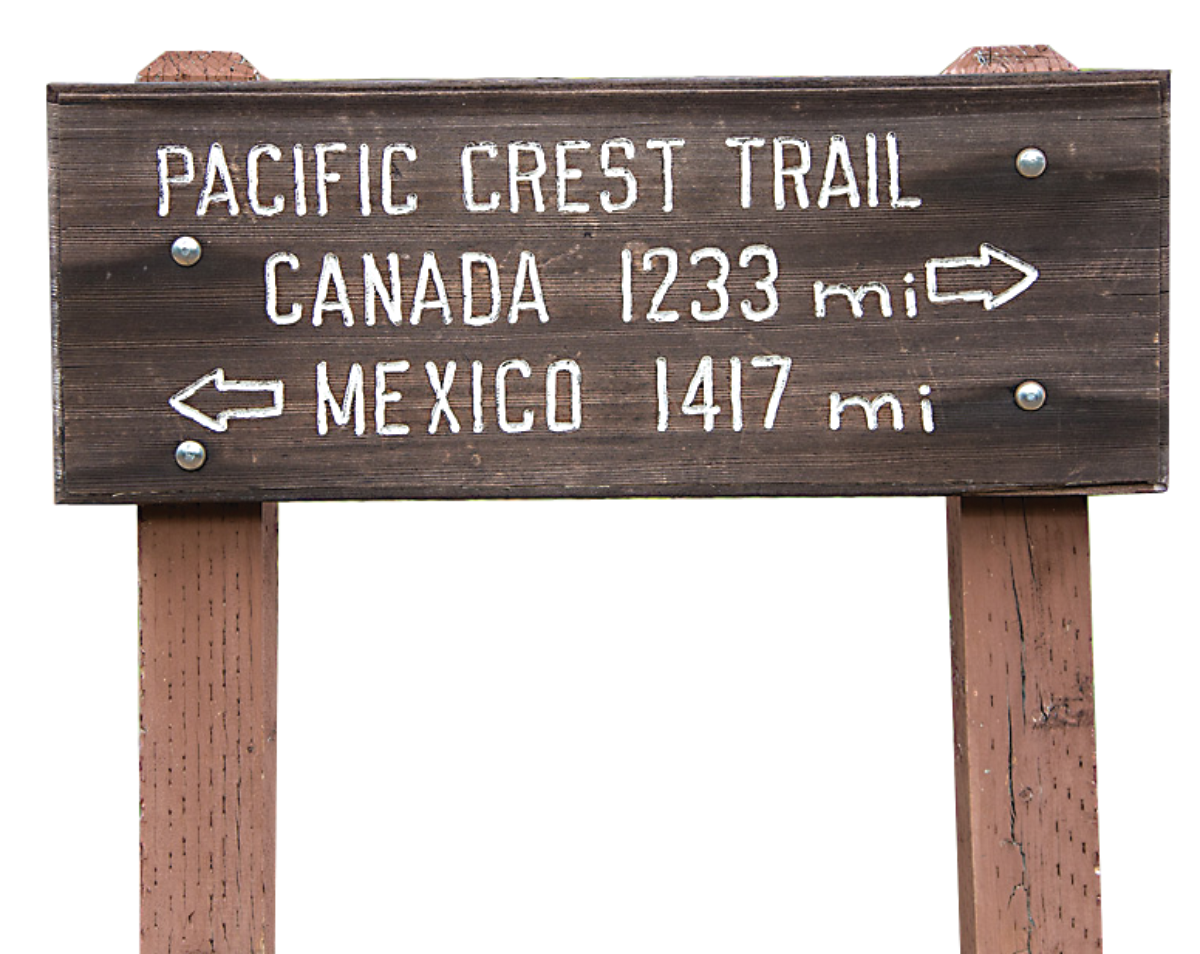


It takes the average thru-hiker five months to complete the Pacific Crest Trail. (Supplied)

“Despite all the challenges, the Pacific Crest Trail has always been an adventure that I aspired to go on one day. For me, going on a thru-hike is just taking my hobby to the next level.”

Before setting out on the trail, the two spent countless hours meticulously preparing. They agonized over what gear to bring and pored over route descriptions and reports from other hikers.

On what it took to prepare themselves, Al-Omran said: “Research. Lots of research and listening to others’ experiences. And going into the trip with a sense of surrender to mother nature. Whatever happens, on the physical side, I tried be more active and prepare my body for what is to come.”

The 33-year-old Al-Samari added: “I’m an avid runner. Having a couple of marathons and ultras under my belt gave me the confidence of knowing that my legs could carry me over long distances. Leading up to the hike, I adjusted my strength program to focus on my core and back muscles so that it would be easier for me to handle the weight of my backpack.”


It takes the average thru-hiker five months to complete the Pacific Crest Trail. (Supplied)

Unfortunately, the UC Berkeley Central Sierra Snow Lab reported that it is the second snowiest season since 1946. Many of the trail’s sections have been closed due to dangerous and hazardous conditions.

The two friends had to wait until the snow melted to continue their hike. “This year, the weather has been a number one challenge. It’s a big snow year and a big part of our journey is managing how to continue on, stay safe and enjoy our trek,” said Al-Omran.

Asked what part of the trail she was most looking forward to, Al-Samari picked the Sierra Nevada section, which spans a little over 628 km and has total elevation gain of 57,888 feet. It is one of the highlights and the most magnificent sections of the trail.

“Some people can’t handle the altitude. I hope that not the case with our bodies. It’s the most remote, the highest altitude, the most snow, the most rivers, bears, etc. I know I’ll be the happiest, most proud and breath-taken after going through the Sierras,” she added.

However, the 28-year-old Al-Omran picked another region: “Every part is exciting to get to because of how diverse the trail is. But if I had to choose, it would be the high desert right before Sierra. Because it’s a terrain that I have never seen and gone through before.”

As they are gearing up to continue their long adventure with more than 1,600 kilometers left, both Arab women believe that their journey is not just about having epic adventures, but also about inspiring others to leave their comfort zones and learn more about themselves and the world.


Decoder

What is the Pacific Crest Trail?

The Pacific Crest Trail is one of the world’s longest thru-hikes spanning the west coast of the US from the Mexican to Canadian borders. Best friends Haya Al-Samari of Saudi Arabia and Fai Al-Omran of Kuwait have taken on the challenge to hike the 4,265-km trail, which will take them through mountains, forests, wildernesses and parks in the states of California, Oregon and Washington.


Art therapy workshop sparks hope for cancer patients 

Updated 22 January 2026
Follow

Art therapy workshop sparks hope for cancer patients 

  • First monthly session was presented by local artist Hanan Al-Ateeq in cooperation with Kalimat House and Sawn Project
  • Gathering brought together women ranging from cancer survivors to those who attended directly from chemotherapy

DHAHRAN: King Fahd University Hospital in the Eastern Province boosted the healing process on Wednesday with the launch of a year-long cultural program supporting cancer patients and survivors through art therapy.

The first monthly session was presented by local artist Hanan Al-Ateeq in cooperation with Kalimat House and Sawn Project. Taking place until December, the program aims to offer fun, playful sessions.

Wednesday’s gathering brought together women ranging from cancer survivors to those who attended directly from chemotherapy. Some picked up a drawing pencil for the first time since childhood, but all were there to get their hands dirty while cleansing their spirits.

Somewhat sullen and quiet at first, the space became a giant canvas of color as the women began to relax, giggle and ask questions, such as which colors to mix to make a particular shade.

Some accidentally dipped their abaya sleeves into the acrylic paint — but luckily it washes out with soap and water. Aside from prayer time, soothing music delicately swirled through the air as the moon peered through the window.

Lina Al-Muhanna, founder and director of the Sawn Project, told Arab News how a deeply personal family experience led her to create the program, which is centered on human connection and emotional support.

The idea grew from her own journey supporting her father during his long cancer battle, a time shaped by hospital visits and moments of isolation. The experience inspired her to help cancer patients to benefit from socializing with the chance to unleash their creative energy away from medical treatments, and she launched the initiative three years ago.

“Today, I honestly feel happy from the very beginning, because Sawn is a dream initiative that I founded,” Al-Muhanna said.

“The main goal of the initiative is to support cancer patients by providing other support to help them accept their condition, which contributes to better healing, alongside their medical treatment, of course.”

The project includes both group-based sessions and cultural and art-related workshops, each carrying a clear message of care, solidarity and encouragement. The program was developed in coordination with the hospital after Al-Muhanna identified a gap in patient support.

“Today was the first session, and it was very exciting. Seeing the patients’ enthusiasm was moving,” she said after Wednesday’s event, with tears filling her eyes.

At its core, Sawn focuses on helping patients navigate the emotional realities of illness — coping with pain, the side effects of treatment, and the sense of disconnection that often accompanies long hospital journeys.

Al-Muhanna told Arab News about a specific patient who attended the art therapy session despite feeling unwell after undergoing chemo just hours earlier.

Concerned for her, Al-Muhanna phoned the patient’s doctor and was told the session would be beneficial. Joining the group, the patient used vibrant pink colors to paint her white canvas.

“That’s why we focused on creating group psychological support, cultural workshops and meaningful activities,” she said, adding that Sawn was aiming to expand remote services and continue evolving in response to patients’ needs.

Kalimat House served as the cultural partner for the initiative, with the workshop led by the organization as part of its year-long cultural programming. Founded in 2014 by cultural visionaries Anfal Al-Hammad and Haifa Al-Owain, it was established with a mission to nurture literature, the arts, and socially driven cultural engagement.

Speaking to Arab News, Al-Hammad told Arab News that Kalimat House’s role as the cultural arm meant it supported arts and culture programming that spans “art workshops, creative writing, workshops, book club sessions and poetry nights.”

She said the decision to take part was rooted in the belief that “arts and culture are tools to self- expression,” particularly for individuals navigating difficult physical and mental healing journeys.

Being part of the program, she added, offered an opportunity to give something back to society, while also engaging participants’ potential and skills by giving them “those tools in order to express themselves also to create artworks from their pain, from their emotions, to support them and their journey.”

Al-Hammad highlighted that Kalimat House’s role focuses on “giving that outlet to those patients, or target audience, and be supportive to them on their journey,” as the initiative launches a full-year program with additional art therapy sessions planned in the months ahead.

Facilitating artist Al-Ateeq, whose practice bridges art, psychology and community-based healing, told Arab News that while she had been drawing since childhood, her relationship with art changed profoundly after the death of her mother in 2017.

That loss, she said, marked a turning point. She stopped doing art while mourning until one day, four years later, she was ready to start again. Since then, she has transformed art from a disciplined practice into a personal tool for healing.

“I always say that perfectionism is what creates blocks,” Al-Ateeq explained, describing how the pressure to achieve “flawlessness” eventually led her to put down the paintbrush.

“Drawing is instinctive,” she said. “Why do we think we need to suffer or struggle to return to art? We are all born artists. It’s our natural state.”

That realization reshaped her approach and now forms the foundation of her art therapy workshops.

“Every human being has the ability to express themselves on a canvas,” she said. “If someone cannot express their thoughts or emotions through words, they can express them through painting.”

Al-Ateeq’s sessions focus on observation as much as instruction. She watched participants’ movements, color choices and hesitations as they paint — details which she says often reveal internal states more honestly than conversation.

“When they draw, they release emotions because no one is judging them,” she said. She added that many patients draw night skies, dark spaces and layer the paint thickly, while others who are in recovery might draw sunshine and vibrant trees.

The hospital setting, she said, was intentional as the workshop was designed specifically for Saudi women undergoing cancer treatment or recovery.

“They are the people who need it most,” Al-Ateeq said. “In Saudi Arabia, I feel that many people come because they don’t have a voice. They carry a lot inside them.”

Many women arrived insisting they did not know how to draw — only to leave changed, with some vowing to continue at home.

“Therapy doesn’t have to be heavy,” explained Al-Ateeq. “It can be joyful. It can be creative. It can be gentle. It can be deep in a beautiful way.”

For her, the goal is not diagnosis or technical mastery, but creating a safe, human space — one where participants leave feeling, as one woman once told her: “Like we left the room and came back different.”

One participant, Samarh “um Turki” Al-Zahrani, said she left the session energized and inspired: “At the beginning, I didn’t know anyone here, but the atmosphere created a sense of excitement. I felt that we all became friends very quickly. The group energy was lovely. I would love to keep doing this and to return to other sessions.

“I surprised myself. I discovered talents within myself that had been buried. I felt a spirit of passion — a spirit that came from the place we were in, from the group, from the sense of closeness and togetherness between us. It was a truly beautiful experience,” she added.

Additional support for the program was provided by SMT Family Counseling Center, Estenarh, the Saudi Cancer Foundation, Al-Rashed Social Responsibility and Vibent.