



RIYADH: In June 2021, a remarkable breakthrough took place at Harvard University’s research lab, led by Waleed Seddiq, a Saudi scholarship student. Through their preclinical studies, the team witnessed a momentous achievement as the immune system of a lab mouse overcame brain cancer. Seddiq expressed his excitement, stating: “It’s a milestone for a scientist. For us, it’s like getting the World Cup.”
As they conclude the initial phase of clinical trials, Seddiq’s team has achieved yet another significant milestone. Their groundbreaking medical discovery, involving the use of viruses and stem cells to target and terminate brain cancer cells, has earned them the esteemed Harvard Medical School Annual Conference Award.
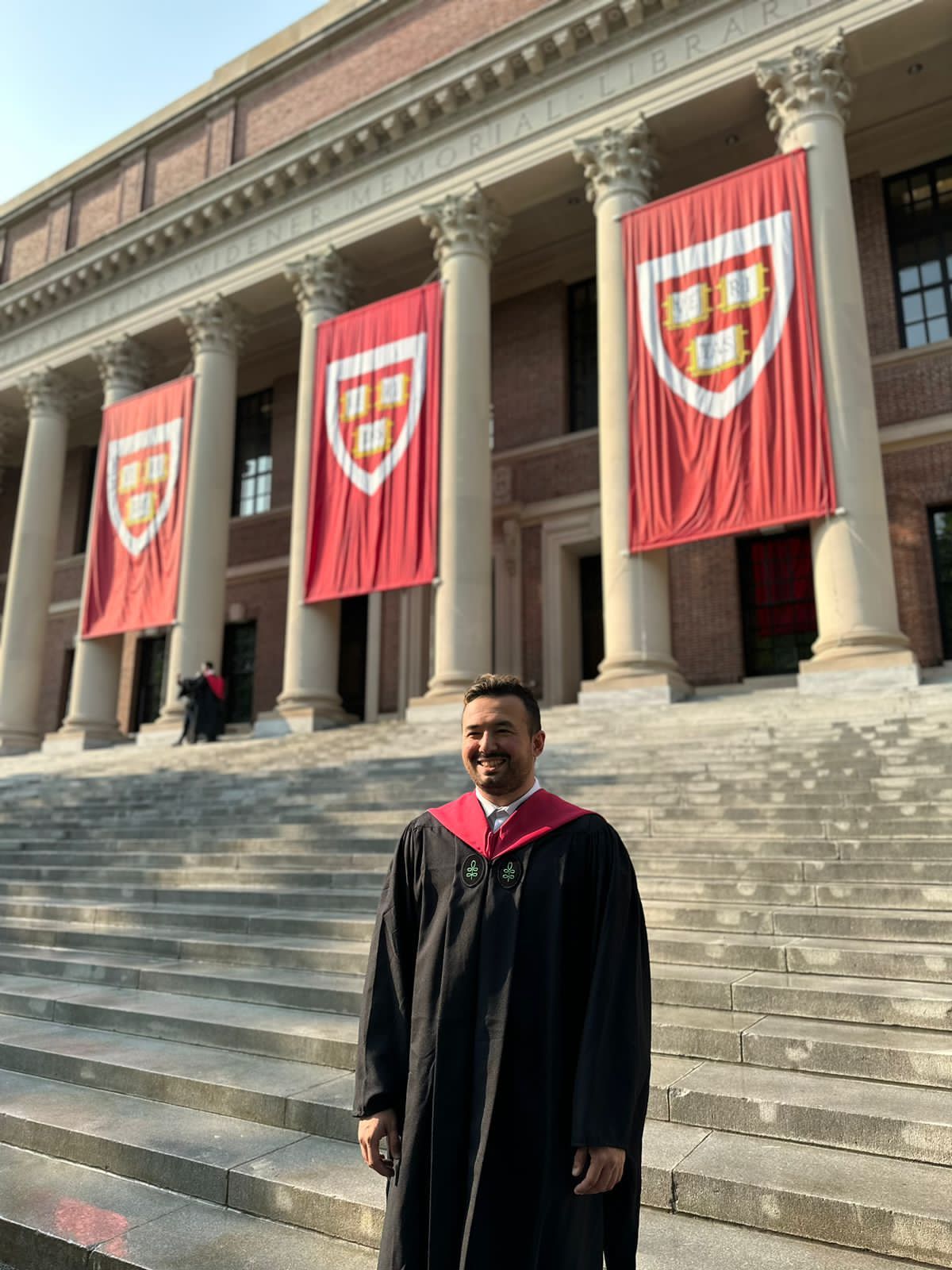
Saudi scholarship student Waleed Seddiq. (Supplied)
“As a Saudi citizen who’s being sponsored by the Saudi government, it’s quite a pleasure having this kind of recognition, having this award, and competing with the world, in the best university in the world,” Seddiq said.
Patients with brain metastases, a condition in which cancer cells from other parts of the body spread to the brain, typically have a survival rate of only six months. In the advanced fourth stage of this condition, the blood-brain barrier poses a significant challenge as it prevents most medications from effectively reaching the brain through the veins. This natural barrier acts as a defense mechanism, blocking the entry of microorganisms like fungi and parasites that may be present in the bloodstream.
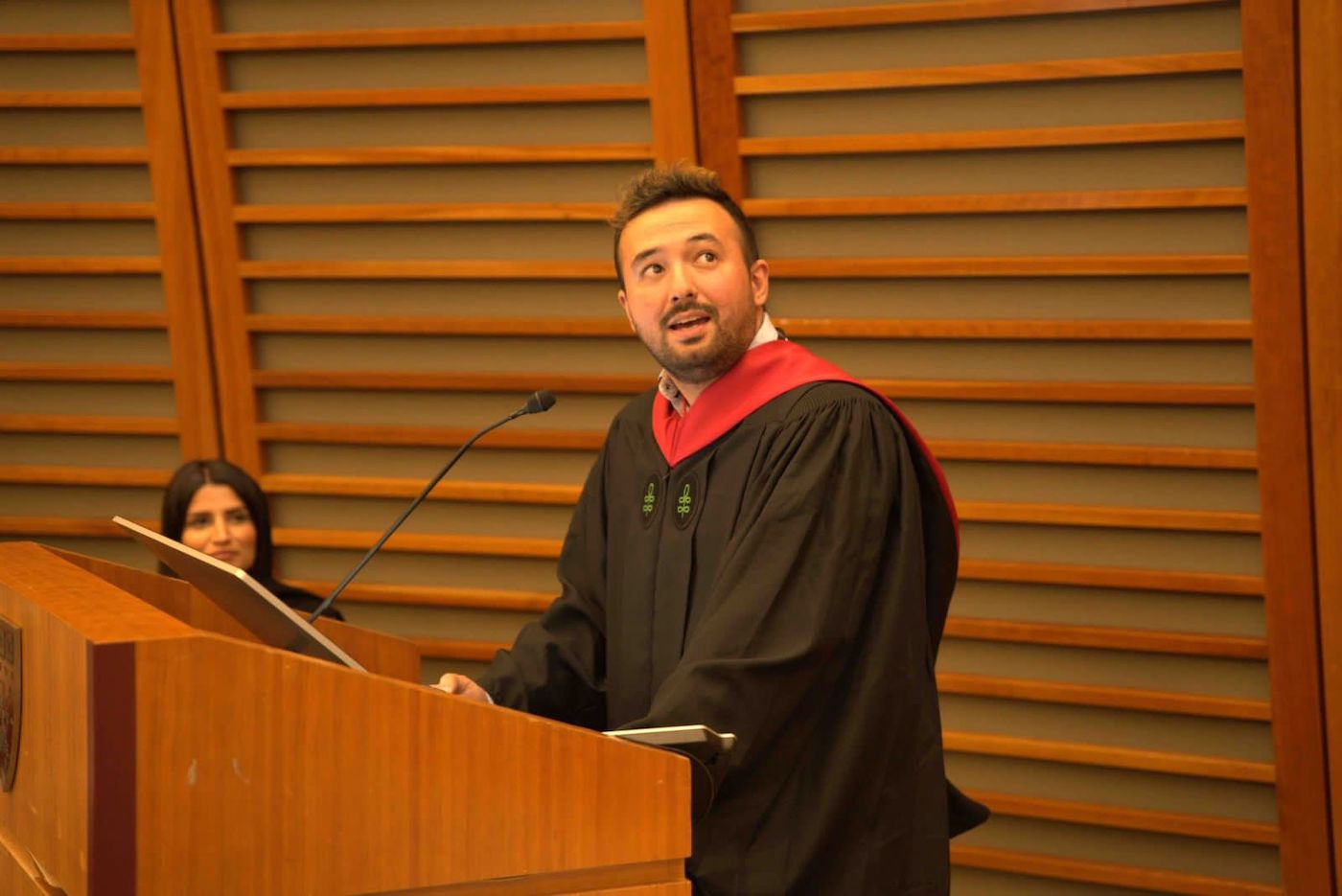
Saudi scholarship student Waleed Seddiq. (Supplied)
The research team found that viruses are one of the few organisms that can access the brain, and with this information, they genetically modified cold viruses, specifically the herpes simplex virus, to only target cancer cells.
“As a delivery vessel, we used stem cells equipped with the modified virus. They flow through the bloodstream until they reach the brain,” Seddiq said.
Stem cells also act as a booster as the virus reproduces within it. Their clinical trials have found that a patient can undergo direct injections into the bloodstream for a four-month period until the patient was “completely cleared” of their cancerous condition.
A similar immunotherapy method, talimogene laherparepvec, was previously developed to treat melanoma skin cancer, but it is not compatible with other parts of the body, Seddiq explained.
As the award-winning team at Harvard University and Brigham and Women’s Hospital nears the completion of the initial phase of their clinical trials, they have successfully ensured the safety of the treatment for patients. The upcoming phases will focus on evaluating dosage and efficacy. However, to progress to the next stage, the team is in need of approximately $4 million in funding. This financial support will be crucial in further advancing their research.
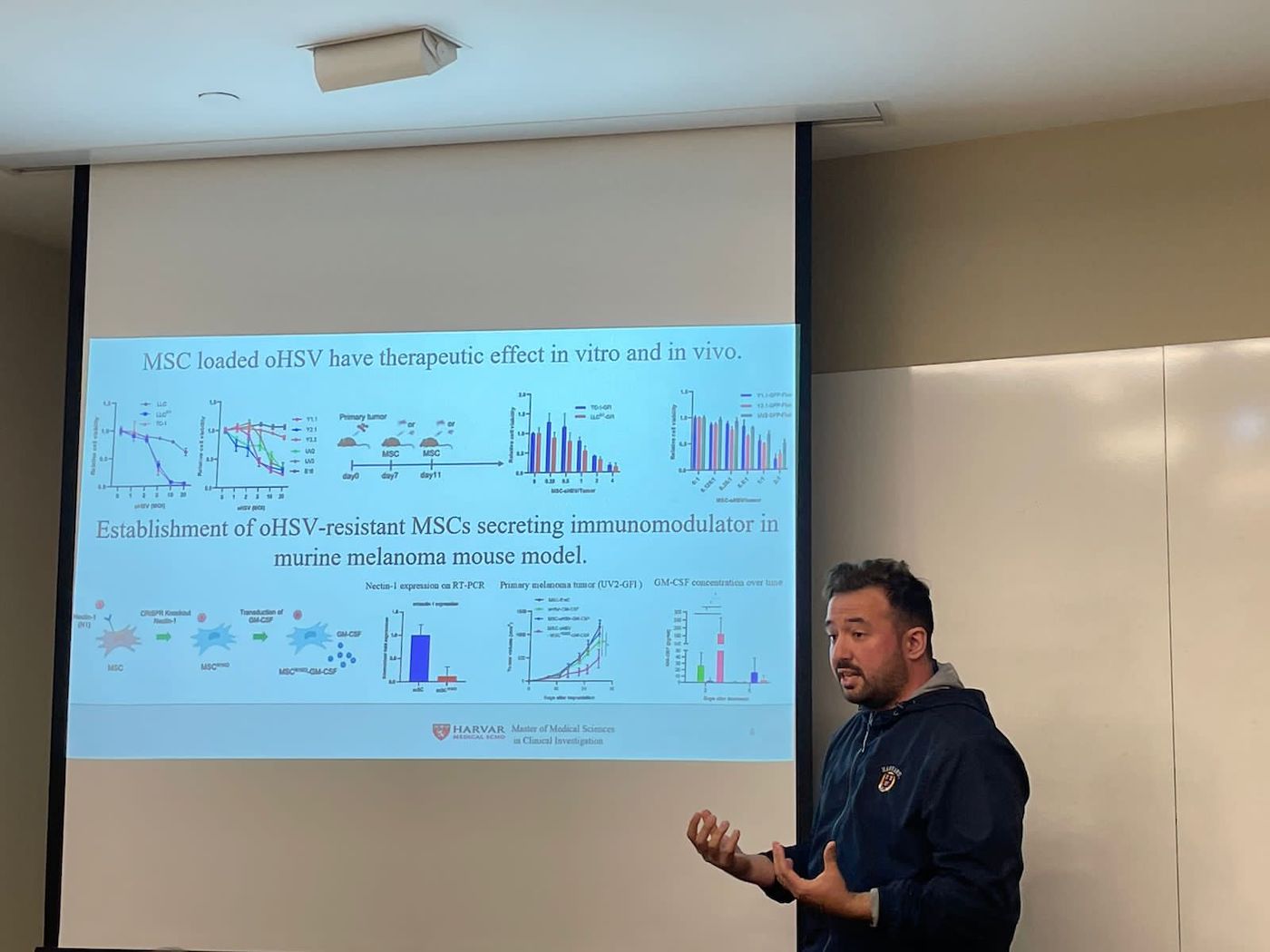
Saudi scholarship student Waleed Seddiq. (Supplied)
Seddiq said: “With Vision 2030, I see Saudi turning to having biotech companies. We still don’t have them in Saudi … I believe that by the time (they do), these kinds of projects and any other projects will go to Saudi.
“In the meantime, of course, any research lab would like to have their own fund, their own projects. I hope that one day I can lead a project that is being funded by Saudi, managed by Saudi, in Saudi, in the very promising field of immunotherapy. That’s the end goal: to give a small thank you to the country for what it’s done for me.”
Seddiq embarked on his research journey in high school, prompted by his curiosity of molecular biology and atomic structure. His interest in the field of immunotherapy grew from a question: How can the body’s immune system be used to overcome disease?
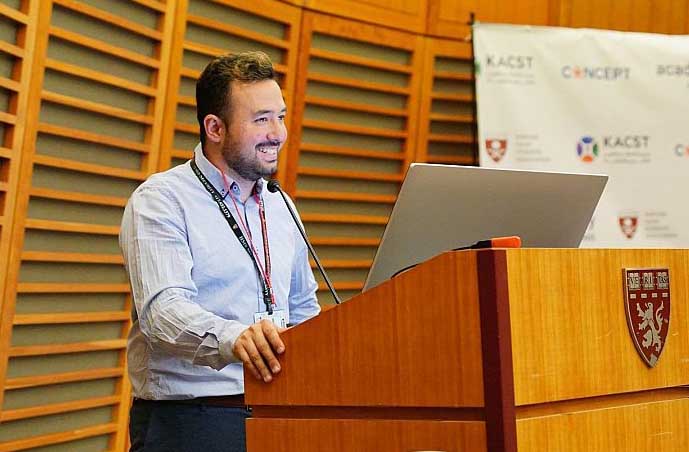
Saudi scholarship student Waleed Seddiq. (Supplied)
He later earned his medical bachelor’s degree from King Saud University in clinical laboratory science before earning a master’s degree from Harvard Medical School in clinical investigation in the translational immunotherapy track. The Harvard program requires an MD, MBBS or an equivalent doctoral degree to apply, but a special committee was held to discuss, and later on accept, his case.
His efforts in the field have merited several acknowledgments, including the SABIC prize for chemistry and health, first place in the field of scientific research at King Saud University for undergraduate students, and the Harvard Medical School scholarship for outstanding students in the years 2021-2023.


