

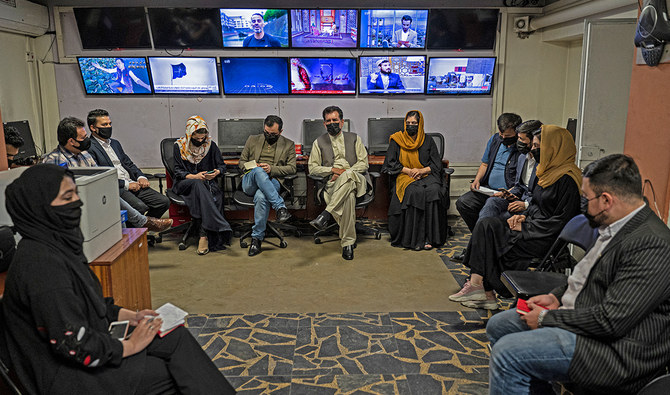

ISLAMABAD: Hundreds of Afghan journalists fled to Pakistan in 2021, desperate to escape Taliban rule. Two years on, many say they have fallen into limbo, waiting for visas to the countries that had previously employed them, and facing routine police harassment and official indifference.
The withdrawal of US-led forces and Taliban takeover of Afghanistan has sparked an exodus of at least 600,000 Afghans into neighboring Pakistan, many crossing by land on hopes or promises of relocation to the West.
Pakistan-Afghan International Forum of Journalists data shows that among them were at least 650 media workers who fled fearing persecution as their country’s new administration cracked down on the press.
Those who had worked for Western organizations during the 20-year US-led military campaign against the Taliban were sure they would still be owned by them when the Washington-backed government in Kabul collapsed in August 2001.
Some 400 journalists have made it to different countries, including the US, Germany and France, but the rest have been stuck, with their travel documents expiring.
“The remaining 250 are still in Pakistan and struggling to get visas of the US and different European countries for their onward travel from Pakistan,” Hashmat Vejdani, the Afghan journalist forum’s spokesperson, told Arab News on Thursday.
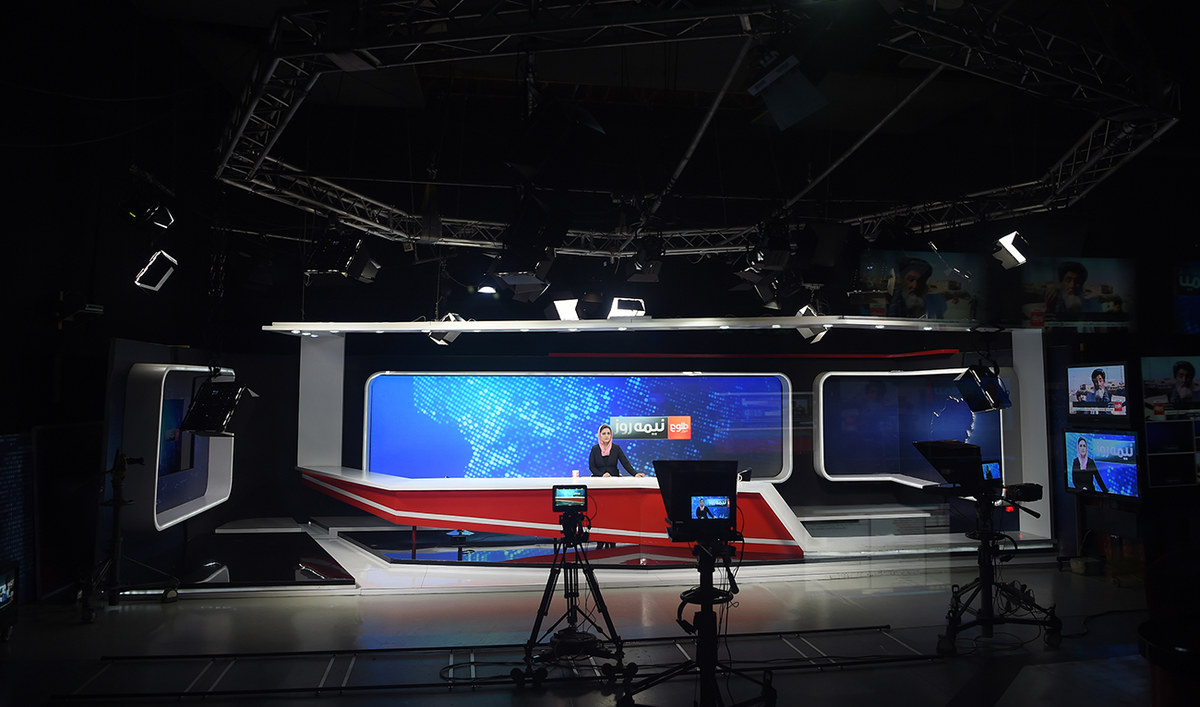
In this photograph taken on September 11, 2018 Afghan presenter Zarmina Mohammadi for Tolo News takes part in a live broadcast at Tolo TV station in Kabul. (AFP/File)
“The US specifically promised to all journalists who worked with them during the war to issue them visas in 18 months ... The applications of almost all of them have been in process in the (respective) embassies.”
The forum, he said, has been raising the issue of delays with Western diplomatic missions in Islamabad and each time would hear requests for patience. as applications were being processed.
But patience is not easy for those who like Tahir Sadid entered Pakistan over a year ago.
His visa expired in March and last month he was detained by police in Islamabad, only to be released on personal bail.
He said he had no choice when he left Afghanistan and for a year has been getting by with financial assistance from friends in Europe as his visa applications are pending not only with Pakistani authorities but also Germany.
“I have applied for the visa extension, but still waiting to hear back from the (Pakistani) government,” he said.
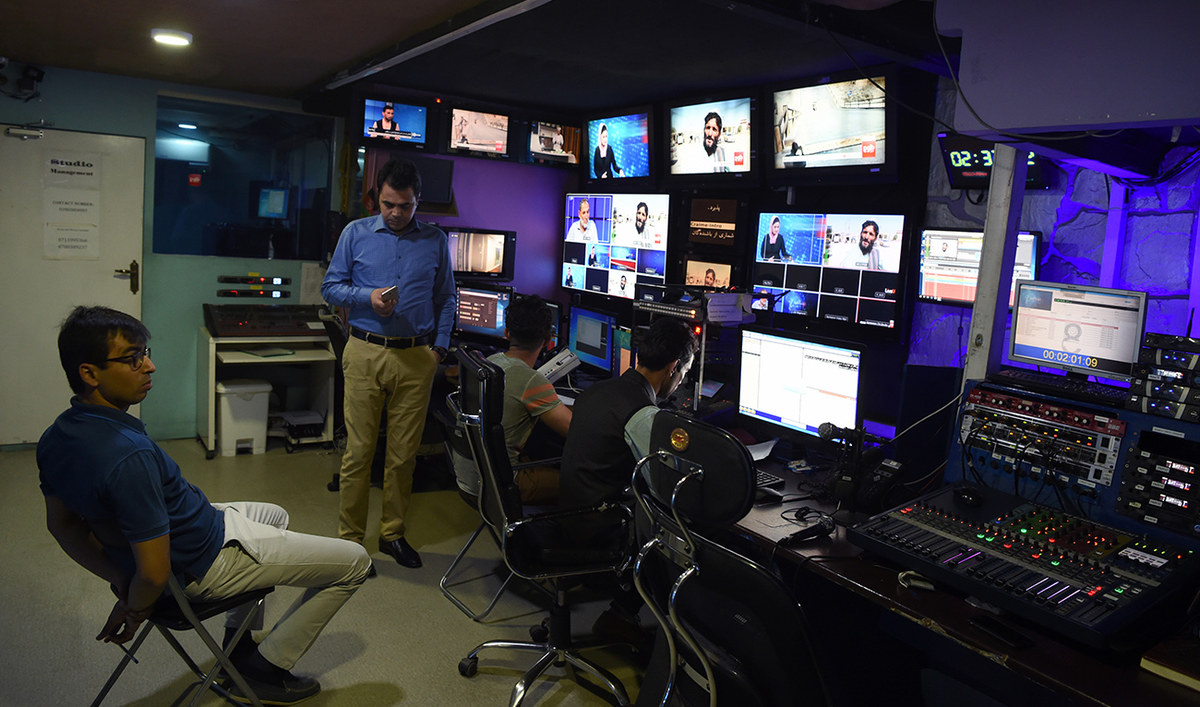
In this photograph taken on September 11, 2018 Afghan staff of Tolo News are seen in the broadcast control room at Tolo TV station in Kabul. (AFP/File)
“My parents were satisfied that I am safe in Pakistan, but the security personnel have started targeting us here, too ... They are living in hell there while I am struggling here to get the visa for Germany.”
The persecution he feared at home he is now facing in the place where he sought safety.
“The local police treat us like illegal migrants to Pakistan, and harass us to extort money,” he said.
“We fled Afghanistan risking our lives, hoping we will be safe in Pakistan, but the police here too have been harassing and intimidating us.”
Another Afghan journalist has been living in Islamabad for the past 14 months, unable to legalize his stay.
“My Pakistani visa expired eight months ago, and I immediately applied for an extension, but there is still no response from authorities,” he told Arab News on condition of anonymity, as he also waited to hear back from the US embassy about his visa application.
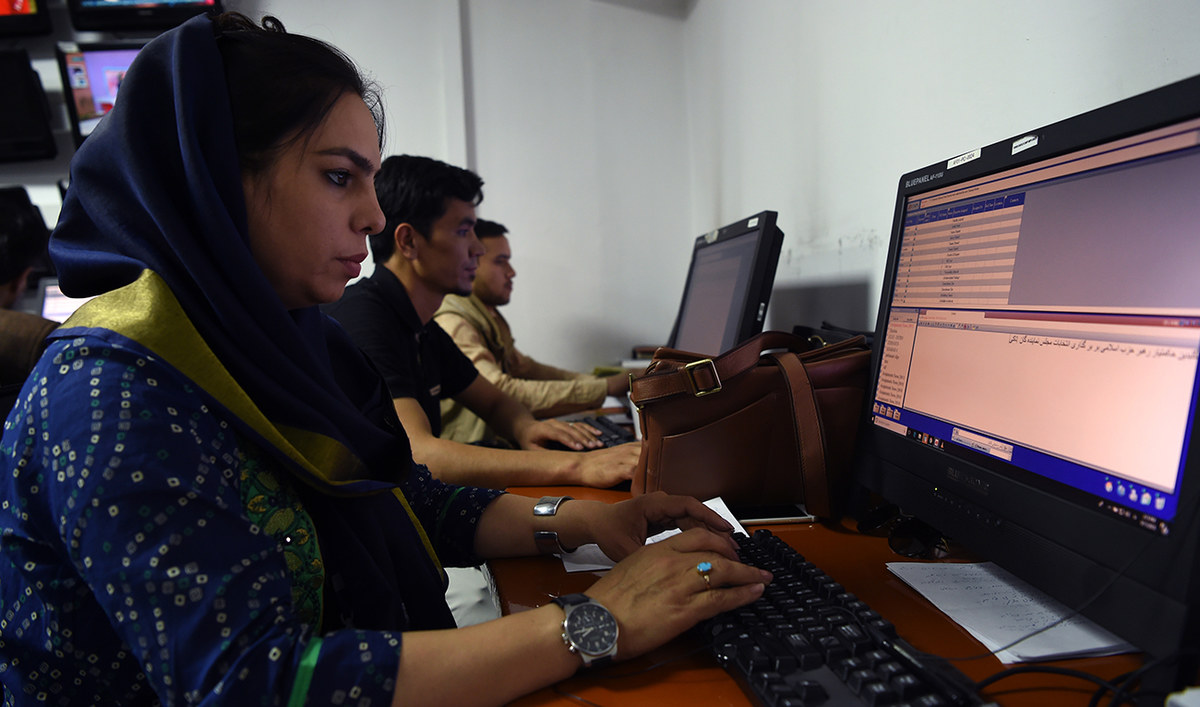
In this photograph taken on September 11, 2018 Afghan reporters of Tolo News work in the newsroom at Tolo TV station in Kabul. (AFP/File)
“We fled restrictions on press freedom and lawlessness in Afghanistan, hoping to find a better place to survive,” he said, adding that for the past two months he and his friends have been facing harassment from police.
After complaints, the Pakistan-Afghan International Forum of Journalists has tried to intervene with both the Pakistani interior ministry and foreign office.
“Afghan journalists have entered Pakistan on valid visas, and they don’t pose any threat to Pakistan’s politics or security in any way, so their visas should be extended at the earliest,” Vejdani said.
“We wrote separate letters to Ministry of Interior and Foreign Office highlighting the issues some three weeks ago, but have received no response from them so far.”
While the foreign office was not available for comment, despite requests, police denied the allegations of abuse.
“It is the police’s job to act against those living in the country illegally, but we strongly deny the charge of any harassment,” Islamabad Police spokesperson Taqi Jawad told Arab News.
“Police detained a couple of Afghan journalists last month for not having valid visas but let them go on a personal surety bond.”
The UN refugee agency, UNHCR, can only offer sympathy, in line with its advisory calling for a ban on forced returns of Afghan nationals, regardless of their legal status.
“We remain steadfast in our efforts to uphold the right to seek asylum and are in dialogue with the government of Pakistan to identify a way forward on the registration and documentation of asylum-seekers from Afghanistan,” Qaiser Khan Afridi, UNHCR spokesperson in Pakistan, told Arab News.
“We firmly believe that with the continuous engagement and support of the Government of Pakistan, the current challenges will be addressed.”


