

In ongoing shift, Pakistan’s PARCO issues fuel oil sales tender for July 

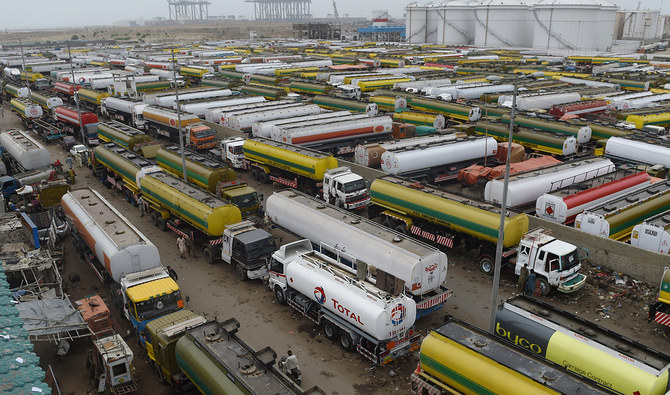
Oil tankers park in a terminal amid a countrywide strike by the All Pakistan Oil Tankers Association near a port in the Pakistani city of Karachi on July 26, 2017. (AFP/File)
Short Url
Updated 05 July 2023
Follow

In ongoing shift, Pakistan’s PARCO issues fuel oil sales tender for July 

  • The refinery is offering 50,000 metric tons of high sulfur fuel oil (HSFO) with maximum 3.5 percent sulfur content 
  • Imports of fuel oil into Pakistan slumped in second quarter this year as companies resorted to burning more coal 

SINGAPORE: Pakistan’s Pak-Arab Refinery Limited (PARCO) has offered fuel oil for July loading in its latest tender, underlining an ongoing shift in market dynamics as the South Asian country turned to exporting instead of importing fuel oil this summer. 

The refinery is offering 50,000 metric tons of high sulfur fuel oil (HSFO) with maximum 3.5 percent sulfur content, for loading at Karachi port between July 15 and 17, based on its website and trade sources. 

The tender closes on July 5. PARCO had previously closed a HSFO sales tender in May this year. 

Imports of fuel oil into Pakistan slumped in the second quarter this year as companies resorted to burning more coal for power generation due to its cheaper cost and availability. 

Monthly imports hit a four-year high in the second quarter last year. 

The country’s fuel oil exports have trended higher in 2023 so far compared to 2022, totaling 340,000 tons in Q2 2023. It did not export any fuel in the same quarter last year, data from shipping analytics firm Kpler showed. 

The country typically imports fuel oil from the Middle East. Exports have so far gone to Singapore and the United Arab Emirates this year. 

The export trend could continue in the coming months as the peak summer demand season is already retreating, with refineries seeking to clear inventories, trade sources said. 


Pakistan’s Punjab launches ‘Green Policing Unit’ with electric patrol fleet amid smog

Updated 7 sec ago
Follow

Pakistan’s Punjab launches ‘Green Policing Unit’ with electric patrol fleet amid smog

  • Unit to begin operations in Lahore, expand to other districts in phases
  • Chief minister says electric fleet will cut fuel costs and carbon emissions

ISLAMABAD: Pakistan’s eastern province of Punjab on Thursday launched the country’s first Green Policing Unit, according to an official statement, introducing electric patrol vehicles as authorities seek to curb fuel use and emissions amid worsening winter smog.

Large parts of Punjab, the country’s most populous province, are engulfed by dense smog every winter as cold, stagnant air traps pollution from vehicle emissions, construction dust , and agricultural fires.

The provincial capital, Lahore, frequently ranks among the world’s most polluted cities during the season. While authorities have previously relied on measures such as anti-smog guns and traffic restrictions, these have offered only temporary relief, leaving residents exposed to hazardous air quality.

“Green policing reflects the vision of clean air and good governance,” Chief Minister Maryam Nawaz Sharif said after inaugurating the unit.

“The use of electric vehicles will lead to a reduction in fuel costs and result in zero carbon emissions,” she added.

The chief minister inspected the electric patrol vehicles and drove one herself, according to the official statement.

Officials said the Green Policing Unit would initially operate in Lahore, using modern electric vehicles for traffic patrolling.

The vehicles, manufactured by Chinese automaker BYD, have a driving range of about 410 kilometers per charge and can be fast-charged from 30 percent to 80 percent in around 30 minutes, according to a briefing given to the chief minister.

All the electric patrol vehicles are fitted with surveillance systems, public address equipment, police lights, 360-degree cameras, and speed-detection tools.

Officials said conventional police patrol vehicles currently deployed in Lahore consume around 28,000 liters of fuel per month, costing about Rs7.42 million rupees ($26,600).

By contrast, each electric vehicle is expected to save roughly 4,500 liters of fuel annually, lower operational costs and eliminate carbon emissions.

The chief minister directed authorities to gradually expand the number of electric vehicles assigned to the Green Policing Unit and ordered steps to roll out the initiative to other districts of Punjab in phases, the statement added.