Loulwa Al-Sharif: Saudi singer finds her passion on stage, from dancing to jazz

1 / 3
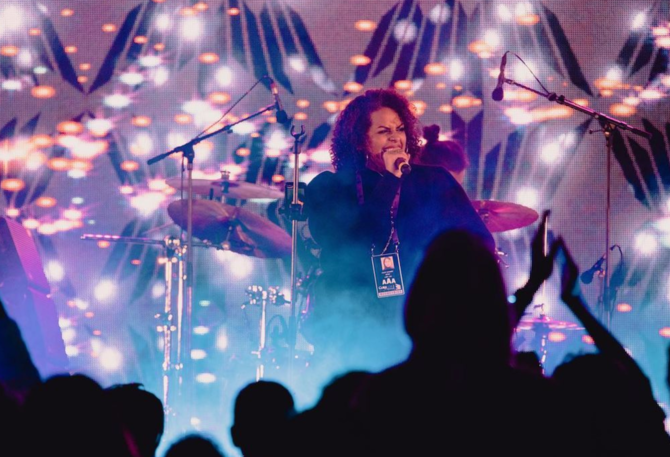
Loulwa Al-Sharif, a jazz singer from Saudi Arabia, is captivating audiences across the Kingdom with her mesmerizing voice. (Supplied)
2 / 3
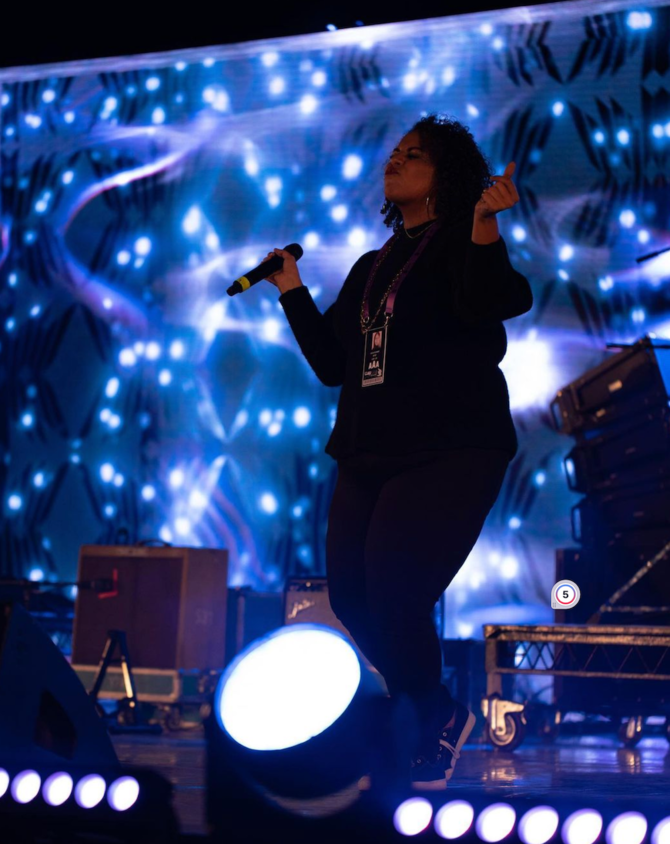
Loulwa Al-Sharif, a jazz singer from Saudi Arabia, is captivating audiences across the Kingdom with her mesmerizing voice. (Supplied)
3 / 3
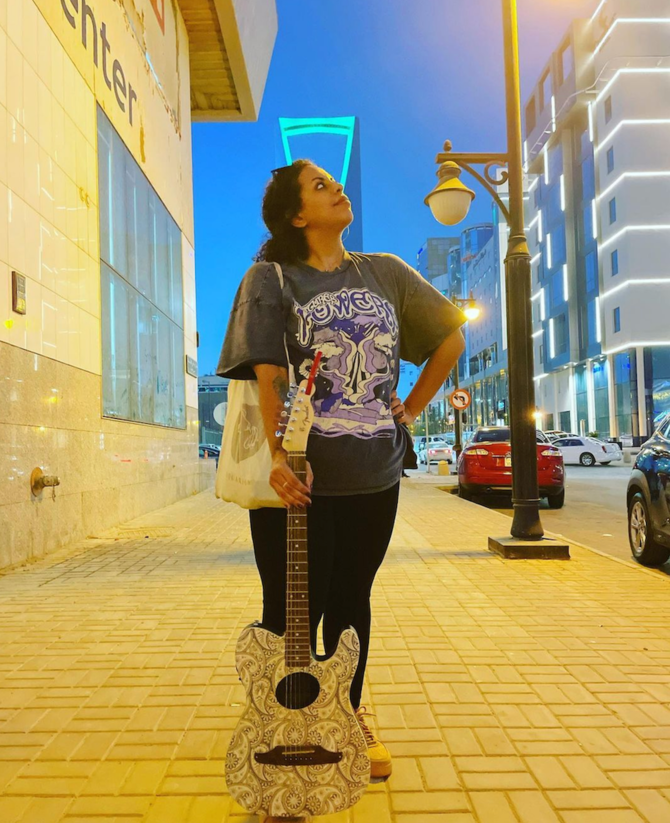
Loulwa Al-Sharif, a jazz singer from Saudi Arabia, is captivating audiences across the Kingdom with her mesmerizing voice. (Supplied)
Short Url
Updated 02 July 2023
Follow

Loulwa Al-Sharif: Saudi singer finds her passion on stage, from dancing to jazz

  • After the sudden loss of her father to a heart attack at 24, Al-Sharif found solace in singing, using it as a way to sing away her sorrow
  • Al-Sharif believes that singing heals her soul, and is an expression of feelings and pain — and more expressive than playing an instrument

RIYADH: Loulwa Al-Sharif, a jazz singer from Saudi Arabia, is captivating audiences across the Kingdom with her mesmerizing voice, establishing herself as a unique presence in the world of jazz music.

She likes singing famous jazz songs such as “What a Wonderful World,” “Comes Love,” “I’ll Be Seeing You” and “My Funny Valentine.”

Al-Sharif took the stage with the Jazzdotorg band, who had traveled from New York, for their inaugural performance in Saudi Arabia in May. The unforgettable night took place at the Ithra Center in Dhahran.

“I recently became aware of my purpose during my most recent performance at Ithra, where I was invited as a guest of honor as a Saudi jazz singer to perform with a fantastic jazz band that was visiting Alkhobar for the first time from New York. Following that, I want to concentrate on jazz compositions with a Saudi touch with the hopes of promoting Saudi jazz globally,” Al-Sharif told Arab News.   

At the age of 5, Al-Sharif discovered her talent for the stage, finding joy in moving and dancing to music. Over time, she nurtured her skills and taught herself the art of singing.

“As I grew older in my teenage years, I discovered my love for singing on my own. My mother has always supported my love for art, such as painting and, nowadays, singing.

“She is a huge supporter and my backbone who believes in my talent and loves me. I’ve always loved music and listening to Disney movies songs,” she said.

After the sudden loss of her father to a heart attack at 24, Al-Sharif found solace in singing, using it as a way to sing away her sorrow. She believes her late father was a significant support and feels he would continue to be if he were alive.

“My father was a musician who used to play the oud instrument and loved music, I know that if my father were still living today, he would be extremely proud.”  

In her journey to discover her music style, Al-Sharif initially began singing in Arabic. However, at the age of 23, she crossed paths with an underground music band in Jeddah called Disturb the Balance, who assisted her in transitioning to English music.

“When I first tried to sing in English, I started with alternative rock like evanescence and learned the timing and harmonies. Then, in 2016, I met a blues musician who, after hearing me sing, encouraged me to listen to jazz and blues. At the time, I thought singing in English was very difficult and I wished I could do that, which was a big challenge. 

“I chose to remain with blues and jazz because it spoke to me and felt natural to me.” 

Al-Sharif believes that singing heals her soul, and is an expression of feelings and pain — and more expressive than playing an instrument.  

“I used to be hard on myself for not knowing how to play the piano, but then I realized that I was surrounded by wonderful musicians with whom I could collaborate. I love to share energy with kind people and produce art that comes from various souls.” 

In 2019, Al-Sharif participated in an episode of “Arabs Got Talent” to gain more experience in performing and overcome her stage shyness. Since then, she has graced various stages, including MDLBeast and the Saudi International Golf Tournament at KAEC.

She has performed at many events in AlUla, Ithra in the Eastern Province, as well as at King Abdullah Sports City in Jeddah, and MDLBeast in Riyadh. 

“I’ve been working on breaking the barrier of creating songs from the heart, which I believe is really difficult and profound. I’m in the process of writing original songs with the assistance of friends and writers,” she said.


Musaned confirms mandatory salary transfers for domestic workers via official channels

Updated 12 sec ago
Follow

Musaned confirms mandatory salary transfers for domestic workers via official channels

  • Move aims to protect wage-related rights, enhance transparency

RIYADH: All employers in Saudi Arabia have been informed they must transfer domestic workers’ salaries through official channels, starting from Jan. 1, 2026.

The move, confirmed through Musaned platform’s X account, aims to protect wage-related rights, enhance transparency and simplify employer-worker relationships.

The electronic payment service provided through Musaned will use approved digital wallets and participating banks to ensure reliability, security and consistency in wage transfers.

Ministry spokesperson Mohammed Al-Rizgi told Arab News that the move “comes as part of the ministry’s efforts to develop the domestic labor sector and strengthen the rights of both employers and domestic workers.”

Lawyer Majed Garoub told Arab News that the new regulation would help tackle persistent issues in employer-worker relationships, especially disputes over unpaid wages.

He said: “This regulation will significantly help resolve many problems that arise when domestic workers leave the country without proper verification of receiving their full rights.”

Garoub explained that informal salary payments were common in the past, often made without proper documentation or signatures.

This, he added, made it challenging for Saudi employers to prove they had paid all wages if workers later filed claims after returning to their home countries.

The new regulation, which has been rolled out in stages, began with domestic workers newly arriving in the Kingdom on July 1, 2024.

It was then extended to employers with four or more domestic workers in January 2025, followed by those employing three or more by July 2025.

The latest stage, which took effect on Oct. 1, applies to employers with two or more domestic workers. This phased approach has ensured a smooth adoption of the system for all employers.

Garoub said the regulation would bring broader legal and security benefits. He explained that informal salary payments had, at times, enabled illegal practices.

He added: “Workers might have falsely claimed unpaid wages or engaged in activities outside their employment.”

Such funds, he added, could even have contributed to crimes like money laundering or the financing of terrorism.

He said: “By mandating official payment channels, this regulation protects the Saudi economy, national security, and international financial systems.”

The Musaned platform offers significant advantages for both employers and workers. Employers gain a reliable salary verification mechanism that simplifies end-of-contract and travel-related procedures, while workers benefit from consistent, secure and timely payments.

The system also allows domestic workers to transfer their earnings to family members abroad through trusted channels.

For those who prefer cash withdrawals, a Mada card will be issued for secure and convenient access to salaries.

According to Musaned, salary transfers for workers covered under the Wage Protection System must be made through authorized channels.

This regulatory change marks a significant step forward in protecting the rights of domestic workers, ensuring transparency in employer-employee relationships, and bolstering the Kingdom’s economic and security interests.