

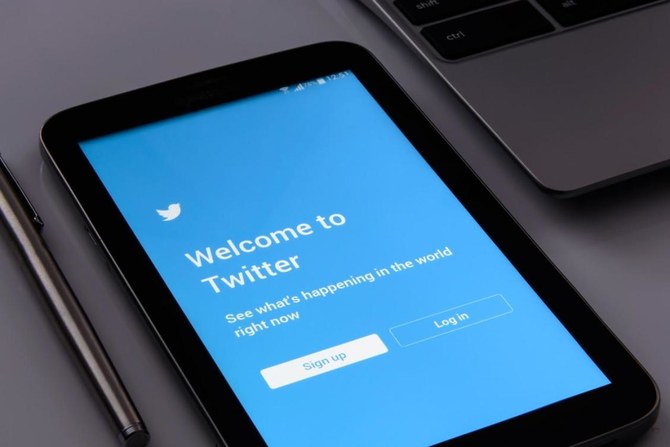
Twitter now needs users to sign in to view tweets

Twitter will now require users to have an account on the social media platform to view tweets, according to Elon Musk. (Reuters/File Photo)
Short Url
Updated 30 June 2023
Follow

Twitter now needs users to sign in to view tweets

  • Musk has previously expressed displeasure at artificial intelligence firms like OpenAI and others using Twitter’s data
  • Twitter has also begun charging users to access its application programming interface (API)

CUPERTINO: Twitter will now require users to have an account on the social media platform to view tweets, a move that owner Elon Musk on Friday called a “temporary emergency measure.”
Users who try to view content on the platform will be asked to sign up for an account or log into an exiting account to see their favorite tweets.
“We were getting data pillaged so much that it was degrading service for normal users!” Musk said in a tweet.

Musk has previously expressed displeasure at artificial intelligence firms like OpenAI and others using Twitter’s data to train their large language models.
The company has initiated a range of measures to bring back advertisers who left the platform under Musk’s ownership and to increase subscription revenue by making verification check marks a part of the Twitter Blue program.
Earlier in the month, Twitter had announced plans to focus on video, creator and commerce partnerships to revitalize the social media company’s business beyond digital advertising.
Twitter has also begun charging users to access its application programming interface (API), used by third-party apps and researchers.


Saudi Arabia strengthens global ranking in 2026 Soft Power Index

Updated 20 January 2026
Follow

Saudi Arabia strengthens global ranking in 2026 Soft Power Index

  • UAE maintains 10th place, Qatar climbs 2 spots

DUBAI: Saudi Arabia climbed three positions to 17th place in this year’s Soft Power Index, released on Tuesday by marketing consultancy Brand Finance.

Other Gulf nations also performed well, with the UAE maintaining its 10th-place ranking and Qatar and Bahrain each climbing two spots to No. 20 and No. 49, respectively, marking a rebound for the region after a softer showing in 2025.

The report indicates that the performance reflects sustained investment in proactive diplomacy, economic diversification and expanded initiatives across culture, tourism and sports.

It also comes at a time when several Western powers are recording declines in their rankings, highlighting the growing influence of Gulf states.

“The UAE remains a clear regional leader, while Saudi Arabia and Qatar have strengthened their global positions through focused economic diplomacy and international engagement,” said Savio D’Souza, managing director for the Middle East and Africa, Brand Finance.

Saudi Arabia and the UAE either maintained or improved their rankings across all key pillars, including familiarity, reputation and influence.

The Kingdom recorded notable gains, with increases of 25 points in the People & Values pillar and 12 points in the Culture & Heritage pillar.

“Although perceptions across some markets remain mixed, renewed upward movement in the rankings suggests that targeted, long-term soft power strategies are beginning to pay off,” D’Souza said.

Globally, the US retained its top position despite recording the steepest overall decline in its score, followed by China in second place. Japan rose to third place, overtaking the UK, which ranked fourth, while Germany placed fifth.

Brand Finance defines “soft power” as a “nation’s ability to influence the preferences and behaviors of various actors in the international arena (states, corporations, communities, publics, etc.) through attraction and persuasion rather than coercion.” 

Each nation is assessed across 55 individual metrics, producing an overall score out of 100 and a ranking from first to 193rd.