



QUETTA: The prices of sacrificial animals have gone up by as much as 100 percent ahead of Eid Al-Adha in Pakistan’s southwestern Balochistan province, customers say, with traders attributing it to lower number of animals due to livestock losses in last year’s deadly floods.
The unprecedented monsoon rains and floods last year killed more than 1,700 Pakistanis, affected 33 million and caused $30 billion losses damages. The deluges killed more than 900,000 livestock, destroying large swathes of prime farmland and key infrastructure in the South Asian country.
According to the provincial disaster management authority (PDMA), the floods killed 328,832 livestock in Balochistan between June and December last year. Animal traders in the busiest market of the provincial capital of Quetta say the floods have badly affected their business ahead of Eid Al-Adha, which is a major annual opportunity for them.
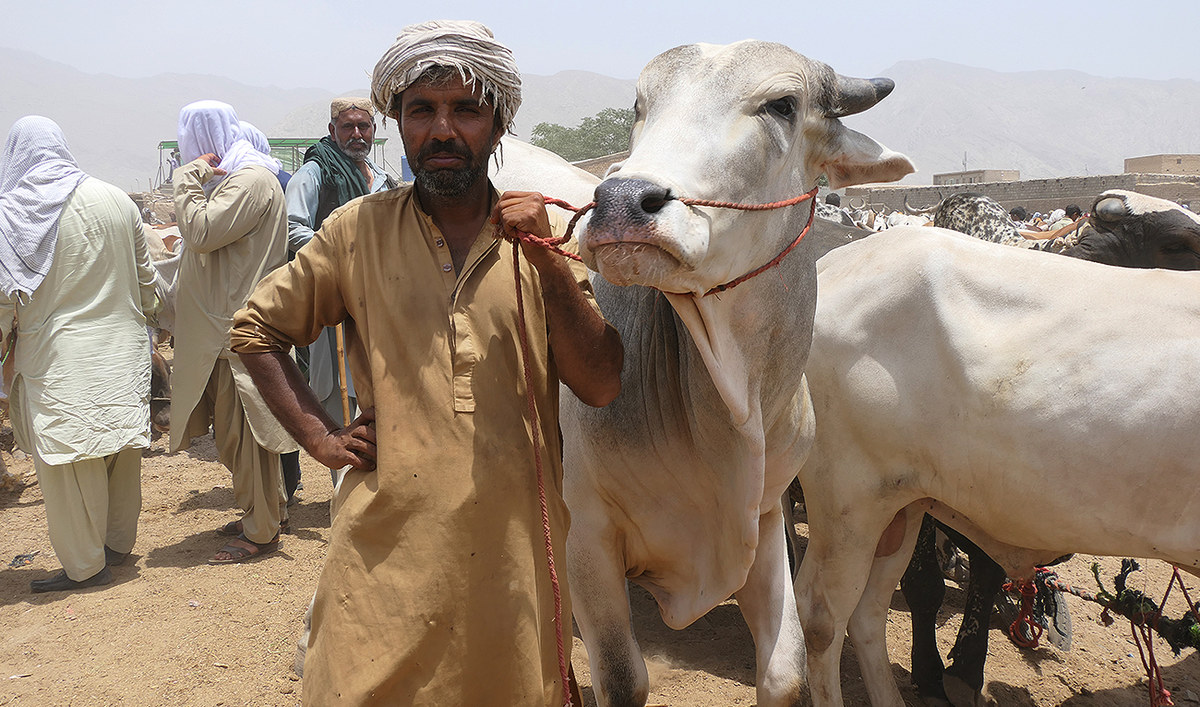
Asadullah, a local cattle vendor poses with his buffalo at the animal market for the Muslim annual festival of Eid Al-Adha or the Festival of Sacrifice, in Quetta on June 25, 2023. (AN Photo)
But customers in the market complained of increased prices and a shortage of desired breeds of animals ahead of Eid Al-Adha, one of the two major annual Islamic festivals, that is marked by Muslims around the world by sacrificing animals to honor Prophet Ibrahim’s (Peace Be Upon Him) sacrifice of his son as an act of obedience to the Almighty.
“The flood damages in Balochistan have directly affected the cattle markets because the prices have soared up to 100 percent,” Yasir Ali, a customer, told Arab News at the cattle market near Quetta’s Eastern Bypass.
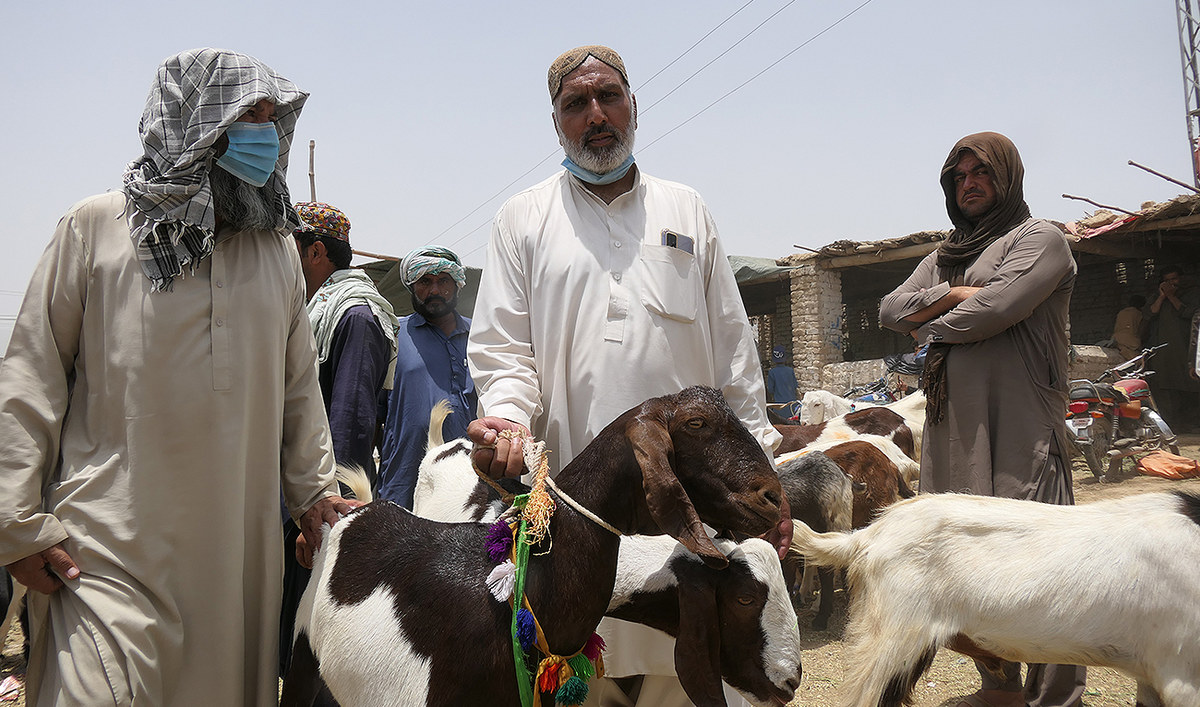
Yasir Ali, a local customer stands with his sacrificial animals at the animal market for the Muslim annual festival of Eid Al-Adha or the Festival of Sacrifice, in Quetta on June 25, 2023. (AN Photo)
“This cattle market in Quetta is flooded with sacrificial animals, but we have seen a large number of mountainous goats which is an Afghan breed rather than the famous local breed which is more in demand in Pakistan during Eid Al-Adha festival.”
Muhammad Aslam, a 35-year-old animal trader, said he had brought 14 goats to the market to sell ahead of Eid, but he had managed to sell only two of them in the last six days. The 2022 deluges badly affected livestock vendors in Balochistan, he added.
“Last year, I had brought 50 goats to Quetta’s central cattle market,” Aslam, who lost 15 goats, three buffalos and a cow to last year’s deluges, told Arab News on Sunday.
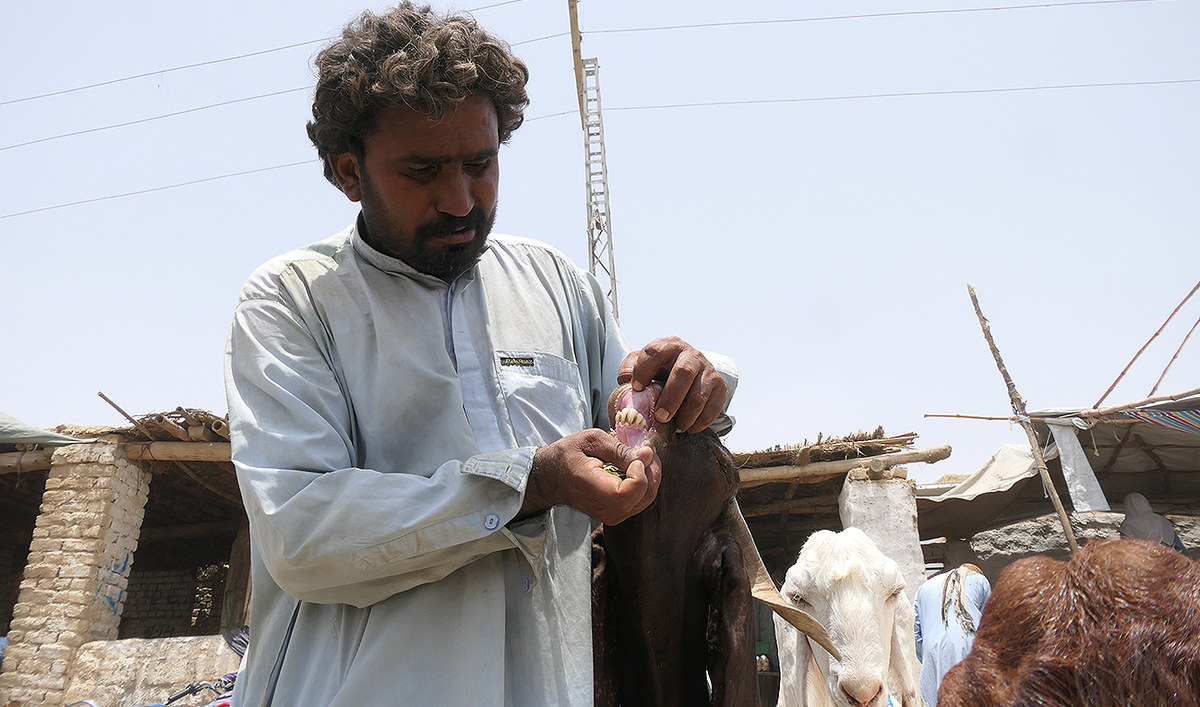
Muhammad Aslam shows the teeth of one of the sacrificial animals at the animal market for the Muslim annual festival of Eid Al-Adha or the Festival of Sacrifice, in Quetta on June 25, 2023. (AN Photo)
The floods left hundreds of thousands of people in Balochistan, particularly in the Nasirabad division, homeless and with no livelihood. These people have still been living in tents and have no shaded place to keep the animals that survived the deluges.
Khadim Hussain, 45, who used to sell his own livestock during Eid, has this season borrowed eight goats and brought them to Quetta from his village in Sibi district.
“I have lost my home, 20 goats and one buffalo to the floods. We have come to sell the animals and pay the debt, keeping the profit for our Eid,” Khadim told Arab News.
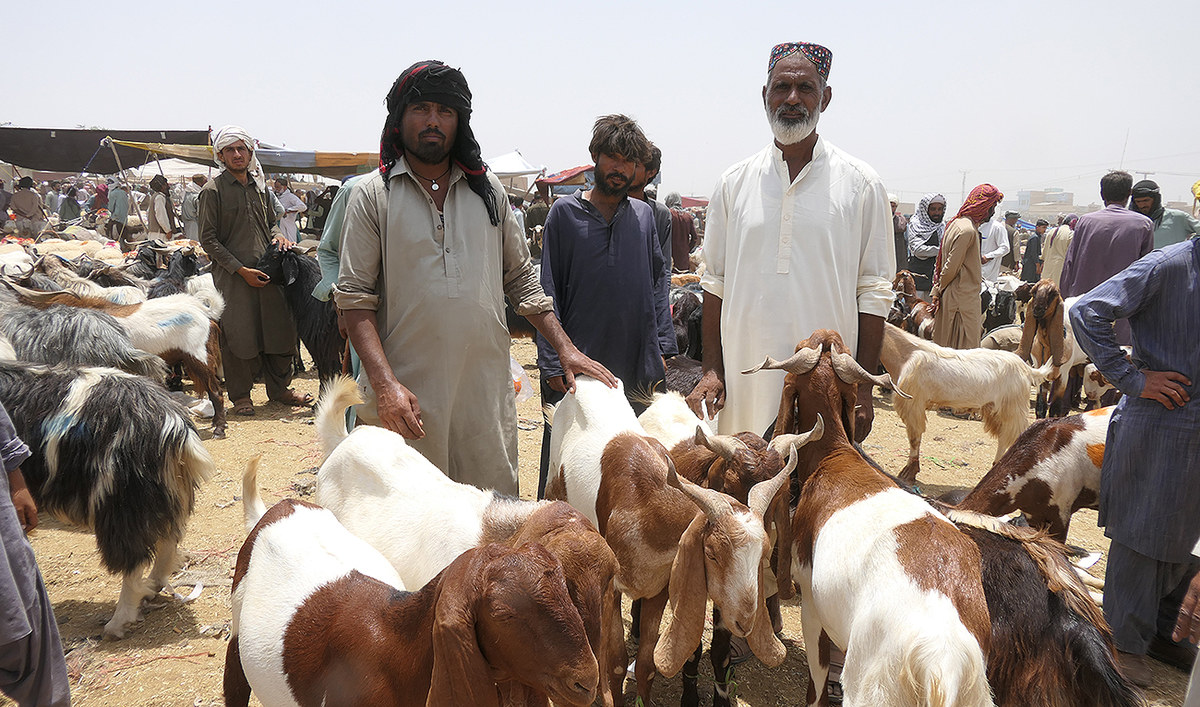
Khadim Hussain (right) stands with his sacrificial animals at the animal market for the Muslim annual festival of Eid Al-Adha or the Festival of Sacrifice, in Quetta on June 25, 2023. (AN Photo)
Pakistan has once again been witnessing pre-monsoon rains in Punjab, Khyber Pakhtunkhwa, Sindh and Balochistan provinces for the last one week. The Pakistan Meteorological Office has predicted further downpours in the country as more currents from the Arabian Sea continue to penetrate parts of the country.
Pakistan’s Climate Change Minister Sherry Rehman has urged citizens to take precautionary measures as the South Asian country is expected to witness pre-monsoon rains and thunderstorms for the next five days. The three-day Eid Al-Adha festival will begin on June 28.
“In case of the heavy rains, there is a fear of urban flooding in urban areas while floods and landslides in mountainous areas,” she said. “All concerned and local institutions have been instructed to be alert and tourists to be cautious.”
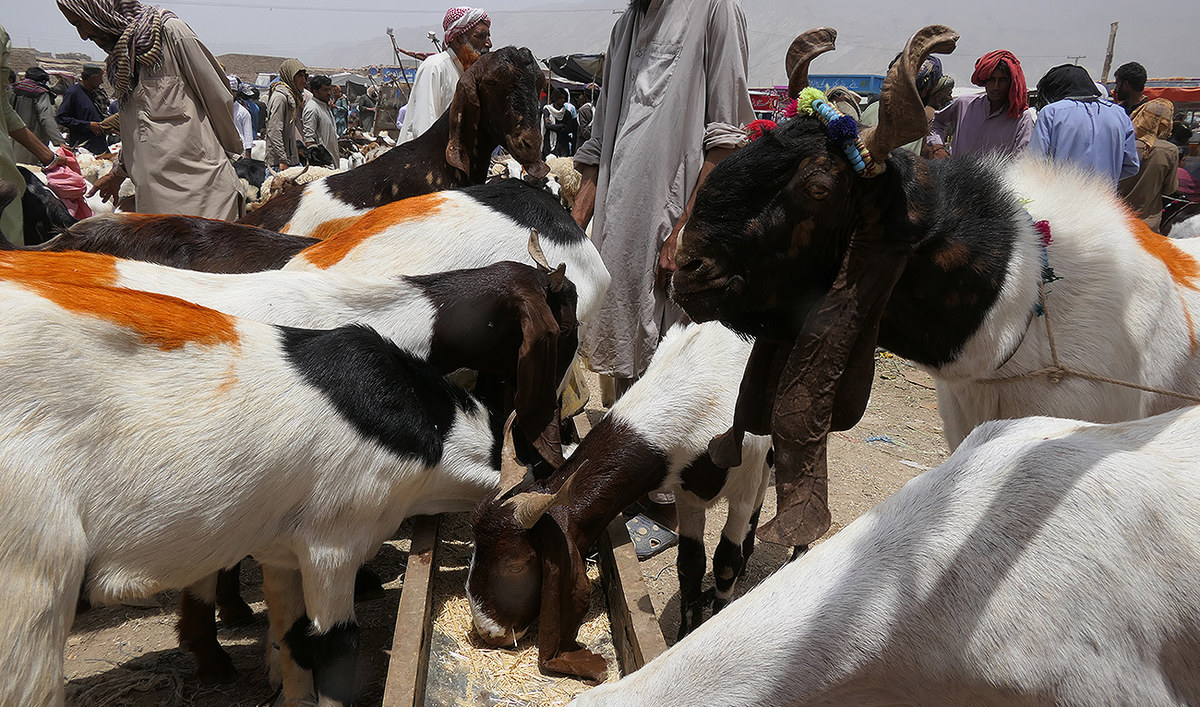
Goats are seen at an animal market ahead of the Muslim festival Eid Al-Adha in Quetta on June 25, 2023. (AN Photo)


