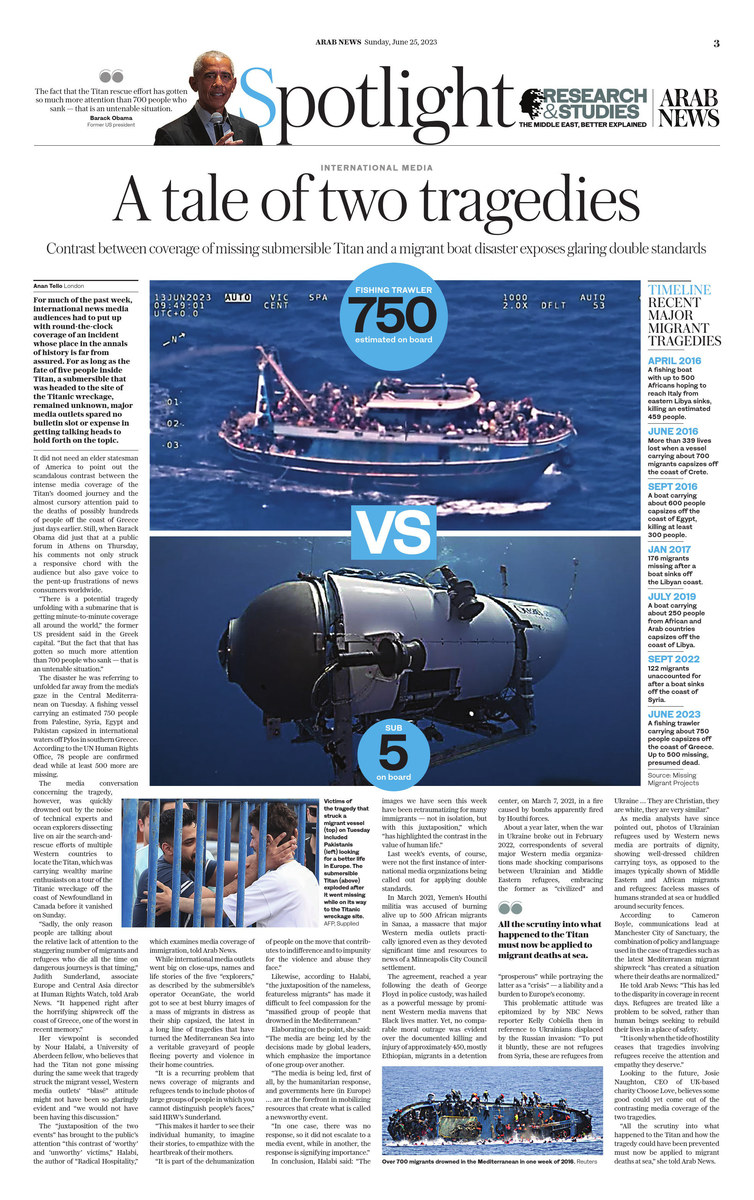

LONDON: For much of the past week, international news media audiences had to put up with round-the-clock coverage of an incident whose place in the annals of history is far from assured. For as long as the fate of five people inside Titan, a submersible that was headed to the site of the Titanic shipwreck, remained unknown, major media outlets spared no bulletin slot or expense in getting talking heads to hold forth on the topic.
It did not need an elder statesman of America to point out the scandalous contrast between the intense media coverage of the Titan’s doomed journey and the almost cursory attention paid to the deaths of possibly hundreds of people off the coast of Greece just days earlier. Still, when Barack Obama did just that at a public forum in Athens on Thursday, his comments not only struck a responsive chord with the audience but also gave voice to the pent-up frustrations of news consumers worldwide.
“There is a potential tragedy unfolding with a submarine that is getting minute-to-minute coverage all around the world, and it is understandable because, obviously, we all want and pray that those folks are rescued,” the former US president said in the Greek capital, where he was attending a conference on child and adolescent mental health initiatives.
“But the fact that that has gotten so much more attention than 700 people who sank — that is an untenable situation.”
The disaster he was referring to — described as “one of the worst in recent memory” — unfolded far away from the media’s gaze in the Central Mediterranean on Tuesday. A fishing vessel carrying an estimated 750 people from Palestine, Syria, Egypt and Pakistan capsized in international waters off Pylos in southern Greece. According to the UN Human Rights Office, 78 people are confirmed dead while at least 500 more are missing.
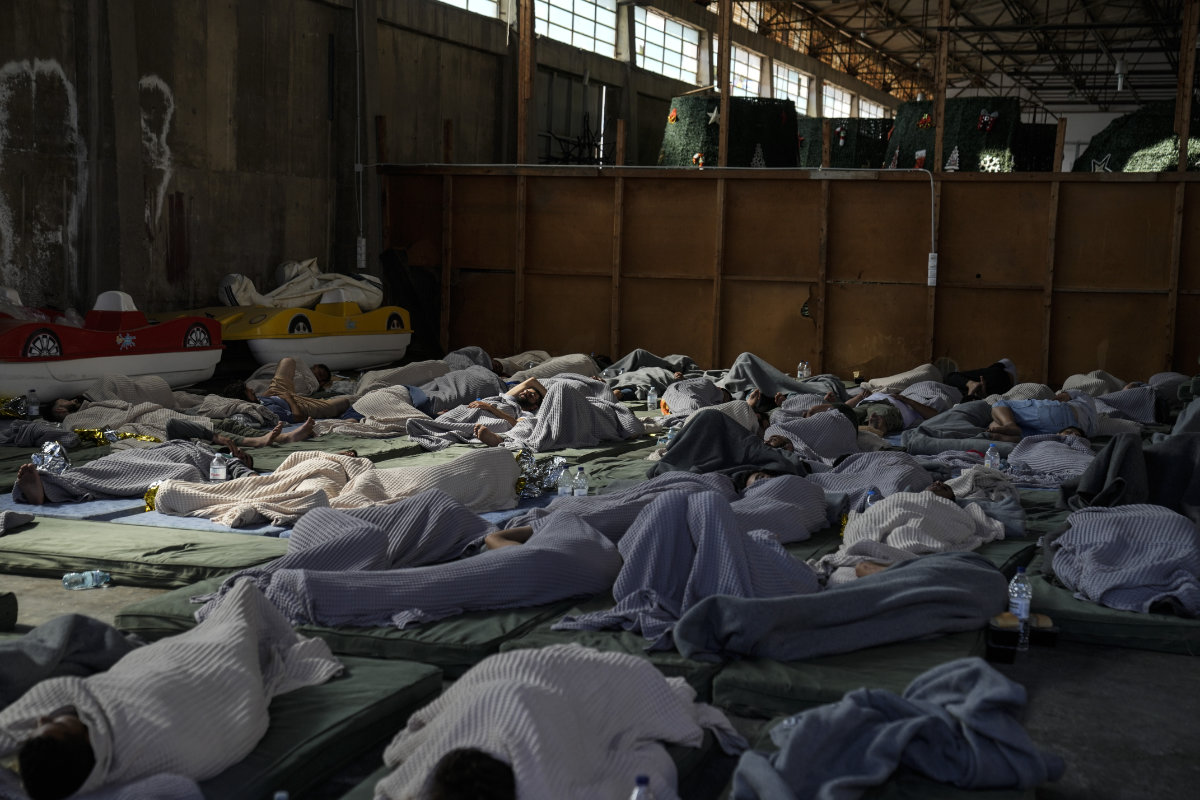
Survivors of a shipwreck sleep at a warehouse at the port in Kalamata town, about 240 kilometers southwest of Athens, on June 14, 2023. (AP / File)
The media conversation concerning the tragedy, however, was quickly drowned out by the noise of technical experts and ocean explorers dissecting live on air the search-and-rescue efforts of multiple Western countries to locate the Titan, which was carrying wealthy marine enthusiasts on a tour of the Titanic wreckage off the coast of Newfoundland in Canada before it vanished on Sunday.
“Sadly, the only reason people are talking about the relative lack of attention to the staggering number of migrants and refugees who die all the time on dangerous journeys is that timing,” Judith Sunderland, associate Europe and Central Asia director at Human Rights Watch, told Arab News. “It happened right after the horrifying shipwreck off the coast of Greece, one of the worst in recent memory.”
Her viewpoint is seconded by Nour Halabi, a University of Aberdeen fellow, who believes that had the Titan not gone missing during the same week that tragedy struck the migrant vessel, Western media outlets’ “blasé” attitude might not have been so glaringly evident and “we would not have been having this discussion.”
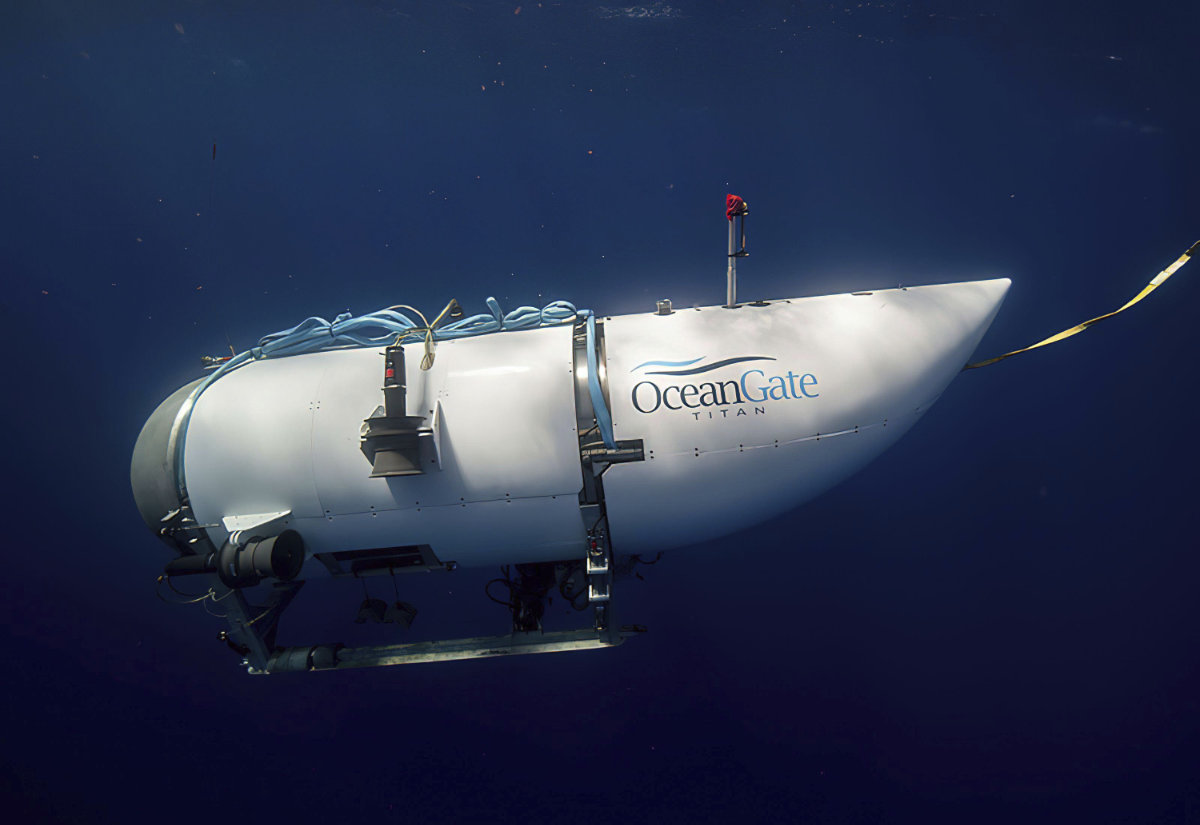
The submersible vessel Titan vanished last week with 5 wealthy marine enthusiasts touring the Titanic wreckage off the coast of Newfoundland in Canada. (OceanGate Expeditions via AP, File)
The “juxtaposition of the two events” has brought to the public’s attention “this contrast of ‘worthy’ and ‘unworthy’ victims,” Halabi, the author of “Radical Hospitality,” which examines media coverage of immigration, told Arab News.
While international media outlets went big on close-ups, names and life stories of the five “explorers,” as described by the submersible’s operator OceanGate, the world got to see at best blurry images of a mass of migrants in distress as their ship capsized, the latest in a long line of tragedies that have turned the Mediterranean Sea into a veritable graveyard of people fleeing poverty and violence in their home countries.
Opinion
This section contains relevant reference points, placed in (Opinion field)
“It is a recurring problem that news coverage of migrants and refugees tends to include photos of large groups of people in which you cannot distinguish people’s faces,” said HRW’s Sunderland.
“This makes it harder to see their individual humanity, to imagine their stories, to empathize with the heartbreak of their mothers.
“It is part of the dehumanization of people on the move that contributes to indifference and to impunity for the violence and abuse they face.”
INNUMBERS
Recent major migrant boat tragedies
April 9, 2016: A fishing boat with up to 500 Africans hoping to reach Italy from eastern Libya sinks, killing an estimated 459 people.
June 3, 2016: More than 339 lives lost when a vessel carrying about 700 migrants capsizes off the coast of Crete.
Sept. 21, 2016: A boat carrying about 600 people capsizes off the coast of Egypt, killing at least 300 people.
Jan. 14, 2017: 176 migrants missing after a boat sinks off the Libyan coast.
July 25, 2019: A boat carrying about 250 people from African and Arab countries capsizes off the coast of Libya.
Sept. 22, 2022: 122 migrants unaccounted for after a boat sinks off the coast of Syria.
June 14, 2023: A fishing trawler carrying about 750 people capsizes off the coast of Greece. Up to 500 missing, presumed dead.
Source: Missing Migrant Projects
Likewise, according to Halabi, “the juxtaposition of the nameless, featureless migrants” has made it difficult to feel compassion for the “massified group of people that drowned in the Mediterranean.”
Elaborating on the point, she said: “The media are being led by the decisions made by global leaders, which emphasize the importance of one group over another.
“The media is being led, first of all, by the humanitarian response, and governments here (in Europe) … are at the forefront in mobilizing resources that create what is called a newsworthy event.
“In one case, there was no response, so it did not escalate to a media event, while in another, the response is signifying importance.”
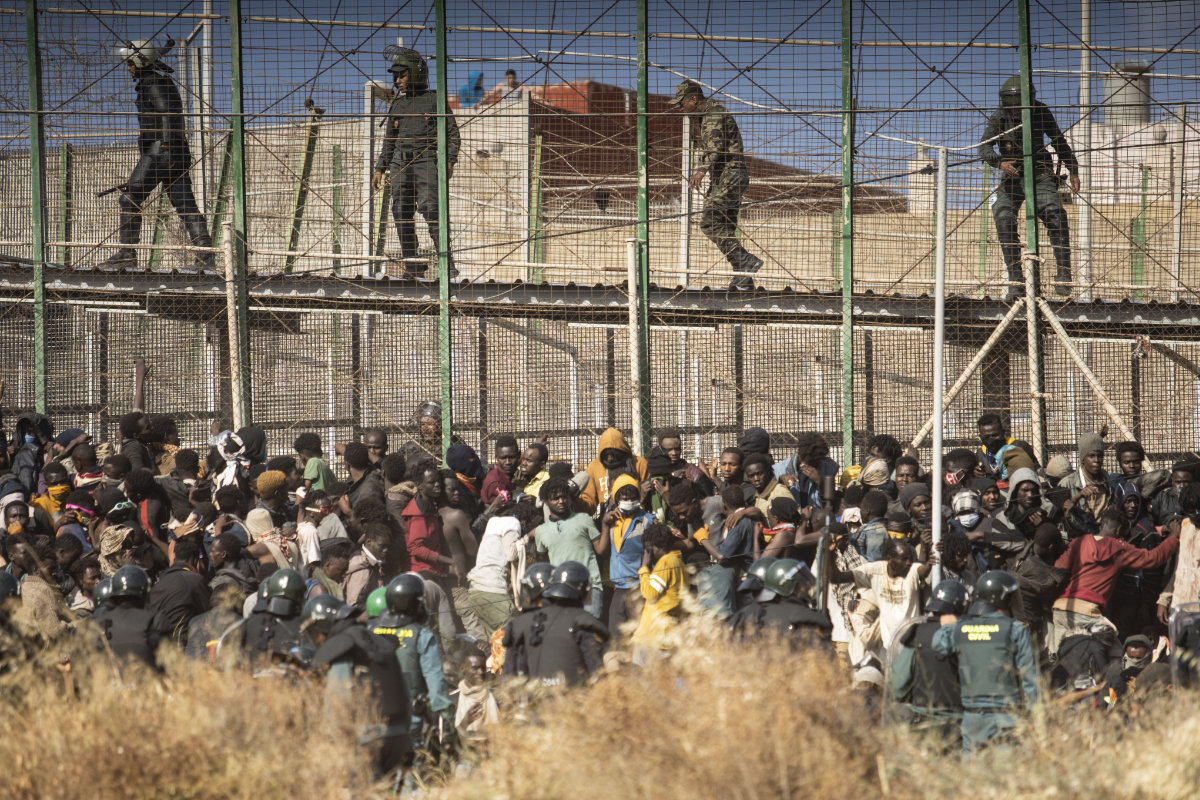
On June 24, 2022, 37 migrants died and more than 70 missing in battles with police as they tried to cross the border from Morocco into the Spanish exclave of Melilla. (AP Photo/File)
In conclusion, Halabi said: “The images we have seen this week have been retraumatizing for many immigrants — not in isolation, but with this juxtaposition,” which “has highlighted the contrast in the value of human life.”
Last week’s events, of course, were not the first instance of international media organizations being called out for applying double standards.
In March 2021, Yemen’s Houthi militia was accused of burning alive up to 500 African migrants in Sanaa, a massacre that major Western media outlets practically ignored even as they devoted significant time and resources to news of a US Minneapolis City Council settlement, the largest pre-trial civil rights settlement ever in America.
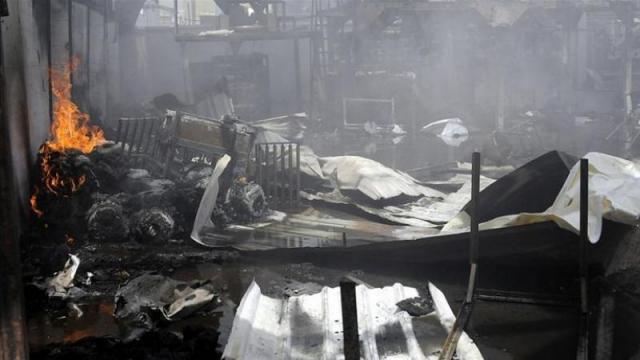
In March 2021, Yemen’s Houthi militia was accused of burning alive up to 500 African migrants in Sanaa, a massacre that major Western media outlets practically ignored. (Supplied)
The agreement, reached a year following the death of George Floyd, an African American man, in police custody, was hailed as a powerful message by prominent Western media mavens that Black lives matter. Yet, no comparable moral outrage was evident over the documented killing and injury of approximately 450, mostly Ethiopian, migrants in a detention center, on March 7, 2021, in a fire caused by bombs apparently fired by Houthi forces.
About a year later, when the war in Ukraine broke out in February 2022, correspondents of several major Western media organizations made shocking comparisons between Ukrainian and Middle Eastern refugees, embracing the former as “civilized” and “prosperous” while portraying the latter as a “crisis” — a liability and a burden to Europe’s economy.
This problematic attitude was epitomized by the remarks made on TV by NBC News reporter Kelly Cobiella then in reference to Ukrainians displaced by the Russian invasion: “To put it bluntly, these are not refugees from Syria, these are refugees from Ukraine … They are Christian, they are white, they are very similar.”
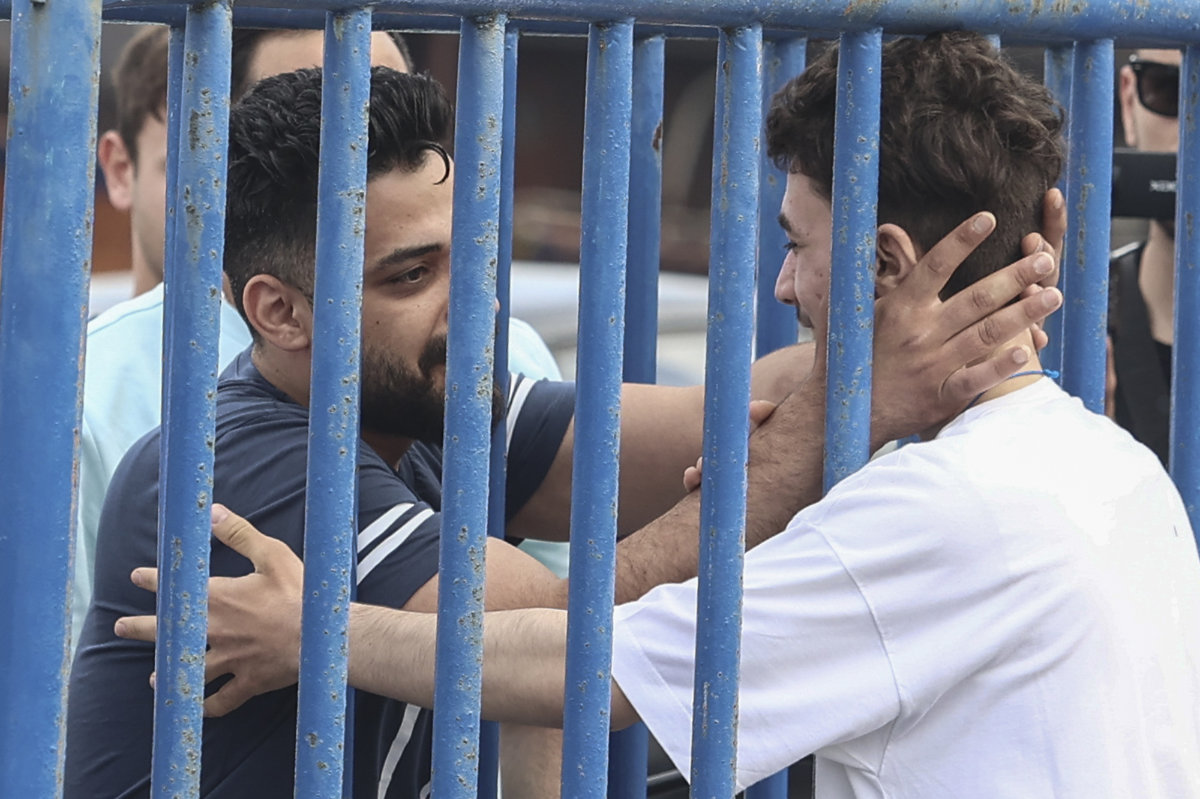
Syrian survivor Fedi, 18, right, one of over a hundred people who were rescued from the Aegean Sea after their fishing boat crammed with migrants sank, reacts as he reunites with his brother Mohammad, who came from Italy to meet him, at the port of Kalamata, Greece, June 16, 2023. (InTime News via AP, File)
As media analysts have since pointed out, photos of Ukrainian refugees used by Western news media are portraits of dignity, showing well-dressed children carrying toys, as opposed to the images typically shown of Middle Eastern and African migrants and refugees: faceless masses of humans stranded at sea or huddled around security fences.
In yet another example of plain bigotry during the early stages of the Ukraine war, CBS reporter Charlie D’Agata said that Ukraine “is not a place, with all due respect, like Iraq or Afghanistan, that has seen conflict raging for decades. This is a relatively civilized, relatively European — I have to choose those words carefully, too — city, one where you wouldn’t expect that, or hope that it’s going to happen.”
The remark suggested that, unlike Iraq and Afghanistan, Ukraine did not deserve to be invaded because things like war and suffering were the province of non-European countries. Whether the outcry sparked by the numerous controversial Ukraine humanitarian crisis-related comments has led to any introspection by international media outlets’ management is open to question.
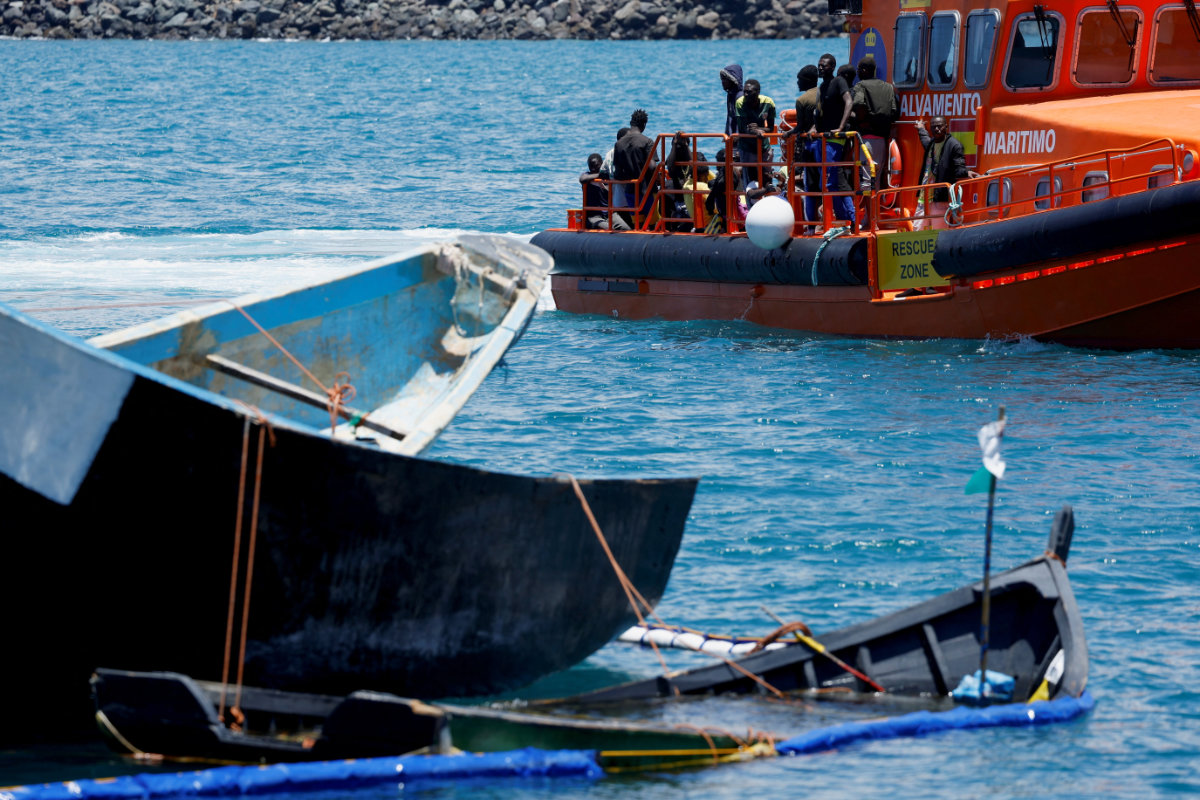
Migrants wait to disembark from a Spanish coast guard vessel, in the port of Arguineguin, in the island of Gran Canaria, Spain, on June 22, 2023. (REUTERS)
According to Cameron Boyle, communications lead at Manchester City of Sanctuary, the combination of policy and language used in the case of tragedies such as the latest Mediterranean migrant shipwreck “has created a situation where their deaths are normalized.”
He told Arab News: “This has led to the disparity in coverage in recent days. Refugees are treated like a problem to be solved, rather than human beings seeking to rebuild their lives in a place of safety.
“It is only when the tide of hostility ceases that tragedies involving refugees receive the attention and empathy they deserve.”
Looking to the future, Josie Naughton, CEO of UK-based charity Choose Love, believes some good could yet come out of the contrasting media coverage of the two tragedies.
“All the scrutiny into what happened to the Titan and how the tragedy could have been prevented must now be applied to migrant deaths at sea,” she told Arab News.