


LONDON: The Egyptian government has enacted a law banning several dog breeds in the country, in a move that has caught dog owners off guard and sparked controversy.
The decision follows a law announced in late May that regulates the ownership of dangerous animals including several dog breeds categorized as hazardous alongside wild animals, venomous insects and reptiles.
Only 10 select breeds are allowed without a “safety” inspection: the Cocker Spaniel, Labrador, poodle, Malinois, Pomeranian, Jack Russell, Great Dane, white shepherd, Maltese dog, and Samoyed.
Tough regulations will be imposed on breeds like the pit bull, Rottweiler, German shepherd, boxer, husky, Caucasian shepherd, and bullmastiff breeds, which must undergo a rigorous government safety licensing process and face confiscation by public veterinarians if deemed unsafe.
Pet owners are required to pay a fee of up to 50,000 Egyptian pounds ($1,620) to Egypt’s General Organization for Veterinary Services as part of the registration process.
Mona Khalil, chair of the Egyptian Society for Mercy to Animals, likens the new law to “prohibiting people from driving cars because of a car accident.”
Khalil expressed concern about the lack of consultation with animal advocacy organizations and the seemingly arbitrary list of banned breeds.
She highlighted discrepancies in the list, such as certain breeds being both prohibited and permitted under different names, arguing that this demonstrates a misunderstanding of dog breeds and their actual aggression levels by the law’s drafters.
The decision follows a tragic incident in February involving a famous TV chef’s pit bull, which killed a person in a residential complex.
The event sent shockwaves throughout the country, leading to public calls for stricter regulations to prevent future tragedies.
Local media reports reveal that the dog had previously attacked another neighbor, prompting a nationwide discussion on whether the owner could have done more to prevent the tragedy.
Public opinion is divided, with some internet users advocating for tougher regulations on dogs and others calling for better regulations on how owners treat their dogs.
Dog attacks have been on the rise, with 11 people hospitalized for treatment after being mauled by a dog in 2021.
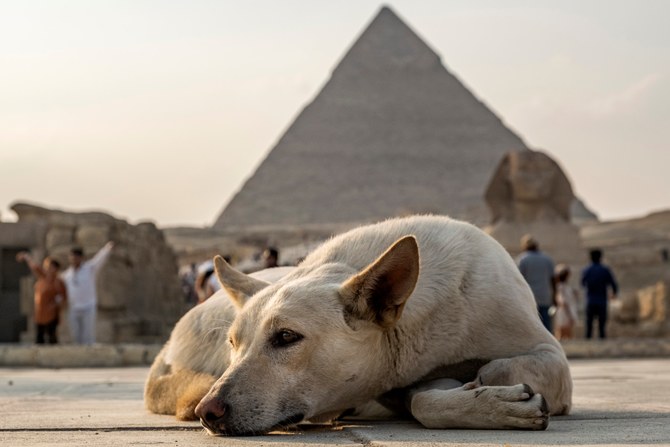
Egypt also grapples with thousands of stray dogs, many of which have attacked people. In 2019, Egypt’s Health and Population Ministry reported 6,241 cases of people being hospitalized following dog attacks in just four months.
Despite these challenges, dogs continue to grow in popularity as pets in Egypt.


