

Pakistan’s target of 3.5 percent GDP in 2023-24 fiscal year ‘realistic’ — finance minister 

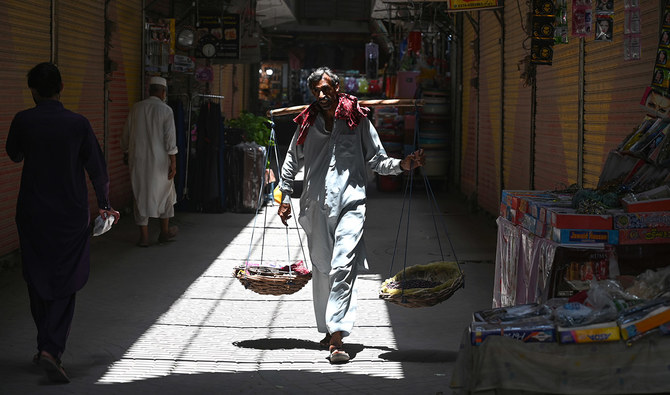
A street vendor selling phalsa fruits looks for customers along a market in Rawalpindi on June 9, 2023. (AFP/File)
Short Url
Updated 10 June 2023
Follow

Pakistan’s target of 3.5 percent GDP in 2023-24 fiscal year ‘realistic’ — finance minister 

  • In year ending this month, Pakistan’s GDP was projected to grow just 0.29 percent, fiscal deficit for the following year projected at 6.54 percent 
  • The budget is being closely watched by the International Monetary Fund as the South Asian country seeks further bailout money 

ISLAMABAD: Pakistan’s finance minister said on Saturday a projection in the government’s budget of 3.5 percent economic growth for the year ending in June 2024 was a “realistic target.” 

The target was “on the lower side,” Ishaq Dar told a press conference in Islamabad, a day after presenting the budget for the fiscal year 2023-24. 

The budget is being closely watched by the International Monetary Fund (IMF) as the South Asian country seeks further bailout money during an economic and balance of payments crisis. 

In the year ending this month, Pakistan’s gross domestic product (GDP) was projected to grow just 0.29 percent. The fiscal deficit for the following fiscal year was projected at 6.54 percent of GDP, according to the budget. 

The country faces a series of economy crises, exacerbated by a stall in bailout funding from the IMF, which analysts said was unlikely to be significantly impressed by the budget. 

In addition to requirements related to the currency and budget, Pakistan is required to secure firm and credible financing commitments to close the $6 billion gap in order to unlock funding under its long-delayed ninth IMF review. The government has gotten commitments of only $4 billion, mainly from Saudi Arabia and the United Arab Emirates. 


Deputy PM Dar in Beijing to co-chair 7th Pakistan–China Strategic Dialogue

Updated 03 January 2026
Follow

Deputy PM Dar in Beijing to co-chair 7th Pakistan–China Strategic Dialogue

  • The foreign ministers’ dialogue is the highest consultative mechanism between Pakistan and China to review bilateral cooperation
  • The two ministers will also announce a series of initiatives, activities to mark 75th anniversary of Pakistan-China diplomatic ties

ISLAMABAD: Pakistani Deputy Prime Minister Ishaq Dar has arrived in Beijing to co-chair the 7th Pakistan–China Foreign Ministers’ Strategic Dialogue, the Pakistani foreign office said on Saturday.

The strategic dialogue is the highest consultative mechanism between Pakistan and China, providing a structured platform to review the entire spectrum of bilateral cooperation as well as regional and international developments of mutual interest.

Dar will co-chair the dialogue with Foreign Minister Wang Yi on Sunday.

“The Dialogue will review the full spectrum of bilateral cooperation, identify new areas of partnership, and further advance the All-Weather Strategic Cooperative Partnership between Pakistan and China,” the Pakistani foreign office said.

Pakistan and China have longstanding strategic, political, economic, defense and cultural relations. Both Islamabad and Beijing maintain close coordination on regional and international issues, frequently supporting each other’s core interests at multilateral forums.

China has also been an important investment partner for Pakistan and has funneled billions of dollars into the country under the China-Pakistan Economic Corridor (CPEC) energy and infrastructure project for over a decade.

During the visit, the two foreign ministers will also announce a series of initiatives and commemorative activities to mark the 75th anniversary of the establishment of diplomatic relations between Pakistan and China in 2026.

“The visit forms an important part of the regular high-level exchanges between the two countries and reflects their shared determination to broaden and deepen the All-Weather Strategic Cooperative Partnership, while reaffirming their mutual commitment to regional peace, stability, and sustainable development,” the Pakistani foreign office said.