Pakistan applauds reopening of Iranian embassy in Saudi Arabia, calls it ‘important development’

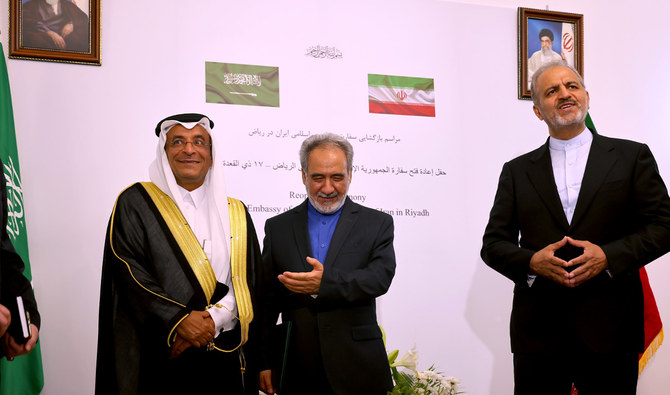
Alireza Bigdeli (R), Iran's Deputy Foreign Minister for Consular, Saudi Ali al-Youssef, Director of Consular Affairs at the Ministry of Foreign Affairs (L) and Charge of consular affairs in the Iranian embassy, Hassan Zarnegar (C), attend the official reopening ceremony of the Iranian embassy in Riyadh, on June 6, 2023. (AFP)
Short Url
Updated 08 June 2023
Follow

Pakistan applauds reopening of Iranian embassy in Saudi Arabia, calls it ‘important development’

  • Iran reopened the diplomatic facility in Riyadh following an agreement brokered by China in March this year
  • Pakistan’s foreign office calls the development a ‘tangible confidence-building measure’ in a volatile region

ISLAMABAD: Pakistan’s foreign office on Thursday welcomed the reopening of Iranian embassy in Saudi Arabia, calling it an “important development” that would positively impact peace and stability in the region.

The administration in Tehran formally reopened its embassy in Riyadh this week after the two Middle Eastern countries decided to restore ties and reopen diplomatic missions following an agreement brokered by the Chinese authorities in March this year.

The Iranian embassy started operating in Saudi Arabia for the first time in seven years on Tuesday.

“The opening of the Iran embassy in Riyadh is a welcome and important development in pursuance of normalization of diplomatic relations between Iran and Saudi Arabia,” foreign office spokesperson Mumtaz Zahra Baloch said in her weekly news briefing.
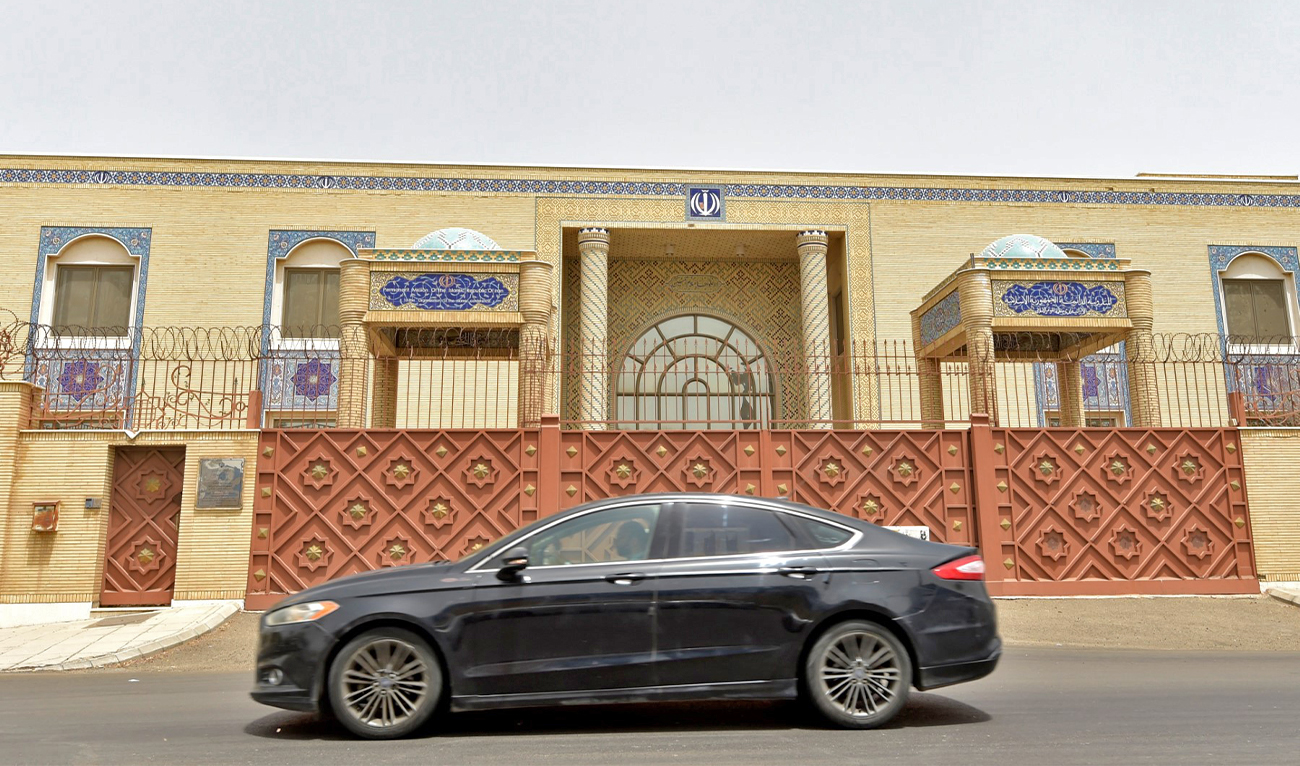


A picture shows the closed Iranian consulate in the Saudi coastal city of Jeddah on April 10, 2023. (AFP)

She described the development as a “tangible confidence-building measure” between two important countries in a volatile region.

“Pakistan has a history of actively supporting diplomatic and peaceful efforts of bridging gaps between our friends and brotherly countries, Iran and Saudi Arabia,” she continued. “It will not only contribute significantly to positive relations between Iran and Saudi Arabia but also have a significant impact on peace and stability in the region.”

It may be recalled that the kingdom decided to downgrade its diplomatic relations with Iran after protesters attacked Saudi diplomatic facilities in Iran in 2016.


Pakistan to invest $1 billion in AI by 2030 in push to modernize economy

Updated 5 sec ago
Follow

Pakistan to invest $1 billion in AI by 2030 in push to modernize economy

  • PM says government will introduce AI curriculum in schools nationwide
  • The transformation plan will help train 1 million non-IT professionals in AI

ISLAMABAD: Prime Minister Shehbaz Sharif on Monday announced that Pakistan would invest $1 billion in artificial intelligence (AI) by 2030, in a major step to modernize the South Asian nation’s digital economy.

Pakistan, a country of 240 million people, seeks to become a key participant in the global AI economy, amid growing interest from governments in the Global South to harness AI for productivity, skills development and innovation.

The South Asian nation has been actively developing its AI landscape and approved its National AI Policy in July last year, which was followed by the launch of the country’s sovereign AI cloud and a startup fund.

Speaking at the launch of the Indus AI Week 2026 in Islamabad, Sharif unveiled a multi-pronged roadmap intended to transform Pakistan from a provider of IT technicians into a global hub for AI expertise.

“I am pleased to announce that the Government of Pakistan is committed to invest $1 billion in AI by 2030, which will go a long way in building AI ecosystem in our country,” he told policymakers and international tech experts at Islamabad’s Jinnah Convention Center.

Sharif detailed several flagship initiatives to support this transformation, including a sweeping educational reform, at the event organized by the Information Technology (IT) Ministry, which will be running until Feb. 15, featuring strategic dialogues on sovereign AI and technical showcases.

“AI curriculum will be introduced not only in all federally controlled or run schools, but also in all schools of AJK, that is Azad Jammu and Kashmir, and Gilgit-Baltistan, as well as remote parts of Balochistan,” he said.

The government will provide 1,000 fully funded PhD scholarships in AI to postgraduates to bolster high-level research, according to the PM. It plans to launch a nationwide program to train 1 million “non-IT professionals in AI skills” to enhance productivity and improve livelihoods across traditional sectors of the economy.

Sharif emphasized that the focus would remain on high-impact sectors, including agriculture, mines and minerals, and the empowerment of Pakistan’s youth which makes up 60 percent of its 240 million population.

“We will, God willing, bring in programs to transform them from IT technicians to AI experts, which will lead to our agriculture production in terms of its yield, its quality, its efficiency, like never before,” he said.

Drawing parallels to previous digitization efforts in the Punjab province, such as land record digitization and the establishment of the first IT university in Lahore, Sharif framed the AI push as a “gamechanger” for national governance. He noted the Federal Board of Revenue is already undergoing a digital overhaul to curb smuggling and tax evasion.

“Pakistan is absolutely ready to accept the challenge and walk with our global partners absolutely with great commitment and dedication,” he said. “Our commitment is solid, unwavering. We will never look back.”