


RIYADH: Saudi Arabia’s King Salman has issued on Wednesday a royal decree to establish a new institute for the Global Cybersecurity Forum (GCF) in Riyadh, state news agency SPA reported.
The institute aims to harness the potential of cyberspace and support efforts to boost cyber safety on a global scale.
“The GCF Institute will tackle the most challenging cybersecurity issues facing governments, businesses, and individuals. It will be a catalyst for the exchange of ideas, driving thought leadership and developing research to inform policy solutions and action,” added SPA.
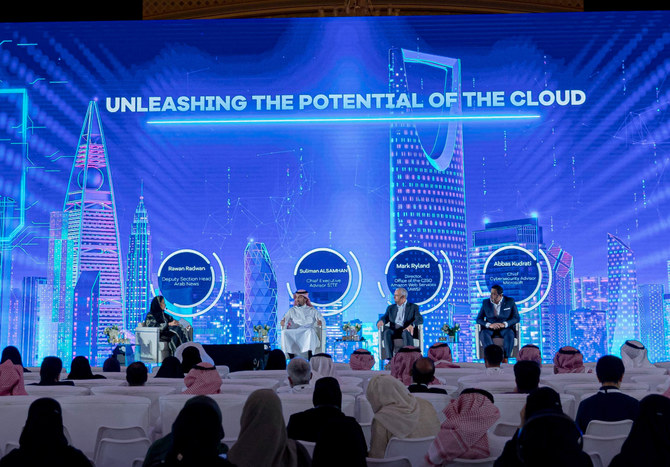
Through the institute, the annual GCF will convene experts and decisionmakers from around the world to meet and discuss protecting the most vulnerable in cyberspace, while maximizing its benefits for everyone.
The establishment of the institute came after “the dialogue among key global cybersecurity stakeholders has underscored the need for a new entity that can provide an action-oriented platform, designed to develop solutions to the most pressing issues in cyberspace,” said SPA.
Welcoming the move, Mohammed Khurram Khan, a professor of cybersecurity at the King Saud University in Riyadh, told Arab News: “This great initiative is an indicator that the Saudi government is committed and determined to make the Kingdom a global leader in cybersecurity. It would pave the way to promote global cybersecurity cooperation with other nations around the world.
He added: “This initiative would provide a platform for the global community to exchange knowledge, expertise and experience to address the most pressing cybersecurity challenges faced by individuals and organizations.”
Khan said that since Saudi Arabia has a strong footprint and expertise in cybersecurity, the institution will devote its work and effort to policy, technology and practical perspectives.
According to the professor, Saudi Arabia has paid great attention to establishing national institutions for capacity and capability building, and some recent establishments, including the National Cybersecurity Center, the Saudi Federation for Cybersecurity, Programming, and Drones, and the National Cybersecurity Authority, have helped the Kingdom become a top country in the global cybersecurity index of the International Telecommunication Union.
Headquartered in Riyadh, the GCF Institute will be guided by an international board of trustees, tasked with the responsibility of safeguarding the institution’s sustainability and independence.
In addition, the institute will have an advisory council, composed of international experts carefully drawn from the highest echelons of government, academia, think tanks and the private sector.


