

Saudi Green Initiative celebrates World Environment Day

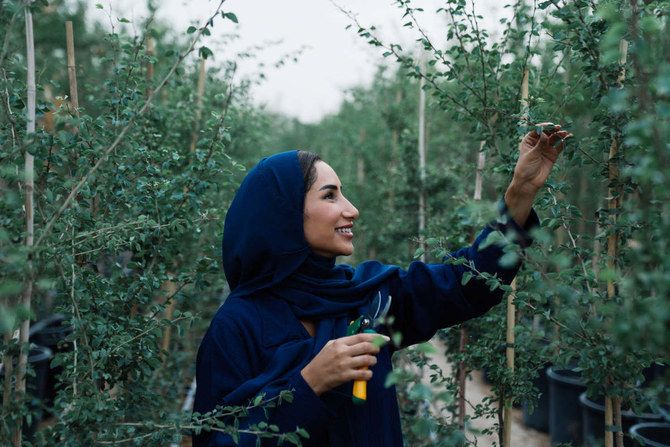
Saudi Arabia plans to eliminate 4.1 million tons of carbon dioxide emissions annually by 2035 and implement an effective waste management system. (Supplied)
Short Url
Updated 05 June 2023
Follow

Saudi Green Initiative celebrates World Environment Day

  • The ultimate goal is to remove 4.1 million tons of carbon dioxide emissions annually and build an effective waste management model to be implemented across the Kingdom by 2035

RIYADH: The Saudi Green Initiative is celebrating World Environment Day on June 5 through the launch of programs to reduce plastic waste and clean the oceans.

Designated by the UN, the theme of World Environment Day 2023, “#BeatPlasticPollution,” will focus on ways to combat the pollution generated by plastic waste.

Approximately 400 million tons of plastic waste are produced annually, while only 9 percent of it is recycled worldwide.

In efforts to improve waste management, the Saudi Basic Industries Corp. has joined the Coalition to Eliminate Plastic Waste with the aim of cleaning plastic from the oceans.


Saudi Arabia plans to eliminate 4.1 million tons of carbon dioxide emissions annually by 2035 and implement an effective waste management system. (Supplied)

SGI is collaborating with the National Center for Waste Management to develop a comprehensive national plan for waste management in the Kingdom to strengthen its leadership in circular economy practices. The project is scheduled to be completed in 2025.

Also in cooperation with the National Center for Waste Management, the Saudi Investment Recycling Co. is leading a waste management initiative in the city of Riyadh that will divert 94 percent of the city’s waste from landfills and convert over 1.3 million tons of biodegradable waste into agricultural fertilizers.

The ultimate goal is to remove 4.1 million tons of carbon dioxide emissions annually and build an effective waste management model to be implemented across the Kingdom by 2035.

Since the launch of SGI in 2021, 77 individual programs representing an investment of more than $186 billion in the green economy are already in progress. The programs have three tangible objectives: to reduce emissions, increase vegetation, and protect local biodiversity and landscapes.

During June, SGI will implement an ongoing campaign to raise awareness about environmental conservation efforts in the Kingdom.

For more information about the ongoing programs under the SGI umbrella to protect land and marine areas and enhance biodiversity in Saudi Arabia, please visit: https://www.greeninitiatives.gov.sa/ar-sa/sgi-initiatives


Japanese researchers hope to restore coral from Saudi-made structures

Updated 05 January 2026
Follow

Japanese researchers hope to restore coral from Saudi-made structures

  • Coral skeletons made for Saudi Pavilion at Japan expo last year
  • Results of Japanese study to be revealed at Riyadh Expo 2030

TOKYO: Japanese universities are seeking to restore coral reefs and marine ecosystems after receiving artificial structures that Saudi Arabia made and showcased at last year’s Osaka-Kansai Expo.

The coral skeletons were donated to the University of the Ryukyus in Okinawa and Kansai University in Osaka Prefecture, Kyodo News reported at the weekend.

The structures are made from calcium carbonate, a material on which corals are believed to grow more easily compared to artificial alternatives such as concrete or metal.

The skeletal structures were created using 3-D printers, with one piece produced a day during the expo, and displayed across an entire wall in the Saudi Arabia Pavilion, which had an area focusing on sustainable marine environments.

Coral reefs serve as habitats for much marine life, but over 40 percent of the world’s 892 species face possible extinction, according to the International Union for Conservation of Nature.

The University of the Ryukyus, which received about 150 of the artificial coral skeletons, will place them in waters off the eastern coast of Okinawa’s main island and then examine their impact on the ecosystem.

Kansai University has placed theirs in the sea around Kagoshima Prefecture’s Yoron Island to observe their growth after transplanting coral polyps onto the structures.

The results of the research are expected to be revealed at the Riyadh Expo in 2030.

“I had never imagined that Japan and Saudi Arabia would cooperate on coral research,” said Masato Ueda, a professor specializing in regenerative medicine at Kansai University.

Ueda said he wants to demonstrate to children that “humanity is attempting to restore the environment.”