

Saudi Arabia to host 10th session of Arab-Chinese Business Conference 

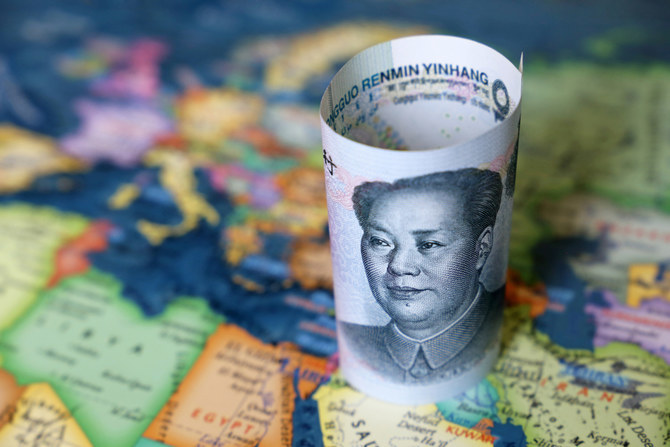
The 10th session of the Arab-Chinese Business Conference will take place in RIyadh. (Shutterstock)
Short Url
Updated 29 May 2023
Follow

Saudi Arabia to host 10th session of Arab-Chinese Business Conference 

  • Expected to be the largest Arab-Chinese gathering for business and investment, with over 2,000 participants

RIYADH: Saudi Arabia will host the 10th session of the Arab-Chinese Business Conference and the eighth Investment Symposium from June 11-12 in Riyadh, the Saudi Press Agency has reported.

“Collaborating for Prosperity” aims to boost cooperation in the areas of the economy, trade, and investment to achieve solutions of mutual interest to Arab nations and China through strategic collaboration.

It is organized by the Kingdom’s Ministry of Investment and the Ministry of Foreign Affairs in partnership with the Arab League’s secretary-general, the Chinese Council for the Promotion of International Trade, and a number of government agencies.

The conference is expected to be the largest Arab-Chinese gathering for business and investment, with more than 2,000 participants, including high-level government representatives, senior officials, CEOs, investors, and entrepreneurs.

Saudi Investment Minister Khalid Al-Falih said that trade and cultural ties between Arab countries and China extended over 2,000 years, and that the conference reflected that historic relationship.

He added that Saudi-Chinese relations had developed, especially following King Salman’s visit to China in 2017 and the two historic visits by Crown Prince Mohammed bin Salman to Beijing in 2016 and 2019.

Trade in 2022 between the Arab countries and China reached SR1.6 trillion ($430 billion), a 31 percent increase on the previous year.

Saudi Arabia led the way in that, with trade between the countries around SR400 billion ($106 billion), a 30 percent increase over 2021.

The conference’s agenda will include many dialogue sessions and bilateral meetings on the development of Arab-Chinese relations; prospects for investment and financing China’s Belt and Road Initiative; review investment opportunities in a variety of economic sectors; and mobilizing efforts to achieve sustainable development in various Arab countries and China.

The conference will also focus on promising economic sectors, most notably manufacturing industries; the digital economy and artificial intelligence; renewable energy; agriculture and food security; construction and real estate activities; mining; tourism and entertainment; infrastructure; logistics; and entrepreneurship and innovation.


Japanese researchers hope to restore coral from Saudi-made structures

Updated 05 January 2026
Follow

Japanese researchers hope to restore coral from Saudi-made structures

  • Coral skeletons made for Saudi Pavilion at Japan expo last year
  • Results of Japanese study to be revealed at Riyadh Expo 2030

TOKYO: Japanese universities are seeking to restore coral reefs and marine ecosystems after receiving artificial structures that Saudi Arabia made and showcased at last year’s Osaka-Kansai Expo.

The coral skeletons were donated to the University of the Ryukyus in Okinawa and Kansai University in Osaka Prefecture, Kyodo News reported at the weekend.

The structures are made from calcium carbonate, a material on which corals are believed to grow more easily compared to artificial alternatives such as concrete or metal.

The skeletal structures were created using 3-D printers, with one piece produced a day during the expo, and displayed across an entire wall in the Saudi Arabia Pavilion, which had an area focusing on sustainable marine environments.

Coral reefs serve as habitats for much marine life, but over 40 percent of the world’s 892 species face possible extinction, according to the International Union for Conservation of Nature.

The University of the Ryukyus, which received about 150 of the artificial coral skeletons, will place them in waters off the eastern coast of Okinawa’s main island and then examine their impact on the ecosystem.

Kansai University has placed theirs in the sea around Kagoshima Prefecture’s Yoron Island to observe their growth after transplanting coral polyps onto the structures.

The results of the research are expected to be revealed at the Riyadh Expo in 2030.

“I had never imagined that Japan and Saudi Arabia would cooperate on coral research,” said Masato Ueda, a professor specializing in regenerative medicine at Kansai University.

Ueda said he wants to demonstrate to children that “humanity is attempting to restore the environment.”