Saudi Arabia to attract huge investments as NCP inks deal with top Chinese bank

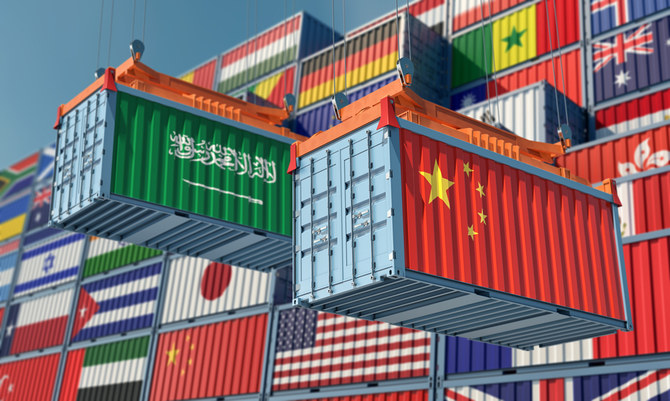
The current pipeline includes over $50 billion in investments, with an additional 300 projects under evaluation, indicating further growth potential. (Shutterstock)
Short Url
Updated 17 May 2023
Follow

Saudi Arabia to attract huge investments as NCP inks deal with top Chinese bank

RIYADH: Saudi Arabia can expect a boost in private investments from prominent Chinese investors following a recent agreement between the government’s privatization arm and a top bank based in Beijing. 

The National Center for Privatization and PPP signed a collaboration agreement with the Industrial and Commercial Bank of China, the largest bank in the world with total assets of $5 trillion, 8 million corporate clients and 650 million retail customers. 

The Kingdom’s privatization authority will leverage the extensive client base of the bank to woo investors keen on investing in the growth story of the Saudi private sector. 

The agreement will also facilitate market surveys, financial advisory services, and local and international events to engage with clients and potential investors eyeing opportunities in the Saudi private sector. 

The deal was signed by Hani Al-Saigh, NCP’s vice president for strategic marketing and knowledge management, and ICBC General Manager Jing Lin Gu. 

NCP CEO Mohannad bin Basodan and ICBC chairman Chen Siqing attended the signing ceremony. 

Basodan emphasized that the bank’s support will significantly bolster NCP’s role in strengthening public-private partnerships, as such institutions play a pivotal role in the success of privatization in the Kingdom. 

He highlighted that this agreement marks the sixth collaboration signed with local and international banks to identify potential investors interested in NCP’s privatization opportunities. 

NCP recently announced the launch of its privatization and PPP pipeline, comprising 200 approved projects across 17 sectors, which aligns with the goals of Vision 2030 to increase the private sector’s contribution to the gross domestic product from 40 percent to 65 percent by 2030. 

The current pipeline includes over $50 billion in investments, with an additional 300 projects under evaluation, indicating further growth potential. 

Privatization is pivotal in Saudi Arabia’s Vision 2030 strategy, showcasing remarkable progress with the successful privatization of 30 projects over the past five years. This approach has also created significant opportunities for domestic and international investors to actively engage in the Kingdom’s flourishing economic sectors. 

Established in 1984, ICBC clocked over $209 billion in revenue in 2021. 


Egypt’s annual inflation falls to 10.3% in December: CAMPAS  

Updated 15 sec ago
Follow

Egypt’s annual inflation falls to 10.3% in December: CAMPAS  

RIYADH: Egypt’s annual headline inflation rate slowed sharply to 10.3 percent in December, down from 23.4 percent in the same month a year earlier, official data showed. 

According to the Central Agency for Public Mobilization and Statistics, the overall consumer price index reached 264.2 points in December. On a monthly basis, inflation rose marginally by 0.1 percent. 

CAPMAS attributed the annual deceleration primarily to a decline in food prices, including a 1.1 percent drop in meat and poultry, 1.2 percent in dairy, cheese and eggs, 1 percent in fruits, 2 percent in vegetables, and 0.1 percent in sugar and sugary products. 

Prices of household appliances, audio-visual equipment and information technology devices also declined by 0.5 percent and 0.4 percent, respectively. 

However, other categories recorded increases, including grains and bread by 0.1 percent, oils and fats by 0.3 percent, and beverages such as coffee, tea and cocoa by 0.1 percent. 

Month-on-month inflation showed limited movement, with food and beverage prices falling by 0.8 percent due to similar declines in meat, dairy, fruit and vegetable prices. In contrast, modest cost increases were recorded in grains, oils and beverages. 

Alcohol and tobacco prices rose by 0.2 percent, while clothing and footwear increased by 0.7 percent, driven by higher prices for fabrics, up 1.6 percent, ready-made garments, up 0.4 percent, and footwear, up 1.6 percent. 

Housing and utilities recorded an increase of 1.5 percent, reflecting a 1.9 percent rise in actual rents, a 1.6 percent increase in electricity, gas and other fuels, and a 0.5 percent rise in maintenance costs. 

Furniture and household equipment prices climbed 0.9 percent, while healthcare rose by 0.5 percent, led by outpatient services, up 1 percent, and hospital services, up 1.8 percent. Transport costs increased by 0.2 percent, and recreational and cultural services rose by 0.6 percent, including a 1.5 percent increase in organized travel. 

Annual inflation data showed a broad-based increase across most sectors. Food and beverages rose by 0.9 percent year on year, with fruits up 22.6 percent, despite a 4.1 percent decline in meat and poultry and a 4.8 percent drop in vegetables. 

Alcohol and tobacco prices jumped 18.2 percent, while clothing and footwear climbed 14 percent. Housing and utilities surged 22.5 percent, largely due to higher rents and energy prices. 

Healthcare recorded one of the highest annual increases at 23.9 percent, driven by a 28.9 percent rise in medical equipment prices and a 21 percent increase in hospital services. Transport costs rose by 21.1 percent, education by 10 percent, and restaurants and hotels by 13 percent. 

The category of miscellaneous goods and services registered a 12.2 percent annual increase, with personal care products rising 13 percent and personal belongings up 27.2 percent.