Iranian female journalist goes on closed-door trial on charges linked to Amini protests

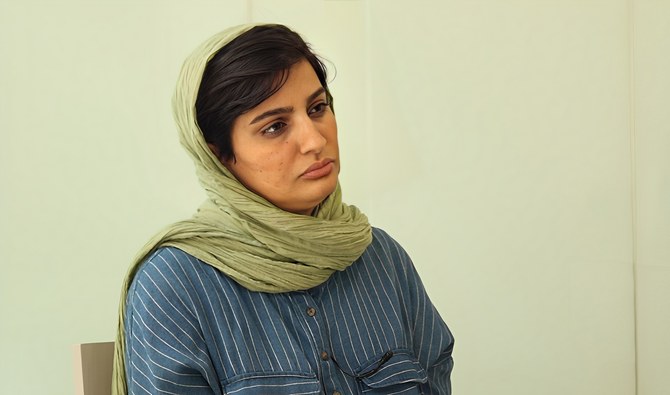
An undated file photo of Iranian journalist Elaheh Mohammadi. (Photo courtesy: social media)
Short Url
Updated 29 May 2023
Follow

Iranian female journalist goes on closed-door trial on charges linked to Amini protests

  • Death of Mahsa Amini while in custody of morality police last year unleashed months of mass protests across Iran
  • Elaheh Mohammadi, who covered Amini's funeral, accused of "colluding with hostile powers," charge carries death penalty

DUBAI: An Iranian journalist went of trial behind closed doors on Monday on charges linked to her coverage of the funeral of a Kurdish-Iranian woman whose death in custody last year triggered months of unrest, her lawyer told ILNA news agency.

The death of 22-year-old Mahsa Amini while in custody of the morality police for allegedly violating the Islamic dress code unleashed a wave of mass protests across Iran for months, marking the biggest challenge to Iran's clerical leaders in decades.

Elaheh Mohammadi covered Amini's funeral in her Kurdish hometown Saqez, where the protests began. The Islamic Republic accused its foreign foes of igniting the protests to destabilise the country.

"The trial of Elaheh Mohammadi went well. The date of the next session will be announced by the court," her lawyer, Shahabeddin Mirlohi, told ILNA. He was not immediately available for comment.

Mohammadi, a reporter for the pro-reform Hammihan newspaper who is on trial in Tehran, and another journalist, Niloofar Hamedi, of the Sharq newspaper, have been accused of "colluding with hostile powers" for their coverage of Amini's death.

The charge potentially carries the death penalty under Islamic law.

A joint statement released by Iran’s intelligence ministry in October accused Mohammadi and Hamedi of being CIA foreign agents.

Hamedi took a photo of Amini's parents hugging each other in a Tehran hospital where their daughter was lying in a coma.

The image, which Hamedi posted on Twitter, was the first signal to the world that all was not well with Amini, who had been detained three days earlier by Iran's morality police.

The two journalists, who have been held in Iran's notorious Evin prison since last September, will be tried separately. Hamedi's trial will begin on Tuesday, according to the judiciary.

The Islamic Republic has ignored repeated calls by rights groups for a public trial for the two journalists.


Syrian Democratic ​Forces withdraws from east of Aleppo

Updated 17 January 2026
Follow

Syrian Democratic ​Forces withdraws from east of Aleppo

RIYADH: Syrian Democratic ​Forces have withdrawn from positions east of Aleppo, according to SDF head Mazloum Abdi.
He announced Friday that SDF will withdraw from east ⁠of ‌Aleppo at ‍7 ‍AM ‍local time on Saturday and redeploy ​them to areas ⁠east of the Euphrates, citing calls from friendly countries and ‌mediators.
Hours earlier, a U.S. military designation had visited Deir Hafer and met with SDF officials in an apparent attempt to tamp down tensions.
The U.S. has good relations with both sides and has urged calm. A spokesperson for the U.S. military did not immediately respond to a request for comment.
Shortly before Abdi’s announcement, interim President Ahmad al-Sharaa had announced issuance of a decree strengthening Kurdish rights.
A wave of displacement
Earlier in the day, hundreds of people carrying their belongings arrived in government-held areas in northern Syria ahead of the anticipated offensive by Syrian troops on territory held by Kurdish-led fighters.
Many of the civilians who fled were seen using side roads to reach government-held areas because the main highway was blocked at a checkpoint in the town of Deir Hafer controlled by the SDF.
The Syrian army said late Wednesday that civilians would be able to evacuate through the “humanitarian corridor” from 9 a.m. to 5 p.m. Thursday and then extended the evacuation period another day, saying the SDF had stopped civilians from leaving.
There had been limited exchanges of fire between the two sides in the area before that.
Men, women and children arrived on the government side of the line in cars and pickup trucks that were packed with bags of clothes, mattresses and other belongings. They were met by local officials who directed them to shelters.

* with input from Reuters, AP