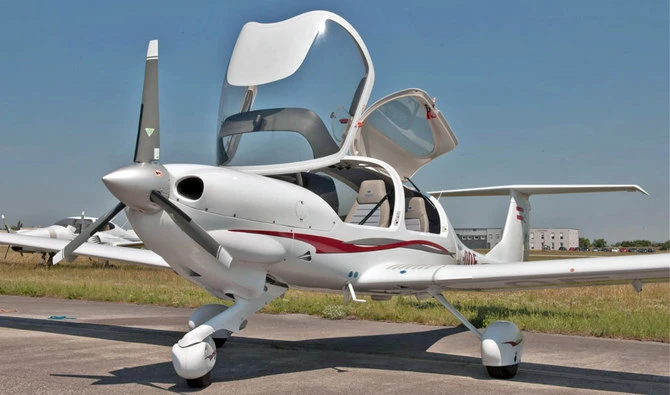
- Aerial taxi service will be launched by Karachi-based Sky Wings Aviation, Thailand’s Wind Speed International
- Rides for aerial service will be charged in dollars, booked through app similar to Uber and Careem
KARACHI: A Karachi-based aviation company is gearing up to launch what it is calling Pakistan’s first ever aerial ride-hailing service, or air taxi, in the next two weeks, with the aim of connecting multiple airports of the country and boosting business and tourism, a company official said.
The online service will be launched by Karachi-based Sky Wings Aviation in collaboration with Thailand-based Wind Speed International. Sky Wings already operates charter flight operations, ambulance services and pilot training programs under licenses from the country’s Civil Aviation Authority (CAA).
The online service, which Sky Wings is calling an aerial taxi service, will be part of charter flight operations governed under CAA rules, requiring the details of passengers on board, nationality, address and contact numbers, purpose of travel, and aircraft specification, among other details.
“We already have the license for aerial works which covers Aerial Charters under which we have named it ‘Air Taxi,’ with the aim to cater to the needs of mid-level businessmen,” Imran Aslam Khan, Sky Wings Aviation’s chief operating officer (COO), told Arab News on Monday.
Khan said his company was currently in the process of applying for the registration certificate for the new service as per legal requirements, and developing the web application through which rides could be booked.
“I am hopeful that the online aerial taxi service will be launched in the next two weeks after completion of the CAA’s formalities and the completion of the app,” Khan said, adding that the company still had to apply for certification from the CAA.
While recognizing that Sky Wings had an aerial works certificate, seen by Arab News, the CAA, Pakistan’s aviation sector regulator, said the authority would consider legal aspects before issuing a certificate for the so-called air taxi.
“Being a regulator, the body will look into legal aspects of the activity whenever the need arises,” Saif Ullah, a spokesperson for the Civil Aviation Authority, said, declining further comment on the service.
The online service, which Sky Wings explained was similar to a charter flight operation, will allow people to reserve rides using a specifically designed web application similar to Uber and Careem ride-hailing apps, according to the COO of the company. These ride-hailing services could also be able to add the aerial taxi service to their apps.
“The aerial ride-hailing service will allow people to move anywhere in Pakistan and enable the country to utilize some of the underutilized airports,” he added.
The company initially plans to launch the service from Karachi to other parts of the southern Sindh province, the neighboring Balochistan province and parts of Punjab. It will initially use eight aircraft with a capacity of two to six passengers each, while eight more aircraft would be inducted in the next phase, Khan said.
Responding to a question about the fares of the ride hailing service, he said a round trip from Karachi to Nawabshah would cost Rs180,000 ($332). Similarly, flying to Gwadar from Karachi would cost around $1500 or around Rs429,000.
“We would charge in dollars as the local currency keeps changing, so this would allow us to absorb currency fluctuation,” Khan said. “The rates would be fixed sector-wise.”
The fleet comprises Seneca and Cessna aircraft, according to the official, as well as a German-made DA-40 Diamond aircraft that has three passenger seats and can fly at a speed of about 300 kilometers per hour.
“We want to have up to two aircraft for all major airports of the country, but that would depend on the success of the service,” he said.
The online service will be economical as compared to chartered flights, according to Khan.
“Apart from passengers, the service will also be used for the transportation of precious or valued cargo, including gold or a small quantity of cargo that needs urgent delivery,” he said.
The COO said the company planned to connect Karachi with airports in the southwestern Balochistan province where few airlines operate and which people avoid traveling to due to security concerns. The launch of the service would also improve and promote business opportunities and tourism across Pakistan, he said.
Khan said he was confident a successful operation in Pakistan would pave the way for his firm to launch similar services in neighboring countries and the Middle East region.
He added that the company’s investors were willing to expand and invest more in Pakistan’s aviation sector, and investment from the Middle East would also be welcomed.
“We want to make a role model for the world for such services that can be replicated in the Middle East and other regional countries,” Khan said.
“For aviation, sky’s the limit but we want to grow from the grass root level.”