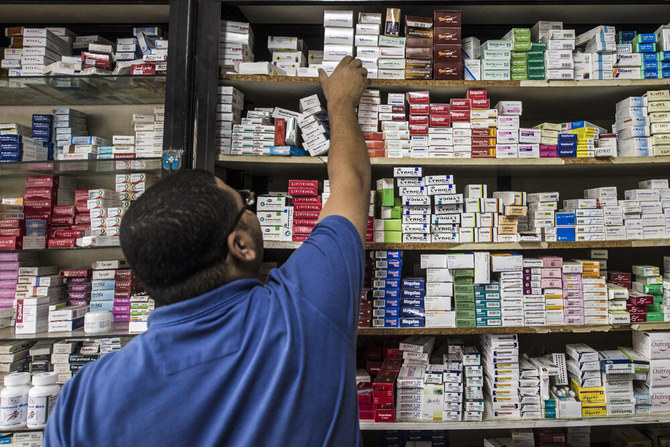
CAIRO: Urgent action is needed to safeguard the future of Egypt’s pharmaceutical industry, a specialist has warned.
Ahmed Galal, a leading figure in the industry, told Arab News the pharmaceutical sector faces significant challenges adapting to the global market, as well as “aligning with modern technology to deliver effective medicine at an affordable price.”
His comments came after a parliamentary session on Saturday in which MPs discussed a specialist report outlining a strategy to “future-proof” the pharmaceutical industry.
The report urged the government to adopt new financing policies for the sector, warning that current exchange rate fluctuations are hindering the industry, particularly small and medium-sized companies.
“National drug security and the well-being of the Egyptian patient are most affected in the event of the pharmaceutical industry’s collapse,” Galal said.
“Urgent action is needed to preserve this industry. This should be a priority and must be supported by every patriotic Egyptian,” he added.
“Drug consumption in Egypt has seen a significant rise recently due to the increasing population numbers, improved health awareness, and development of health care programs. While the pharmaceutical industry in Egypt is among the most successful, its primary market is local due to its focus on producing traditional medicines. These lack innovative elements that could secure a place in the new global market.”
He highlighted the need to “strike a balance between purchased technology and that which can be self-developed, to ensure the provision of safe, effective, high-quality medicine in adequate quantities, and at a price that is affordable to all.”
Egypt’s pharmaceutical industry has a rich history going back decades, and has played a vital role in the country’s economy and health care system.
However, the industry’s future will depend on how successfully it can navigate a host of challenges and adapt to changing market conditions.
Key issues, such as adopting modern pharmaceutical technology, providing high-quality medicines at affordable prices, and maintaining a balance between domestic production and imports, need to be addressed.
Recommendations laid out in the report provide a blueprint for the industry’s development and present an opportunity for stakeholders to work together toward a sustainable sector.
Dr. Mona Salem, a physician and pharmaceutical activist, said: “Egypt must implement policies consistent with the World Health Organization’s recommendations to ensure the appropriate use of medicines. It should work toward providing the necessary infrastructure to supervise and regulate the use of medicines, and train and monitor prescribers to guarantee the provision of safe, effective, and high-quality medicine.”
Egypt’s drug industry dates back to 1939 with the establishment of Misr Pharmaceuticals.
The country is one of the largest drug producers in the Middle East and Africa, and is ranked as the fourth most attractive drug market in Africa.
The report said that the high quality and reasonable prices of Egyptian medicines make the country a coveted destination for investment in the pharmaceutical sector.
The industry also benefits from low labor costs and a large number of skilled pharmacists.
According to the report, there are about 170 licensed drug-producing factories in Egypt, with another 254 under construction.
The private sector owns 152 factories, the public and business sector controls nine, and multinational companies own another nine.

Health warning for Egypt’s pharmaceutical industry
Short Url
https://arab.news/gxarf
Health warning for Egypt’s pharmaceutical industry
- ‘Urgent action’ needed to safeguard sector, specialist says, as MPs discuss report
- The report urged the government to adopt new financing policies for the sector, warning that current exchange rate fluctuations are hindering the industry
Iraq says it will prosecute Daesh detainees sent from Syria
- Iraq government says transfer was pre-emptive step to protect national security
- Prosoners have been held for years in prisons and camps guarded by the Kurdish-led SDF
BAGHDAD: Iraq’s Supreme Judicial Council said on Thursday it would begin legal proceedings against Daesh detainees transferred from Syria, after the rapid collapse of Kurdish-led forces in northeast Syria triggered concerns over prison security.
More than 10,000 members of the ultra-hard-line militant group have been held for years in about a dozen prisons and detention camps guarded by the Kurdish-led Syrian Democratic Forces (SDF) in Syria’s northeast.
The US military said on Tuesday its forces had transferred 150 Daesh detainees from Syria to Iraq and that the operation could eventually see up to 7,000 detainees moved out of Syria.
It cited concerns over security at the prisons, which also hold thousands more women and children with ties to the militant group, after military setbacks suffered by the SDF.
A US official told Reuters on Tuesday that about 200 low-level Daesh fighters escaped from Syria’s Shaddadi prison, although Syrian government forces had recaptured many of them.
Iraqi officials said Prime Minister Mohammed Shia Al-Sudani mentioned the transfer of Daesh prisoners to Iraq in a phone call with Syrian President Ahmad Al-Sharaa on Tuesday, adding that the transfers went ahead following a formal request by the Iraqi government to Syrian authorities.
Iraqi government spokesperson Basim Al-Awadi said the transfer was “a pre-emptive step to protect Iraq’s national security,” adding that Baghdad could not delay action given the rapid pace of security and political developments in Syria.
Daesh emerged in Iraq and Syria, and at the height of its power from 2014-2017 held swathes of the two countries. The group was defeated after a military campaign by a US-led coalition.
An Iraqi military spokesperson confirmed that Iraq had received a first batch of 150 Daesh detainees, including Iraqis and foreigners, and said the number of future transfers would depend on security and field assessments. The spokesperson described the detainees as senior figures within the group.
In a statement, the Supreme Judicial Council said Iraqi courts would take “due legal measures” against the detainees once they are handed over and placed in specialized correctional facilities, citing the Iraqi constitution and criminal laws.
“All suspects, regardless of their nationalities or positions within the terrorist organization, are subject exclusively to the authority of the Iraqi judiciary,” the statement said.
Iraqi officials say under the legal measures, Daesh detainees will be separated, with senior figures including foreign nationals to be held at a high-security detention facility near Baghdad airport that was previously used by US forces.
Two Iraqi legal sources said the Daesh detainees sent from Syria include a mix of nationalities, with Iraqis making up the largest group, alongside Arab fighters from other countries as well as European and other Western nationals.
The sources said the detainees include nationals of Britain, Germany, France, Belgium and Sweden, and other European Union countries, and will be prosecuted under Iraqi jurisdiction.
More than 10,000 members of the ultra-hard-line militant group have been held for years in about a dozen prisons and detention camps guarded by the Kurdish-led Syrian Democratic Forces (SDF) in Syria’s northeast.
The US military said on Tuesday its forces had transferred 150 Daesh detainees from Syria to Iraq and that the operation could eventually see up to 7,000 detainees moved out of Syria.
It cited concerns over security at the prisons, which also hold thousands more women and children with ties to the militant group, after military setbacks suffered by the SDF.
A US official told Reuters on Tuesday that about 200 low-level Daesh fighters escaped from Syria’s Shaddadi prison, although Syrian government forces had recaptured many of them.
Iraqi officials said Prime Minister Mohammed Shia Al-Sudani mentioned the transfer of Daesh prisoners to Iraq in a phone call with Syrian President Ahmad Al-Sharaa on Tuesday, adding that the transfers went ahead following a formal request by the Iraqi government to Syrian authorities.
Iraqi government spokesperson Basim Al-Awadi said the transfer was “a pre-emptive step to protect Iraq’s national security,” adding that Baghdad could not delay action given the rapid pace of security and political developments in Syria.
Daesh emerged in Iraq and Syria, and at the height of its power from 2014-2017 held swathes of the two countries. The group was defeated after a military campaign by a US-led coalition.
An Iraqi military spokesperson confirmed that Iraq had received a first batch of 150 Daesh detainees, including Iraqis and foreigners, and said the number of future transfers would depend on security and field assessments. The spokesperson described the detainees as senior figures within the group.
In a statement, the Supreme Judicial Council said Iraqi courts would take “due legal measures” against the detainees once they are handed over and placed in specialized correctional facilities, citing the Iraqi constitution and criminal laws.
“All suspects, regardless of their nationalities or positions within the terrorist organization, are subject exclusively to the authority of the Iraqi judiciary,” the statement said.
Iraqi officials say under the legal measures, Daesh detainees will be separated, with senior figures including foreign nationals to be held at a high-security detention facility near Baghdad airport that was previously used by US forces.
Two Iraqi legal sources said the Daesh detainees sent from Syria include a mix of nationalities, with Iraqis making up the largest group, alongside Arab fighters from other countries as well as European and other Western nationals.
The sources said the detainees include nationals of Britain, Germany, France, Belgium and Sweden, and other European Union countries, and will be prosecuted under Iraqi jurisdiction.
© 2026 SAUDI RESEARCH & PUBLISHING COMPANY, All Rights Reserved And subject to Terms of Use Agreement.