JEDDAH: Arab leaders convening in Saudi Arabia on Friday can assist in achieving peace in war-torn Yemen by bolstering current peace efforts, mainly the Saudi initiative, Yemeni government officials and political analysts said.
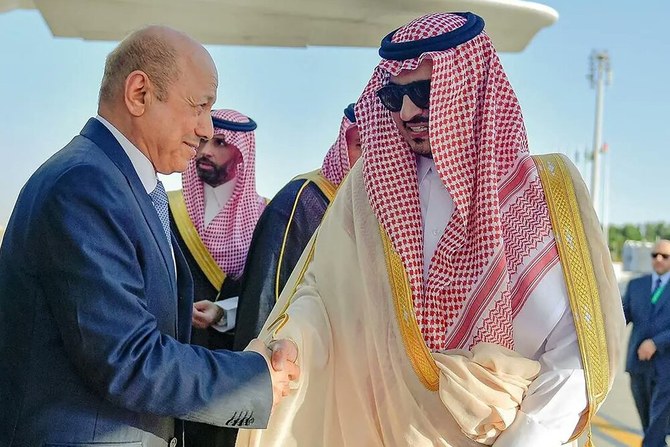
Arab leaders arrived in Jeddah on Thursday in preparation for their annual summit on Friday, at which they are anticipated to discuss crucial issues in the Arab World, including the Yemen war.
Experts and government officials in Yemen argue that Arab leaders should support the most recent reconciliation plans to end more than eight years of bloody conflict in Yemen.
Faisal Al-Majidi, undersecretary at the Yemeni Ministry of Justice, said that leaders should take advantage of the current climate to resolve contentious issues in the Arab World, such as the readmission of Syria to the Arab League and the reconciliation between Saudi Arabia and Iran, in order to take a unified stance on the Yemen conflict.
“In an atmosphere of peace and harmony, Arab countries can reach a consensus formula for establishing peace in Yemen in accordance with Security Council Resolution 2216 and the Arab summits that supported Yemeni legitimacy,” Al-Majidi said.
“Arab nations are primarily concerned with resolving the war in Yemen.”
Saudi Arabia’s Ambassador to Yemen Mohammed Al-Jaber arrived in Houthi-held Sanaa last month with a semifinal text of a peace proposal that addresses points of contention between the Yemeni government and the Houthis.
The unprecedented visit to Sanaa has significantly bolstered peace efforts and brought Yemenis closer than ever before to ending the conflict.
Other Yemeni officials believe the Jeddah summit can bring about peace in Yemen by naming and shaming the Houthis for rejecting peace efforts, unifying support for the internationally recognized government, and pressuring the Houthis to accept the Saudi peace offer.
Arab leaders can help Yemeni peace efforts by “supporting the legitimate government, standing by the Presidential Leadership Council, condemning the Houthi militia, and supporting the Saudi initiative for peace,” Abdul Baset Al-Qaedi, undersecretary at Yemen’s Information Ministry, told Arab News.
Fatehi bin Lazerq, editor of Aden Al-Ghad newspaper, who expressed skepticism about the Arab leaders’ capacity to influence the warring factions in Yemen, argues that the best thing they can do now is to support the Saudi peace initiative, which has made significant progress toward an agreement.
“I believe that Saudi Arabia’s decision to negotiate with the Houthis is the key to resolving Yemen’s political and military crisis. A solution can be reached simply through talks between Yemeni parties under the Saudi initiative,” he said.
Bin Lazerq said that successive Arab summits since the beginning of the conflict in Yemen have been unable to exert pressure on Yemeni warring factions to cease hostilities.
“The summit will not issue any conclusions that will put pressure on Yemen’s conflict parties. The Security Council was unable to exercise pressure on the Houthis despite its power,” he added.
The UN-led peace efforts have come to a halt since October last year as the Houthis refused to prolong the truce or lift their siege of Taiz, instead launching drone and missile attacks on oil installations in southern Yemen.
The Houthi strikes have damaged peace talks and prompted the Yemeni government to retaliate by branding the Houthis as a terrorist organization.
The Houthis asked that the Yemeni government share oil profits with them and pay public employees in regions under their control.


![]()

Jeddah Arab League summit urged to support peace in Yemen
Short Url
https://arab.news/yuwzz
Jeddah Arab League summit urged to support peace in Yemen
- Experts and government officials in Yemen argue that Arab leaders should support the most recent reconciliation plans to end more than eight years of bloody conflict in Yemen
- “In an atmosphere of peace and harmony, Arab countries can reach a consensus formula for establishing peace in Yemen in accordance with Security Council Resolution 2216 and the Arab summits that supported Yemeni legitimacy,” Al-Majidi said


Latest updates


Recommended


© 2026 SAUDI RESEARCH & PUBLISHING COMPANY, All Rights Reserved And subject to Terms of Use Agreement.