DHAKA: Volunteers in Bangladesh’s coastal districts were using loudspeakers to urge people to seek shelter on Saturday as the delta nation braced for an extremely severe cyclone, which is expected to slam ashore in Bangladesh and Myanmar in the next 24 hours.
UN agencies and aid workers prepositioned tons of dry food and dozens of ambulances with mobile medical teams in sprawling refugee camps with more than 1 million Rohingya who fled persecution in Myanmar.
The camps at Cox’s Bazar are on the path of Cyclone Mocha, which was moving toward the coasts of southeastern Bangladesh and Myanmar with wind speeds of up to 200 kilometers (125 miles) per hour and gusts up to 220 kph (136 mph), the Indian Meteorological Department said. It’s projected to make landfall on Sunday evening between Cox’s Bazar in Bangladesh and Kyaukpyu in Myanmar.
Bangladesh, with more than 160 million people, has prepared more than 1,500 cyclone shelters. The navy said it’s keeping ready 21 ships, maritime patrol aircraft and helicopters for rescue and relief operations.
Speaking from Cox’s Bazar, the International Organization of Migration’s deputy chief of mission, Nihan Erdogan, said Bangladesh put in place a massive preparedness plan.
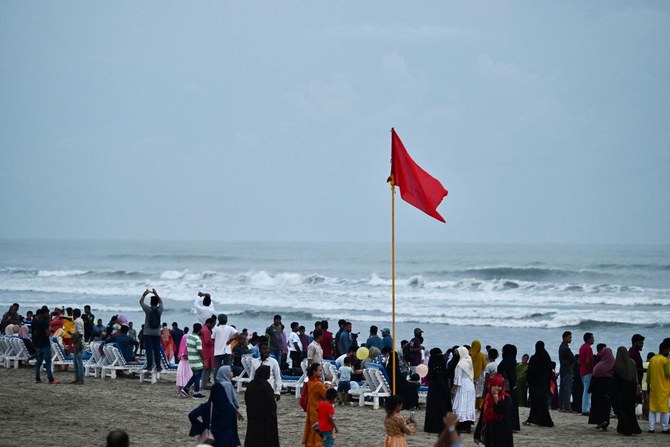
He said his agency had trained 100 volunteers in each of the 17 refugee camps on how to alert rescuers using flag warning signals when heavy rains, floods and strong winds lash the region. “Emergency shelter materials and hygiene kits are readily available, and personal protective gear has been provided to all volunteers.”
The World Health Organization put 40 ambulances and 33 mobile medical teams on standby at Cox’s Bazar, the agency’s spokesperson Margaret Harris said.
Authorities in Bangladesh said heavy rains from the cyclone could trigger landslides in Chattogram and Cox’s Bazar and three other hilly districts — Rangamati, Bandarban and Khagrachhari.
Bangladesh, which is prone to natural disasters such as floods and cyclones, issued the highest danger signal for Cox’s Bazar. The Bangladesh Meteorological Department warned the cyclone could cause severe damage to the lives and properties in eight coastal districts.
Mizanur Rahman, director general of the Department of the Disaster Management, said they asked the local authorities in 20 districts and sub-districts to make swift preparations. He said they were particularly concerned about a small coral island called Saint Martins in the Bay of Bengal, where efforts were underway to protect thousands of inhabitants.
Myanmar said in its weather bulletin that the cyclone was moving toward the coast of Rakhine state near Sittwe, which was put under the highest weather alert.
The World Food Program said it prepositioned enough food to cover the needs of more than 400,000 people in Rakhine and neighboring areas for one month.
“We are preparing for the worst, while hoping for the best. Cyclone Mocha is heading to areas burdened by conflict, poverty, and weak community resilience,” said WFP’s Myanmar deputy director, Sheela Matthew. “Many of the people most likely to be affected are already reliant on regular humanitarian assistance from WFP. They simply cannot afford another disaster.”
In May 2008, Cyclone Nargis hit Myanmar with a storm surge that devastated populated areas around the Irrawaddy River Delta. At least 138,000 people died and tens of thousands of homes and other buildings were washed away.
Roxy Mathew Koll, a climate scientist at the Indian Institute of Tropical Meteorology in Pune city, said cyclones in the Bay of Bengal are becoming more intense more quickly, in part because of climate change.
The state-run Global New Light of Myanmar newspaper reported on Friday that thousands of people living along the western coast of Rakhine state were evacuated.
Both Indian and Bangladesh authorities said they were expecting heavy to very heavy rainfall in Andaman and Nicobar Islands in the Andaman Sea, parts of India’s remote northeast, and across Bangladesh from Saturday night.
Climate scientists say cyclones can now retain their energy for many days, such as Cyclone Amphan in eastern India in 2020, which continued to travel over land as a strong cyclone and caused extensive devastation. “As long as oceans are warm and winds are favorable, cyclones will retain their intensity for a longer period,” Koll said.
Cyclones are among the most devastating natural disasters in the world, especially if they affect densely populated coastal regions in South Asia.


![]()

Thousands along Bangladesh, Myanmar coast told to seek shelter as powerful Cyclone Mocha approaches
Short Url
https://arab.news/cb9eg
Thousands along Bangladesh, Myanmar coast told to seek shelter as powerful Cyclone Mocha approaches
- UN agencies and aid workers prepositioned tons of dry food and dozens of ambulances with mobile medical teams in sprawling refugee camps
- Bangladesh, with more than 160 million people, has prepared more than 1,500 cyclone shelters


Latest updates


Recommended


© 2026 SAUDI RESEARCH & PUBLISHING COMPANY, All Rights Reserved And subject to Terms of Use Agreement.