Sudan: BBC News Arabic launches emergency radio service

Program runs twice daily: at 07:00 GMT on 21,510 kHz and 15:00 GMT on 15,310kHz
Short Url
Updated 02 May 2023
Follow

Sudan: BBC News Arabic launches emergency radio service

  • Online, shortwave pop-up broadcast to provide life-saving information on supplies and services
  • Twice-daily program ‘crucial at a time of great uncertainty,’ says director-general

LONDON: The British Broadcasting Corporation World Service will launch an Arabic emergency radio service for Sudan, aiming to provide news to people in the North African country as fighting rages.

Launched on BBC News Arabic, the pop-up news service will broadcast live from London twice daily for three months, the BBC said in a press statement.

The service will feature eyewitness accounts, analysis from teams in the Jordanian capital Amman and Egypt’s Cairo, and news on diplomatic efforts, in addition to factual coverage countering disinformation.

The emergency broadcast can be accessed through shortwave radio in Sudan and online, where listeners can find information on essential supplies and services.

“The World Service provides an essential lifeline to many around the world, where access to accurate news and information is scarce,” said BBC Director-General Tim Davie.

“The enhanced emergency service for Sudan will be crucial at a time of great uncertainty in the country,” he added.

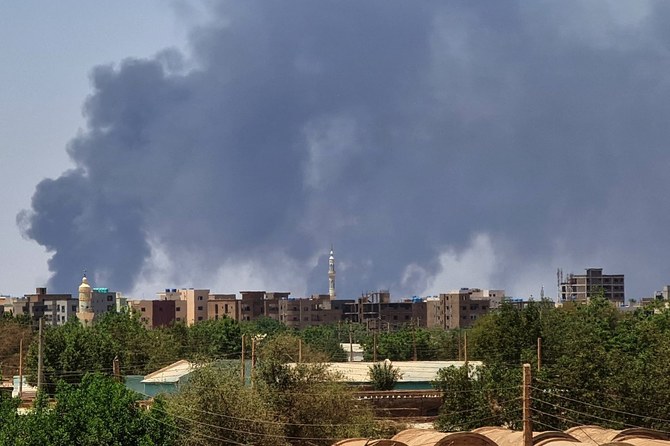
Clashes between Sudan’s government and the Rapid Support Forces paramilitary broke out on April 15, throwing the country into chaos within the first week of conflict.

“The situation in Sudan has escalated quickly with its citizens seeking clear, independent information and advice at a time of critical need,” said Liliane Landor, director of the World Service, adding: “BBC Arabic’s Emergency Radio Service for Sudan will bring vital live updates of the situation on the ground and inform listeners of lifesaving resources.”

The program, set to launch on Tuesday afternoon, will broadcast at 7 a.m. GMT on 21,510 kHz and 3 p.m. GMT on 15,310 kHz.


Paris exhibition marks 200 years of Le Figaro and the enduring power of the press

Updated 17 January 2026
Follow

Paris exhibition marks 200 years of Le Figaro and the enduring power of the press

  • The exhibition celebrated the bicentennial of Le Figaro, offering visitors a rare opportunity to step inside the newspaper’s vast historical archive

PARIS: One of France’s most influential newspapers marked a major milestone this month with a landmark exhibition beneath the soaring glass nave of the Grand Palais, tracing two centuries of journalism, literature and political debate.
Titled 1826–2026: 200 years of freedom, the exhibition celebrated the bicentennial of Le Figaro, offering visitors a rare opportunity to step inside the newspaper’s vast historical archive. Held over three days in mid-January, the free exhibition drew large crowds eager to explore how the title has both chronicled and shaped modern French history.
More than 300 original items were displayed, including historic front pages, photographs, illustrations and handwritten manuscripts. Together, they charted Le Figaro’s evolution from a 19th-century satirical publication into a leading national daily, reflecting eras of revolution, war, cultural change and technological disruption.
The exhibition unfolded across a series of thematic spaces, guiding visitors through defining moments in the paper’s past — from its literary golden age to its role in political debate and its transition into the digital era. Particular attention was paid to the newspaper’s long association with prominent writers and intellectuals, underscoring the close relationship between journalism and cultural life in France.
Beyond the displays, the program extended into live journalism. Public editorial meetings, panel discussions and film screenings invited audiences to engage directly with editors, writers and media figures, turning the exhibition into a forum for debate about the future of the press and freedom of expression.
Hosted at the Grand Palais, the setting itself reinforced the exhibition’s ambition: to place journalism firmly within the country’s cultural heritage. While the exhibition has now concluded, the bicentennial celebrations continue through special publications and broadcasts, reaffirming Le Figaro’s place in France’s public life — and the enduring relevance of a free and questioning press in an age of rapid change.