MALINDI, Kenya: The ongoing drought in Eastern Africa has been made worse by human-induced climate change, which also made it much likelier to occur in the first place, an international team of climate scientists concluded.
The report Thursday came from World Weather Attribution, a group that seeks to quickly determine whether certain extreme weather events were influenced by climate change. Nineteen scientists from seven nations assessed how climate change affected rainfall in the region.
“Climate change caused the low rainfall in the region,” Joyce Kimutai, principal meteorologist at the Kenya Meteorological Department said. “Climate change has made the drought exceptional.”
The scientists analyzed historical weather data, including changes in the two main rainfall patterns in the region alongside computer model simulations dating back to the 1800s. They found that the long rains season — March through May — was turning drier and the short rains season — typically October through December — was becoming wetter due to climate change. The report also said a “strong increase” in evaporation from soil and plants due to higher temperatures had worsened the drought’s severity.
They called the region’s experience with drought “one of a kind.”
Friederike Otto, senior climate scientist at Imperial College London and the leader of the study, said it underscored how climate change’s effects “strongly depend on how vulnerable we are.”
While climate change has made drought more frequent and extreme in the Horn region, the scientists acknowledged that previous failed rainy seasons, high temperatures, conflict, fragile statehood and poverty are also to blame for the “devastating impacts.”
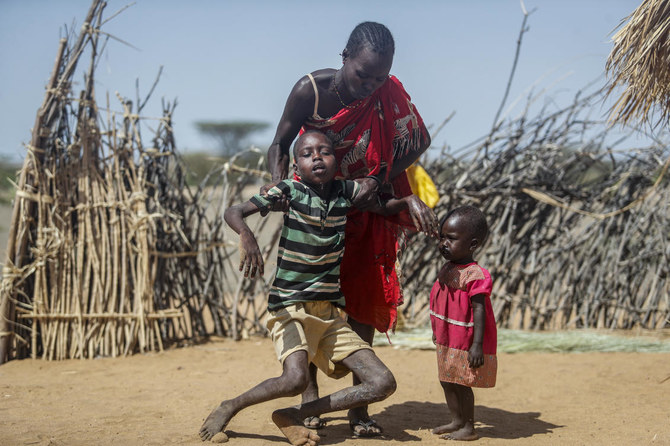
The United Nations said more than 20 million people in Kenya, Ethiopia, Somalia, Uganda and South Sudan have been affected by the drought, with more than 2.2 million displaced in Somalia and Ethiopia and severe maternal risks to hundreds of thousands of expectant or breastfeeding women.
Rod Beadle, head of relief and humanitarian affairs at Food for the Hungry, said almost 15 million children are exposed to acute malnourishment.
“Despite the recent rains in North Kenya, the pressure from previous failed seasons makes for a dire situation. The flooding has impacted livestock and many pastoralists lost their primary livelihoods. The drought conditions have resulted in severely compacted soil that cannot absorb the water; hence the floods are more severe. The country is also facing severe outbreaks of cholera and other diseases as more refugees arrive,” Beadle said.
Development gains in the countries have been offset by a long history of natural disasters, famine and disease, said Guyo Malicha Roba, a food security expert who heads the Jameel Observatory, which works on food insecurity issues in dryland nations.
Roba said the food situation in the region’s drylands has addressed by raising money and with food distributions from governments and humanitarian partners, but more work needs to be done to use early-warning systems to respond more quickly to “food shocks.”


![]()

Scientists: Climate change worsened Eastern Africa drought
Short Url
https://arab.news/6zpw7
Scientists: Climate change worsened Eastern Africa drought
- Report Thursday came from World Weather Attribution
- Called region’s experience with drought “one of a kind”


Latest updates


© 2026 SAUDI RESEARCH & PUBLISHING COMPANY, All Rights Reserved And subject to Terms of Use Agreement.