TUNIS: Tunisia on Friday introduced a quota system for potable water and banned its use in agriculture until Sept. 30 in response to a severe drought that has hit the country, the agriculture ministry said.
Tunisia, which is suffering a fourth straight year of serious drought, recorded a drop in its dam capacity to around 1 billion cubic meters, or 30 percent of the maximum, due to a scarcity of rain from September 2022 to mid-March 2023, senior agriculture ministry official Hamadi Habib said.
The agriculture ministry also banned the use of potable water to wash cars, water green areas and clean streets and public places. Violators face a fine and imprisonment for a period of between six days to six months, according to the Water Law.
Residents said that Tunisian authorities have for the last two weeks been cutting off drinking water at night in some areas of the capital and other cities in a bid to cut consumption, a move that has sparked widespread anger. The government declined to comment on the claim.
The new decision threatens to fuel social tension in a country whose people suffer from poor public services, high inflation and a weak economy.
The Sidi Salem Dam in the north of the country, a key provider of drinking water to several regions, has declined to only 16 percent of its maximum capacity of 580 million cubic meters, official figures showed.
Tunisia’s grain harvest will be “disastrous,” with the drought-hit crop declining to 200,000-250,000 tons this year from 750,000 tons in 2022, senior farmers union official Mohamed Rjaibia told Reuters on Thursday.

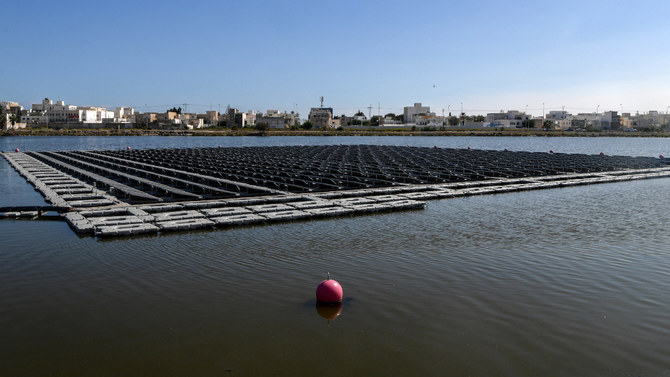
Tunisia introduces water quota system due to severe drought
https://arab.news/4h2bh
Tunisia introduces water quota system due to severe drought
- Tunisia recorded drop in dam capacity due to rain scarcity
- Agriculture ministry banned use of potable water to wash cars, water green areas, clean streets and public places
Ramadan lanterns: A symbol of celebration
CAIRO: Muslims around the world are observing Ramadan, a month of dawn-to-dusk fasting, intense prayer and charity.
The holy month has long been associated with a rich tapestry of customs and traditions that define its unique celebrations.
Among the most prominent symbols of these festivities is the Ramadan lantern, a cherished emblem that illuminates streets and homes, reflecting the spiritual and cultural essence of the season.
In the historic districts of Cairo — such as Al-Hussein, Al-Azhar and Sayyida Zeinab — millions of Egyptians gather to celebrate Ramadan.
These neighborhoods are transformed into vibrant scenes of light and color, adorned with elaborate illuminations and countless Ramadan lanterns that hang across streets and balconies.
Vendors line the bustling alleys, offering a wide array of goods associated with the sacred month.
Foremost among these cherished items is the Ramadan lantern, which remains the most iconic and sought-after symbol of the season, embodying both tradition and festivity.
The lantern, in its earliest form, served as a vital source of illumination in ancient times.
Initially, torches crafted from wood and fueled with oils were used to light homes and pathways.
During the Middle Ages, Egyptians advanced their methods of lighting, developing oil lamps and decorative lanterns. In the Mamluk era, streets were illuminated on a wider scale, and artisans excelled in architectural innovation, producing intricately designed lanterns adorned with refined artistic motifs.
Gamal Shaqra, professor of modern history, told Arab News: “The story of the Ramadan lantern is widely traced back to the Fatimid era, with several narratives surrounding its origin. One account links it to Jawhar Al-Siqilli, the general who founded Cairo and built Al-Azhar Mosque, and to the arrival of Caliph Al-Muizz li-Din Allah in 969 A.D.
“According to this, Egyptians welcomed the Fatimid caliph by carrying lanterns to light his path, using them as both illumination and a gesture of celebration.”
He added: “Following this historic scene, lanterns began to be used to light streets and public spaces. Over time, the lantern evolved into a defining symbol of Ramadan festivities, as children took to the streets carrying their brightly lit lanterns and chanting traditional songs celebrating the holy month.
“The tradition continued to flourish during the Ayyubid and Mamluk periods, with lantern designs becoming increasingly diverse. In the era of Mohammad Ali, the craft saw further development, as lanterns were manufactured from metal sheets and fitted with colored glass, marking a significant evolution in both design and production.”
Methods of manufacturing the Ramadan lantern have diversified over time, alongside the evolution of its artistic designs in the modern era.
With the advancement of tools and technology, merchants have increasingly introduced wooden lanterns crafted using laser-cut techniques, offering intricate patterns and contemporary styles.
Despite these innovations, handcrafted lanterns continue to retain their distinctive value and authenticity. Made by skilled artisans, these traditional pieces remain deeply cherished, preserving the spirit of heritage and craftsmanship associated with the holy month.
Artist Mohamed Abla told Arab News that the design of the Ramadan lantern was inspired by the form of the mishkat — the ornate niche found in mosques that embodies Islamic art and traditionally serves as a source of illumination.
He added that the lantern had long been a subject for visual artists, who had depicted it in their paintings as a symbol of folk heritage and the enduring traditions associated with celebrating the holy month.
During a tour of popular marketplaces, a clear variation in lantern prices was noted, reflecting the craftsmanship and effort invested in their production.
In the tourist markets along Al-Moeaz Street, brass and bronze lanterns are prominently displayed in antique shops, showcasing elaborate designs that appeal to both visitors and collectors seeking traditional Ramadan decor.


