JERUSALEM: A gunman fired at joggers from a passing car at a junction near the occupied West Bank city of Ramallah on Tuesday, medics said, and the Israeli military blocked roads and launched a search in response.
Israel’s ambulance service said it treated a 28-year-old with a hand injury before transferring him to hospital. He was running with a group in memory of fallen soldiers, as Israelis commemorate their military dead on Tuesday.
The shooting occurred along Route 60, the main north-south highway in the occupied West Bank that passes along some large Israeli settlements.
It was the latest in year-long series of incidents in an upsurge in Israeli-Palestinian violence, with frequent military raids and violence by Israeli settlers amid a spate of Palestinian attacks.
On Monday, a Palestinian drove his car into a crowd on a Jerusalem street in what police said was a deliberate attack, wounding five people, including a 70-year-old man in serious condition. Earlier, Israeli soldiers killed a Palestinian during a raid in the occupied West Bank.
More than 90 Palestinians and at least 19 Israelis and foreigners have been killed since January.
Israel captured the West Bank, Gaza and East Jerusalem, territories Palestinians want for an independent state, in a 1967 Middle East war.


![]()
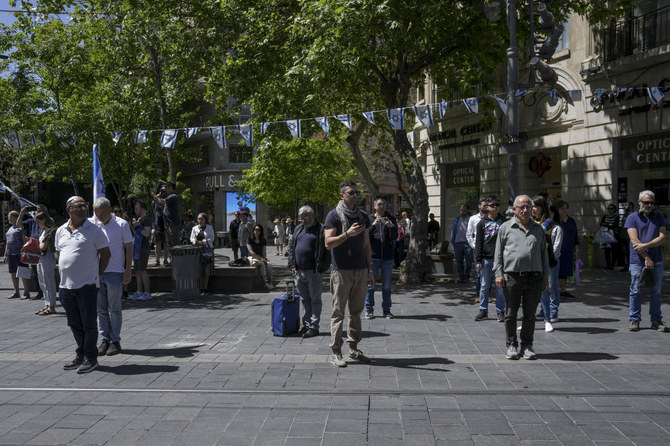

Attacker fires at Israeli runners commemorating fallen soldiers, wounds one

Short Url
https://arab.news/vpktm
Attacker fires at Israeli runners commemorating fallen soldiers, wounds one
- Shooting occurred along Route 60, the main north-south highway in the occupied West Bank that passes along some large Israeli settlements


Two dead in Israeli strikes on Lebanon
- Israel has kept up regular strikes in Lebanon despite the November 2024 truce that sought to end more than a year of hostilities with Hezbollah
SIDON, Lebanon: Israeli strikes in south Lebanon killed two people on Wednesday, authorities said, as Israel said it targeted operatives from militant group Hezbollah.
Israel has kept up regular strikes in Lebanon despite the November 2024 truce that sought to end more than a year of hostilities with Hezbollah, usually saying it is targeting members of the Iran-backed group or its infrastructure.
The health ministry said that an “Israeli enemy strike... on a vehicle in the town of Zahrani in the Sidon district killed one person,” referring to an area far from the Israeli border.
An AFP correspondent saw a charred car on a main road with debris strewn across the area and emergency workers in attendance.
Later, the ministry said another strike targeting a vehicle in the town of Bazuriyeh in the Tyre district killed one person.
Israel said it struck operatives from the militant group in both areas, saying the raids came “in response to Hezbollah’s repeated violations of the ceasefire understandings.”
This month, Lebanon’s army said it had completed the first phase of its plan to disarm the group, covering the area south of the Litani river, around 30 kilometers (20 miles) from the Israeli border.
The strike in Zahrani on Wednesday was north of the Litani.
Israel, which accuses Hezbollah of rearming, has criticized the army’s progress as insufficient, while Hezbollah has rejected calls to surrender its weapons.
More than 350 people have been killed by Israeli fire in Lebanon since the ceasefire, according to an AFP tally of health ministry reports.
Israel has kept up regular strikes in Lebanon despite the November 2024 truce that sought to end more than a year of hostilities with Hezbollah, usually saying it is targeting members of the Iran-backed group or its infrastructure.
The health ministry said that an “Israeli enemy strike... on a vehicle in the town of Zahrani in the Sidon district killed one person,” referring to an area far from the Israeli border.
An AFP correspondent saw a charred car on a main road with debris strewn across the area and emergency workers in attendance.
Later, the ministry said another strike targeting a vehicle in the town of Bazuriyeh in the Tyre district killed one person.
Israel said it struck operatives from the militant group in both areas, saying the raids came “in response to Hezbollah’s repeated violations of the ceasefire understandings.”
This month, Lebanon’s army said it had completed the first phase of its plan to disarm the group, covering the area south of the Litani river, around 30 kilometers (20 miles) from the Israeli border.
The strike in Zahrani on Wednesday was north of the Litani.
Israel, which accuses Hezbollah of rearming, has criticized the army’s progress as insufficient, while Hezbollah has rejected calls to surrender its weapons.
More than 350 people have been killed by Israeli fire in Lebanon since the ceasefire, according to an AFP tally of health ministry reports.
Latest updates


© 2026 SAUDI RESEARCH & PUBLISHING COMPANY, All Rights Reserved And subject to Terms of Use Agreement.