

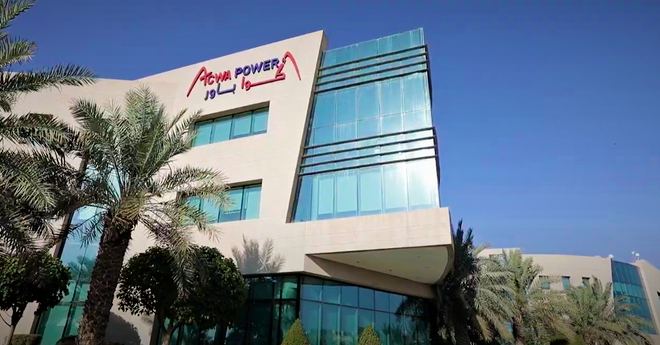
ACWA Power gets $174m loan for 2 Uzbekistan wind power projects

ACWA Power has revealed Uzbekistan is the largest market for its investments outside of Saudi Arabia (File)
Short Url
Updated 25 April 2023
Follow

ACWA Power gets $174m loan for 2 Uzbekistan wind power projects

RIYADH: Saudi energy firm ACWA Power will develop two wind power plants in Uzbekistan financed by loans of $174 million from the Asian Development Bank, it has been announced, 

Some $40.5 million is for a facility in Bash, and $46.5 million are set aside for a development in Dzhankeldy, with both funded by ADB’s regular capital resources, according to a statement from the bank.

Each power station has 79 wind turbines that will create a total of 3,235 gigawatt-hours of electricity and displace the equivalent of roughly 2 million tons of carbon dioxide each year. 

Bash and Dzhankeldy will form the largest utility-scale wind power facility in Central West Asia. 

“Uzbekistan is one of the fastest-growing economies in Central Asia, and with it comes a growing demand for energy,” said Suzanna Gaboury, director general for private sector operations at ADB.

“Bash and Dzhankeldy are landmark greenfield wind power projects which have a significant demonstrative impact of private sector participation across the region’s energy sector,” she added. 

The loans will also be used to build 282.5 km of 500-kilovolt, single-circuit overhead transmission line to connect to the electricity system. 

Last month, ACWA Power — owned by Saudi Arabia’s Public Investment Fund — signed agreements worth $2.5 billion with the National Electric Grid of Uzbekistan to develop three solar photovoltaic projects in the Tashkent, Bukhara, and Samarkand regions of the country.

The contracts also include three battery energy storage systems with a total combined capacity of 1,500 megawatts. 

In August 2022, ACWA Power revealed Uzbekistan was the largest market for its investments outside of Saudi Arabia. 

This came as the company signed three final agreements with the Central Asian country to establish a power station with a capacity of 1.5GW, with investments amounting to $2.4 billion. 


Saudi investment pipeline active as reforms advance, says Pakistan minister

Updated 08 February 2026
Follow

Saudi investment pipeline active as reforms advance, says Pakistan minister

ALULA: Pakistan’s Finance Minister Mohammed Aurangzeb described Saudi Arabia as a “longstanding partner” and emphasized the importance of sustainable, mutually beneficial cooperation, particularly in key economic sectors.

Speaking to Arab News on the sidelines of the AlUla Conference for Emerging Market Economies, Aurangzeb said the relationship between Pakistan and Saudi Arabia remains resilient despite global geopolitical tensions.

“The Kingdom has been a longstanding partner of Pakistan for the longest time, and we are very grateful for how we have been supported through thick and thin, through rough patches and, even now that we have achieved macroeconomic stability, I think we are now well positioned for growth.”

Aurangzeb said the partnership has facilitated investment across several sectors, including minerals and mining, information technology, agriculture, and tourism. He cited an active pipeline of Saudi investments, including Wafi’s entry into Pakistan’s downstream oil and gas sector.

“The Kingdom has been very public about their appetite for the country, and the sectors are minerals and mining, IT, agriculture, tourism; and there are already investments which have come in. For example, Wafi came in (in terms of downstream oil and gas stations). There’s a very active pipeline.”

He said private sector activity is driving growth in these areas, while government-to-government cooperation is focused mainly on infrastructure development.

Acknowledging longstanding investor concerns related to bureaucracy and delays, Aurangzeb said Pakistan has made progress over the past two years through structural reforms and fiscal discipline, alongside efforts to improve the business environment.

“The last two years we have worked very hard in terms of structural reforms, in terms of what I call getting the basic hygiene right, in terms of the fiscal situation, the current economic situation (…) in terms of all those areas of getting the basic hygiene in a good place.”

Aurangzeb highlighted mining and refining as key areas of engagement, including discussions around the Reko Diq project, while stressing that talks with Saudi investors extend beyond individual ventures.

“From my perspective, it’s not just about one mine, the discussions will continue with the Saudi investors on a number of these areas.”

He also pointed to growing cooperation in the IT sector, particularly in artificial intelligence, noting that several Pakistani tech firms are already in discussions with Saudi counterparts or have established offices in the Kingdom.

Referring to recent talks with Saudi Minister of Economy and Planning Faisal Alibrahim, Aurangzeb said Pakistan’s large freelance workforce presents opportunities for deeper collaboration, provided skills development keeps pace with demand.

“I was just with (Saudi) minister of economy and planning, and he was specifically referring to the Pakistani tech talent, and he is absolutely right. We have the third-largest freelancer population in the world, and what we need to do is to ensure that we upscale, rescale, upgrade them.”

Aurangzeb also cited opportunities to benefit from Saudi Arabia’s experience in the energy sector and noted continued cooperation in defense production.

Looking ahead, he said Pakistan aims to recalibrate its relationship with Saudi Arabia toward trade and investment rather than reliance on aid.

“Our prime minister has been very clear that we want to move this entire discussion as we go forward from aid and support to trade and investment.”