

Mubadala-backed M42 acquires Bridgepoint’s dialysis firm Diaverum in huge healthcare deal

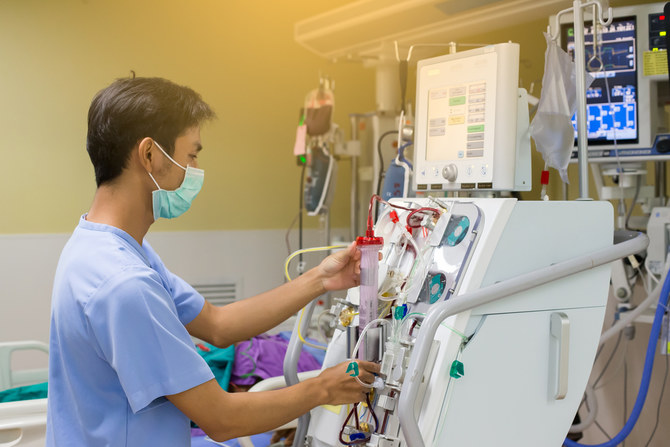
This acquisition gives the space for M42 to provide healthcare services and tech solutions in additional markets, further expanding its global geographic footprint.   (Shutterstock)
Short Url
Updated 19 April 2023
Follow

Mubadala-backed M42 acquires Bridgepoint’s dialysis firm Diaverum in huge healthcare deal

RIYADH: The largest healthcare company in the Middle East is set to be created after Abu Dhabi-based M24 acquired Bridgepoint Group’s Swedish dialysis clinic chain Diaverum, according to a press release. 

M42, a newly created healthcare joint venture between state fund Mubadala Investment Co. and artificial intelligence firm G42, made the claim as it announced the deal. 

The transaction is expected to close later this year, but the company did not disclose its value. 

This acquisition gives the space for M42 to provide healthcare services and tech solutions in additional markets, further expanding its global geographic footprint.   

“M42’s acquisition of Diaverum represents a major milestone in our global expansion strategy,” said Al-Nowais, the group CEO and managing director of M42, in the statement. 

In addition, this move reinforces the company’s position as a world leader in renal care, noted Diaverum CEO Dimitris Moulavasilis.   

He added: “Together, we’ll be able to drive international growth and continue transforming the industry through patient-centric digital innovations.”  

Diaverum currently operates 440 clinics in 23 different countries and employs over 13,000 people, making it the world’s third-largest provider of dialysis services. 

Led by Al-Nowais, M24 will own a large portfolio that includes Imperial College London Diabetes Center, Danat Al-Emarat and HealthPoint Hospital. 

Earlier this week, M42 said it will explore “opportunities for global expansion and partnerships with pharmaceutical, healthcare, and health tech leaders to bring high-quality care to communities around the world.”  

The acquisition supports Abu Dhabi’s development of its biopharmaceutical manufacturing capabilities.   

It also enables the country’s transition into a global healthcare industry center, with Mubadala leading the industry.   

With $284 billion in assets, Mubadala is ramping up its healthcare investments through new deals and partnerships to diversify its portfolio.   

Mubadala acquired Dental Care Alliance in January, a US support organization for about 390 allied practices across 22 states. 

In August last year, Mubadala-backed G42 established a $10 billion fund to invest in emerging technology in high-growth regions. In October of that year, Mubadala Health and G42 Healthcare joined to look for innovative solutions to treat chronic illnesses.   

Furthermore, the region’s wealth funds have shown great interest in investing in this sector. The Abu Dhabi Investment Authority, the city’s largest wealth fund, revealed plans to co-invest with Swedish firm EQT AB in the UK-based Dechra Pharmaceuticals.   


Saudi ministry launches private sector tender to operate sports venues in Makkah region

Updated 7 sec ago
Follow

Saudi ministry launches private sector tender to operate sports venues in Makkah region

RIYADH: New investment opportunities in athletic facilities across the Makkah region have been launched as Saudi Arabia looks to expands private sector participation in the sports economy and improve the commercial performance of its stadiums.

The Kingdom’s Ministry of Sport announced the offering under its “Sports Facilities Investment” initiative, inviting qualified companies to bid for a three-year contract to operate and manage multiple venues, including King Abdullah Sports City Stadium in Jeddah, Prince Abdullah Al-Faisal Stadium in Jeddah, King Abdulaziz Stadium in Makkah, and the indoor arena at King Abdullah Sports City.

The initiative comes amid a wider push by Saudi Arabia to maximize the commercial value of its sports infrastructure as the Kingdom prepares for major international tournaments and expands its domestic sports economy.

Under the proposed arrangement, the selected operator will manage matches, events, and daily venue services to enhance fan experiences and operational quality, while the ministry will retain responsibility for maintenance and oversight. The model is designed to expand partnerships with the private sector and improve the year-round utilization of sports infrastructure.

The investment opportunity offers multiple revenue streams, including ticket sales, food and beverage concessions, and hospitality services, as well as advertising and venue naming rights, excluding King Abdullah Sports City Stadium, and the ability to host non-sporting events and community activities.

Francesca Petriccione, an international sports lawyer and professor at the University of Milan, said the initiative reflects a broader strategy to transform stadiums into long-term economic assets rather than facilities used only for sporting competitions.

“These stadiums are being developed as long-term economic assets rather than simply event venues,” Petriccione told Arab News. “The infrastructure strategy is not only about match-day capacity but also about commercial activation outside football.”

Petriccione advises leading international football clubs on strategic expansion projects in the Middle East, particularly in Saudi Arabia. Her work focuses primarily on football club acquisitions and cross-border investment in the sports sector.

She explained that the Kingdom’s broader sports infrastructure program, linked to its 2034 FIFA World Cup bid, demonstrates a portfolio approach to stadium development.

“Saudi Arabia’s plan is built around 15 proposed stadiums across five cities, including four existing venues, three already under construction and eight planned new builds,” Petriccione said. “The ministry is trying to avoid the classic white elephant problem by embedding stadiums within a broader utilization model.”

According to the professor, the Kingdom’s stadium program is designed to support both international tournament hosting and long-term infrastructure development.

“The ministry is not simply refurbishing legacy stock but selectively creating a next-generation venue network for top-tier international events,” she said.

Petriccione added that the nation’s approach emphasizes multi-purpose venues capable of hosting concerts, conferences and other large-scale events in addition to football matches, improving utilization rates and strengthening the financial model of sports infrastructure.

“Modern stadiums are financially stronger when they function as experience and events platforms rather than simply football grounds,” she said.

Some venues are also being integrated into larger urban development strategies and tourism ecosystems rather than built as standalone athletic projects, aligning sports infrastructure with broader real estate and destination planning. 

Petriccione noted that the ministry’s decision to invite private companies to operate and manage facilities signals a gradual shift toward commercially driven management structures. 

“The value is not only in construction — it also lies in operations, facility management, venue technology, hospitality, naming rights, premium seating and non-match-day monetization,” Petriccione said.

The ministry said the investment initiative aims to create a scalable operating model that could later be applied to additional sports facilities across the Kingdom, while increasing financial efficiency, enhancing commercial rights activation and generating new revenue streams for the sports sector.