

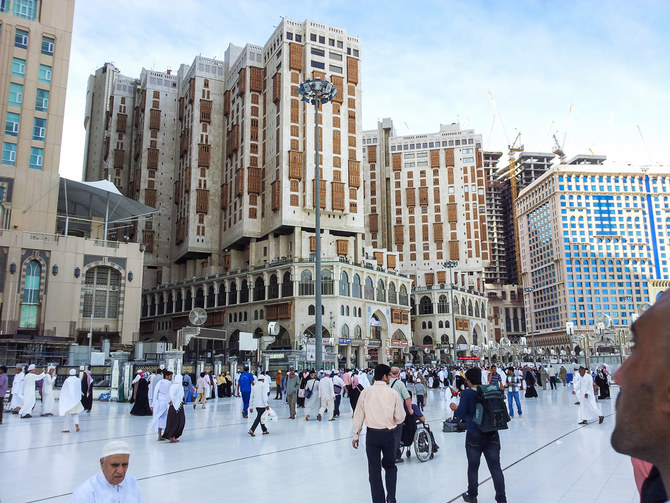
Makkah’s hotel occupancy rises to 80%, the highest since 2020  

Hotel rates, particularly in Makkah, are determined by certain factors, including supply and demand, proximity to the Grand Mosque, room views and amenities. (Shutterstock) 
Short Url
Updated 03 April 2023
Follow

Makkah’s hotel occupancy rises to 80%, the highest since 2020  

RIYADH: Saudi Arabia’s hotel sector is witnessing a significant resurgence, with room occupancy in Makkah reaching 80 percent during the holy month of Ramadan this year, the highest level in the last three years.    

This resulted in room rates also climbing to record levels due to high demand, especially during the last 10 days of the season, according to the chairman of the Hajj and Umrah Committee of the Makkah Chamber, Abdullah Al-Qadi.  

Al-Qadi noted that hotel rates, particularly in Makkah, are determined by certain factors, including supply and demand, proximity to the Grand Mosque, room views and amenities.  

He also added that the hotel rates are similar to the prices of the airline tickets, especially those in the central region, where prices increase gradually as the season approaches.  

Al-Qadi revealed that the Ministry of Tourism worked with investors in Makkah with total transparency and clarity to restore the hotel sector’s recovery after the COVID-19 pandemic. 

He added that several remote meetings were held to address various issues faced by the investors – something that helped the sector achieve a speedy recovery.  

According to a survey conducted by the Saudi newspaper Al-Eqtisadiah on hotel room prices in Makkah’s central district during the last ten years, the rates soared between SR3,000 ($800) and SR9,000 per room per day.  

This year’s Ramadan season also saw a large turnout, particularly with the opening of visas and the facilities offered by the Kingdom to pilgrims from abroad.  

According to the Minister of Tourism Ahmed Al-Khateeb, Saudi Arabia initiated 10 new policies in December to expand the tourism sector and protect tourists, describing the new laws as “a promising step toward a prosperous tourism future” in a tweet.  

According to a Saudi Press Agency report, the Kingdom’s hotel, restaurant, transportation, food and commercial sectors have benefited from the surge of Umrah pilgrims, as ready-made clothes, gifts and Zamzam water topped the list of the most demanded goods among pilgrims.   

Al-Khateeb also announced in November last year that the Kingdom is offering investment opportunities worth $6 trillion in the travel and tourism sector through 2030. 


Saudi Arabia launches skills framework to support mining, industrial growth 

Updated 6 sec ago
Follow

Saudi Arabia launches skills framework to support mining, industrial growth 

JEDDAH: Saudi Arabia has launched a new skills framework for the mining and industrial sectors to standardize job roles and support workforce development. 

The initiative was unveiled by Minister of Industry and Mineral Resources Bandar Alkhorayef on the sidelines of the Global Labor Market Conference 2026, according to Al-Eqtisadiah. 

The framework is intended to help employers, job seekers and training providers better navigate labor demand in mining and industry, as Saudi Arabia accelerates investment in manufacturing, minerals processing and related value chains under Vision 2030. 

“This is, in fact, a tool which ensures clear definitions of occupations and their required skills. It will cover more than 500 job roles, detailing the necessary skills, responsibilities, and titles,” Alkhorayef said during a discussion panel at the event. 

The Ministry of Industry and Mineral Resources said the initiative — known as the Industry & Mining Occupations & Skills Framework — will serve as a national reference for occupations and skills in mining and industry. 

The framework is designed to achieve a set of strategic objectives that support human capital development in the industrial and mining sectors. It aims to strengthen workforce planning, training programs, and career pathways, while supporting informed decision-making. 

Covering more than 500 industrial occupations, over 300 professional specialties, 600 skills, and 900 professional certifications, the framework sets standardized job titles, descriptions, and skill requirements to support recruitment, performance, and competitiveness. 

For each occupation, a profile is developed, outlining the code, job titles, and descriptions, as well as other information such as key tasks, educational qualifications, and required skills.

These profiles give employees clarity on roles, career pathways, and accredited credentials, while helping job seekers match their qualifications with suitable roles and focus on targeted skill development. 

The framework, published by the ministry, runs to nearly 3,200 pages and was developed through collaboration with the General Authority for Statistics, alongside government bodies, private sector organizations and academic institutions. 

The launch comes as Saudi Arabia’s mining push gains momentum after new surveys of the Arabian Shield showed the Kingdom’s mineral resources are larger than previously estimated. 

Official estimates have jumped by about 90 percent to roughly SR9.37 trillion ($2.5 trillion), up from around SR5 trillion in 2016, strengthening the case for further mining investment and skills development.