



RIYADH: Concerns about energy security and the need to accelerate decarbonization seem to be growing with 2023 rolling on, as geopolitical issues that came to the fore last year show no sign of abating.
Amid the ongoing energy crisis catalyzed by these tensions, countries are realizing the necessity to embrace renewables as dependence on traditional energy imports could be impacted due to various factors including the internal affairs of energy exporting nations.
Even though energy transition is very much necessary to warrant a better future, a sudden transformation to renewables is expected to do more harm than good, especially considering the fact that the energy crisis has been battering the world’s poorest countries for several years.
“The IEA estimates that some 75 million people who recently gained access to electricity are likely to lose the ability to pay for it, meaning that for the first time since we started tracking it, the total number of people worldwide without electricity access has started to rise,” Abdullah Al-Abri, a consultant at the International Energy Agency told Arab News.
He added: “To solve the issue of the energy crisis in the poorest nations, the global community needs to invest more in sustainable energy solutions and provide competitive capital and expertise.”
The vitality of a gradual energy transition
Experts believe that a gradual energy transition, where both renewables and traditional sources operate, hand-in-glove could be the solution to smoothen the journey toward sustainability.
“There will be a transition period when investment in both fossil fuel and renewables must continue concurrently, without losing sight of the fact that renewables are the future of global energy,” Ian Harfield, managing director of ENGIE Energy Solutions, Gulf Cooperation Council, told Arab News.

There will be a transition period when investment in both fossil fuel and renewables must continue concurrently, without losing sight of the fact that renewables are the future of global energy.
Ian Harfield, Managing director of ENGIE Energy Solutions, Gulf Cooperation Council
He added: “To fortify energy systems against extreme weather, we need to diversify the renewable energy mix, incorporating hydroelectric, solar, wind and green hydrogen, and large-scale storage systems.”
Manish Laligam, managing director, of the Middle East Region of Protiviti Member Firm, shares identical views and said: “To satisfy the pledges under the Paris Climate Accord, developing countries where energy consumption is increasing faster than the rest of the globe are considering a combination of gas and renewable energy sources.”
Earlier in March, Francesco La Camera, director-general of the International Renewable Energy Agency, told Arab News divestment from fossil fuels must be a gradual process.
“We have to understand that the old system, the one that is centralized and based on fossil fuels, cannot shut down in a day,” La Camera told Katie Jensen, host of the Arab News program “Frankly Speaking.”
“There will be a slow decline of oil and gas. And to maintain a smooth decline of oil and gas, we need some investment again in oil and gas. If not, there will be a disruption.”
Al-Abri opined that it is necessary to develop climate-resilient fossil fuels to ensure a smooth energy transition.
“The question is not about fossil fuels versus new energies – the matter is more of how to develop fossil fuels that are climate resilient while ensuring that new energies are also developed to mutually satisfy the growing demand and climate agenda,” said Al-Abri.
Meanwhile, experts believe that the ongoing geopolitical tensions including the Ukraine conflict are expected to accelerate the energy transition journey.
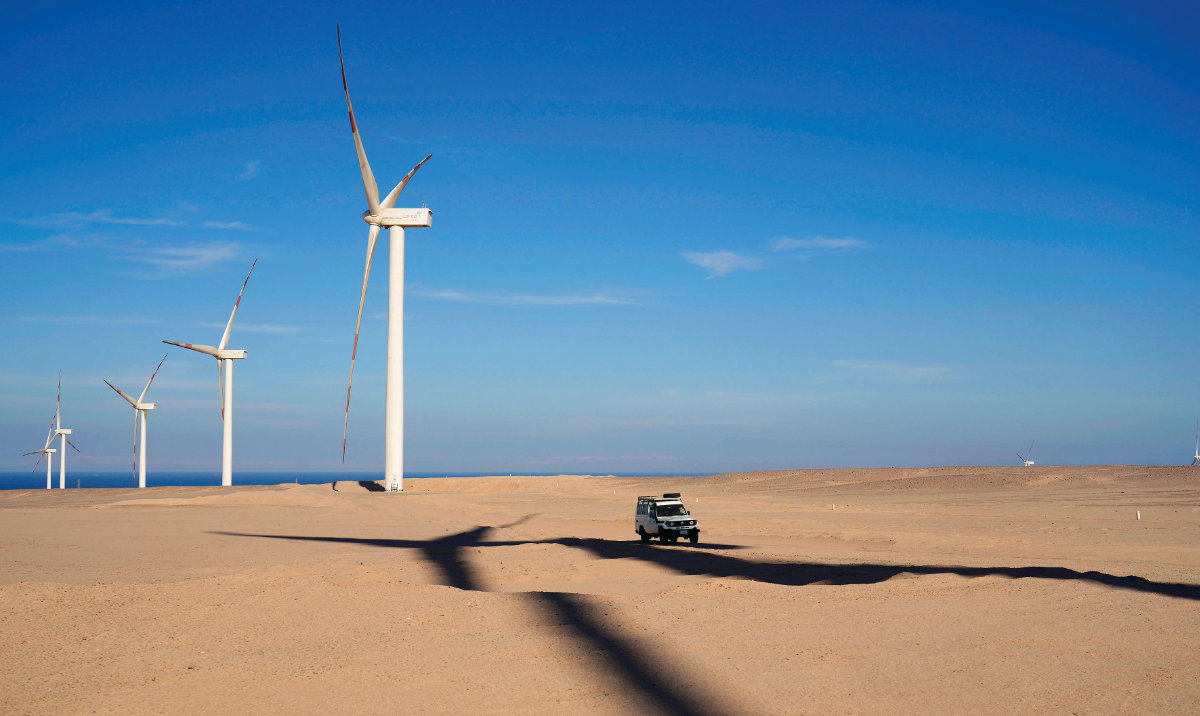
COP28 will help shine the spotlight on the region’s ambitious decarbonization goals. (AP)
“Geopolitical tensions have only underscored the critical need for renewable energy — green energy sources are more resilient to global disruptions. International efforts are then needed to set benchmarks, share insights, and promote industry best practices,” noted Harfield.
In January, during the World Economic Forum, Fatih Birol, executive director of the International Energy Agency, warned the world is going through an unprecedented energy crisis.
“Our world has never seen an energy crisis of this depth and of this complexity. The biggest driver of renewable energy growth today is energy security,” Birol said.
COP28 holds crucial significance
Amid all these sustainability efforts and ongoing energy transition, the UN Climate Change Conference, also known as COP28, is set to be held in Dubai from Nov. 30 to Dec. 12 this year.
The upcoming conference is expected to have a crucial significance in the energy transition journey as countries in the Middle East and North Africa region — spearheaded by Saudi Arabia — are playing a crucial role in turning the earth green with their net-zero targets.
“COP28 will help shine the spotlight on the region’s ambitious decarbonization goals, most aligned with national socioeconomic visions,” said Harfield.
Laligam opined that COP28 will accelerate the region’s plans to achieve a clean economy, driven by renewable energy sources, technology developments, and climate-smart solutions.
HIGHLIGHT
Amid the ongoing energy crisis catalyzed by these tensions, countries are realizing the necessity to embrace renewables as dependence on traditional energy imports could be impacted due to various factors including the internal affairs of energy exporting nations.
“Many Middle Eastern countries have developed the Hydrogen Leadership Roadmap to position their nation as top hydrogen suppliers by fostering low-carbon sectors. Across the past two years, numerous solar, wind, and battery storage projects have been started across the Middle East,” Laligam added.
In March, Issam Abu Suleiman, regional director of the Gulf Cooperation Council at the World Bank, said COP28 will provide an opportunity to move to an economic path of green growth which could ultimately diversify the economy while making a positive impact on the climate.
Abu Suleiman further added that the conference is expected to provide chances to push toward green technology and carbon sequestration investments, which are crucial for the world to achieve net-zero emissions by 2050.
This year’s COP is also expected to include oil and gas companies in discussions, as without their contribution, it will be difficult to achieve a sustainable future.
During a recent exclusive interview with Arab News, Fahad Alajlan, president of the King Abdullah Petroleum Studies and Research Center, also reiterated this view and said that an inclusive approach is required to smoothen the energy transition journey.
“In the past, oil and gas companies have been excluded from discussions. If we look at emissions today, more than 50 percent comes from the energy sector. So, it is very important that we involve oil and gas companies in this discussion, to become part of the solution rather than demonizing and excluding them,” said Alajlan.
Al-Abri said that COP28 would play a key role, not just in the MENA region, but the entire world.
“To the region, I think COP28 could shed light on how producer economies are working to address the climate agenda through the energy transition, de-emissionization practices, and the incorporation of innovation and solution integration. COP28 could also be instrumental to the world as I think the hydrogen and new energies agenda would be more emphasized and opportunity for cross-learnings on how to establish the low-emission industrial clusters,” noted Al-Abri.
As the biggest oil-producing nations in the Middle East are spearheading the energy transition globally, the world will witness more monumental milestones in this journey, which will ensure that the future is green.


