

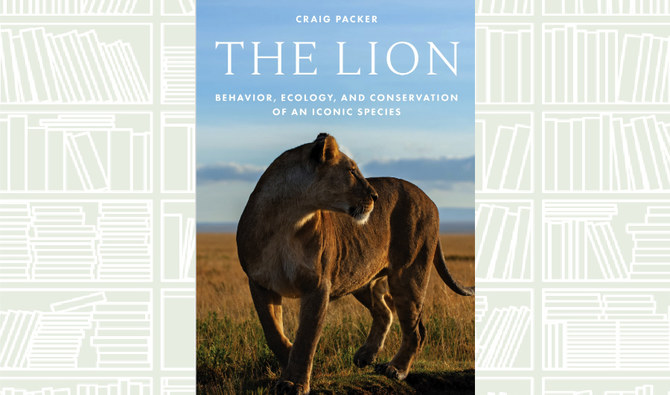
What We Are Reading Today: The Lion: Behavior, Ecology, and Conservation of an Iconic Species

Short Url
Updated 01 April 2023
Follow

What We Are Reading Today: The Lion: Behavior, Ecology, and Conservation of an Iconic Species

Author: Craig Paccker

Lions are the only social cat. They hunt together, raise cubs together, and defend territories together against neighbors and strangers. Lions also rest atop their ecological pyramid, with profound impacts on competitors and prey alike, but their future is far from assured. Craig Packer interweaves his discoveries from more than 40 years of research—including a substantial body of new findings—to provide an unforgettable portrait of the African lion.

He shares insights into the intricacies of lion life from birth until death and describes efforts to conserve lions in an increasingly crowded continent.

With a wealth of breathtaking photographs by Daniel Rosengren, “The Lion” sheds light on a host of intriguing scientific questions, such as why males have manes, why lions are social, how sociality limits and stabilizes lion populations, how close inbreeding affects lion health, why lions become man-eaters, how lions and people can best be protected from each other, and how to ensure the lion’s survival into the next century.


Book Review: ‘Winter Garden’ by Kristin Hannah

Updated 09 January 2026
Follow

Book Review: ‘Winter Garden’ by Kristin Hannah

Kristin Hannah’s “Winter Garden” is a novel that gradually unfolds into something deeply emotional and haunting.

At its heart are two sisters who could not be more different. Meredith has stayed home, building a life around responsibility, family, and the demanding work of running the apple orchard.

Nina has done the opposite, chasing stories across the world as a celebrated photojournalist, avoiding roots and the weight they carry.

Reading “Winter Garden” feels like slowly peeling back layers of a family. The differences between the two sisters feel real, and so does the tension between them.

But what will really move you is their cold, unreachable mother Anya and the way her silence seems to freeze the entire house.

For most of the book readers will ask why she cannot show love. Why is everything so guarded? The only softness in her comes through the Russian fairytale she tells — and even that story is always unfinished.

When the sisters’ father becomes ill and asks that the story finally be told to its end, the novel shifts in a way that genuinely surprises. The fairytale slowly turns into truth. As Anya begins revealing her past in Leningrad — the hunger, the fear, the impossible choices — you feel your perception of her change page by page.

You will start judging her, pitying her, and finally understand that sometimes silence is just another way of surviving.

What makes the book feel personal is the reminder that our parents are not just parents: They are entire worlds of lost dreams, mistakes, heartbreaks, and secrets we may never fully uncover. And sometimes the distance we feel from them has nothing to do with us; it comes from wounds they never healed.

“Winter Garden” is not the kind of novel that grabs you right away. It is slow, heavy at times, and painful. But the emotional payoff is worth it. By the end you feel as though you have been invited into someone’s private grief.