Investments in renewable energies must quadruple to meet climate target: IRENA

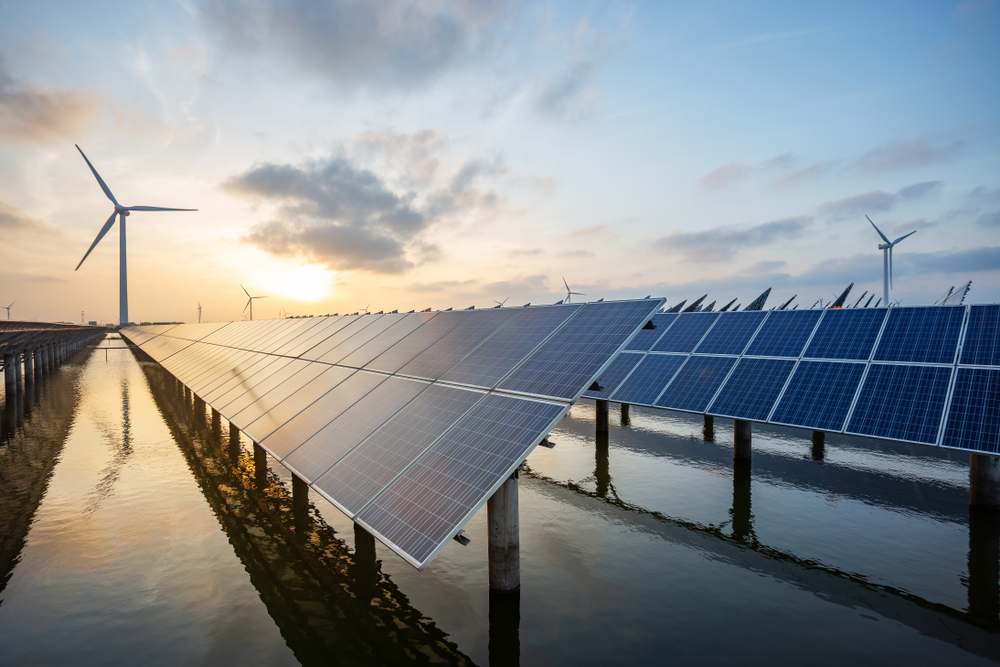
Renewable energy deployment must grow from around 3,000 gigawatts annually today to over 10,000 GW in 2030, IRENA said. (Shutterstock)
Short Url
Updated 28 March 2023
Follow

Investments in renewable energies must quadruple to meet climate target: IRENA

BERLIN: Global investments in energy transition technologies must more than quadruple annually to stay in line with commitments made under the Paris climate accord, the International Renewable Energy Agency said on Tuesday.

Investments in renewable energy technologies reached a record of $1.3 trillion last year but that figure must rise to around $5 trillion annually to meet the key Paris accord target of limiting temperature increases to 1.5 degrees Celsius above pre-industrial levels, IRENA said.

In total, the world needs around $35 trillion for transition technology by 2030, including improving efficiency, electrification, grid expansion and flexibility, IRENA said.

Renewable energy deployment must grow from around 3,000 gigawatts annually today to over 10,000 GW in 2030, IRENA said, adding that more equality is needed in renewable expansion between industrial and developing countries.

New renewable energy projects in China, the EU and the US accounted for two-thirds of installed capacity last year, while Africa accounted for only 1 percent of renewable capacity installed.

"A fundamental shift in the support to developing nations must put more focus on energy access and climate adaptation," IRENA' Director General Francesco La Camera said, calling on financial institutions to direct more funds towards energy transition projects with better conditions.

IRENA called for directing planned fossil fuel investments — around $1 trillion of fossil fuel investments per year by 2030 — toward renewable energy technologies and infrastructure.
Pakistan, Saudi Arabia reaffirm push for joint energy and mining projects

Updated 30 January 2026
Follow

Pakistan, Saudi Arabia reaffirm push for joint energy and mining projects

  • In recent years, Saudi Arabia has positioned itself as a leader in the global minerals and energy sectors
  • Both sides reaffirm commitment to enhance partnership and promote mutually beneficial investments

ISLAMABAD: Pakistan and Saudi Arabia have agreed to enhance cooperation in energy and mineral sectors, the Pakistani information ministry said on Friday, as the two sides seek to deepen economic ties and promote joint investment.

The development comes weeks after Pakistan’s Petroleum Minister Ali Pervaiz Malik met Saudi Arabia’s Minister of Industry and Mineral Resources Bandar Ibrahim Alkhorayef at the Future Minerals Forum in Riyadh that saw participation from 13 public and private Pakistani firms.

Pakistan petroleum ministry said Alkhorayef had pointed out “vast opportunities” for cooperation between Pakistan and Saudi Arabia in the minerals sector, adding that the Kingdom would support the development of Pakistan’s mining industry through its knowledge and technical expertise.

On Friday, Malik held a meeting with Nawaf bin Said Al-Malki, Saudi ambassador to Pakistan, to discuss areas of mutual cooperation and further strengthen bilateral relations between the two brotherly countries, according to the information ministry.

“Both sides reviewed ongoing collaboration and explored new avenues for cooperation, particularly in the energy and minerals sectors,” it said in a statement. “They reaffirmed their commitment to enhancing economic partnership and promoting mutually beneficial investment opportunities.”

In recent years, Saudi Arabia has positioned itself as a leader in the global minerals and energy sectors and accelerated investments in green technologies, sustainable mining practices and international collaborations that are shaping the future of the mines and mineral industry.

Last year, Saudi Arabia’s Manara Minerals, a Public Investment Fund and Maaden joint venture, also expressed intent to acquire a 15 percent stake in Pakistan’s Reko Diq gold and copper mine. The $7 billion project, located in Balochistan, is being developed by Canadian mining giant Barrick Gold in partnership with Pakistan’s federal and provincial governments.

Malik expressed confidence that longstanding brotherly relations between Pakistan and Saudi Arabia would translate into tangible outcomes, fostering investment, technology exchange, and sustainable development initiatives for mutual benefit.

Ambassador Al-Malki appreciated Pakistan’s active participation in the Future Minerals Forum, which offered significant opportunities for regional collaboration, according to the statement.

“Both sides agreed to maintain close coordination to further strengthen economic and strategic cooperation in the coming period,” the information ministry added.