

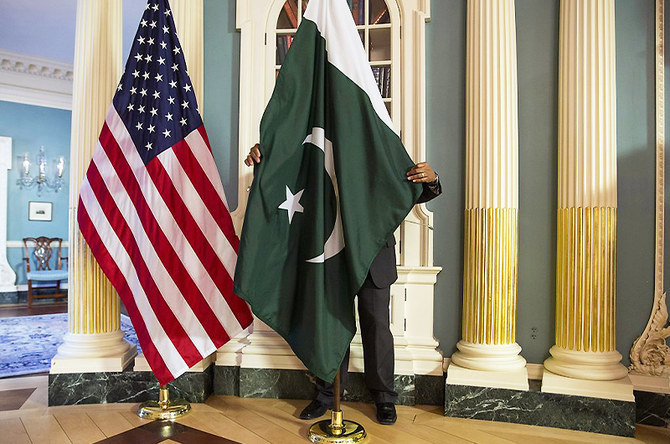

ISLAMABAD: Pakistan’s foreign office on Tuesday confirmed that the South Asian country will not attend a Washington-led democracy summit, adding that it would instead “engage bilaterally” with the US and other co-hosts of the summit, which kicks off today.
US President Joe Biden will co-host the second “Summit for Democracy” with the governments of Costa Rica, Netherlands, Republic of Korea, and Republic of Zambia, on March 29-30. The second summit “will assemble world leaders in a virtual, plenary format, followed by gatherings in each of our countries with representatives from government, civil society, and the private sector,” according to the US State Department.
Pakistan also did not participate in last year’s US democracy summit as ties between Washington and Islamabad soured after the Taliban takeover of Afghanistan. US officials blamed Pakistan for sheltering Taliban fighters, an allegation that Islamabad vehemently denied. Ties between the two nations were further strained when US President Joe Biden refused to engage with former Pakistani prime minister Imran Khan, reportedly causing Islamabad to reject the summit invite.
This year, however, the U.S. vexed China by snubbing it and instead, inviting Beijing's longstanding nemesis Taiwan to the democracy summit. China considers Taiwan, a self-ruled island, an inalienable part of its territory and has not ruled out the possible use of force to “reunify” the country. Pakistan, historically a close ally of Washington, has become increasingly close to China, which has provided billions in loans and is Islamabad’s largest single creditor. Pakistan faces a crippling economic crisis, with decades-high inflation and critically low foreign exchange reserves depleted by continued debt repayment obligations.
In a press statement, Pakistan’s foreign office spokesperson thanked Washington for the summit invite, adding that its friendship with the US had “widened and expanded substantially” under the Biden administration.
“Pakistan has not been part of the Summit process, that commenced in 2021 and required countries to make certain national commitments.” the foreign office spokesperson said. “The Summit process is now at an advanced stage and therefore, Pakistan would engage bilaterally with the United States and co-hosts of the Summit to promote and strengthen democratic principles and values and work toward advancing human rights and the fight against corruption.”
The decision by Pakistan comes at an important time for Islamabad as it desperately seeks to revive a stalled $6.5 billion loan program with the International Monetary Fund (IMF) to escape a balance of payments crisis. Pakistan also seeks closer economic cooperation and an improvement in its ties with the US as it grapples with an economic crisis that has seen its foreign exchange reserves dwindle and its national currency plummet to historic lows against the US dollar in recent months.


