

In southwest Pakistan, fried vermicelli is everyone’s favorite Ramadan delight

Workers fry vermicelli, as known as “pheni,” at a local sweet shop in the southwestern Pakistani city of Quetta on March 26, 2023. (AN photo)
Short Url
Updated 27 March 2023
Follow

In southwest Pakistan, fried vermicelli is everyone’s favorite Ramadan delight

  • Many Pakistanis, fasting from dawn till dusk, prefer the staple, called ‘pheni,’ with hot milk in pre-dawn meals
  • Customers complain of increase in pheni’s price, bakery owners attribute it to soaring inflation across the country

QUETTA: After offering afternoon prayers, 54-year-old Muhammad Aziz starts displaying buckets filled with round bunches of fried vermicelli, called “pheni,” to attract customers to a local sweet shop in the southwestern Pakistani city of Quetta. Aziz, who works as a manager at the sweet shop, says the demand for the staple food item “increases” in southwest Pakistan during the holy month of Ramadan. 

In southwestern Pakistan, pheni is a Ramadan delight as people love to consume the light food item in their pre-dawn sehri meals. Vermicelli enthusiasts often consume it with hot milk and tea, which helps them avoid heavier meals during suhoor. 

“The demand for pheni increases in Ramadan because customers eat it with hot milk in their suhoor,” Aziz, 54, told Arab News on Saturday. “In Ramadan, we sell almost five to six buckets a day and each bucket contains 15-20 kilogram of pheni.” 
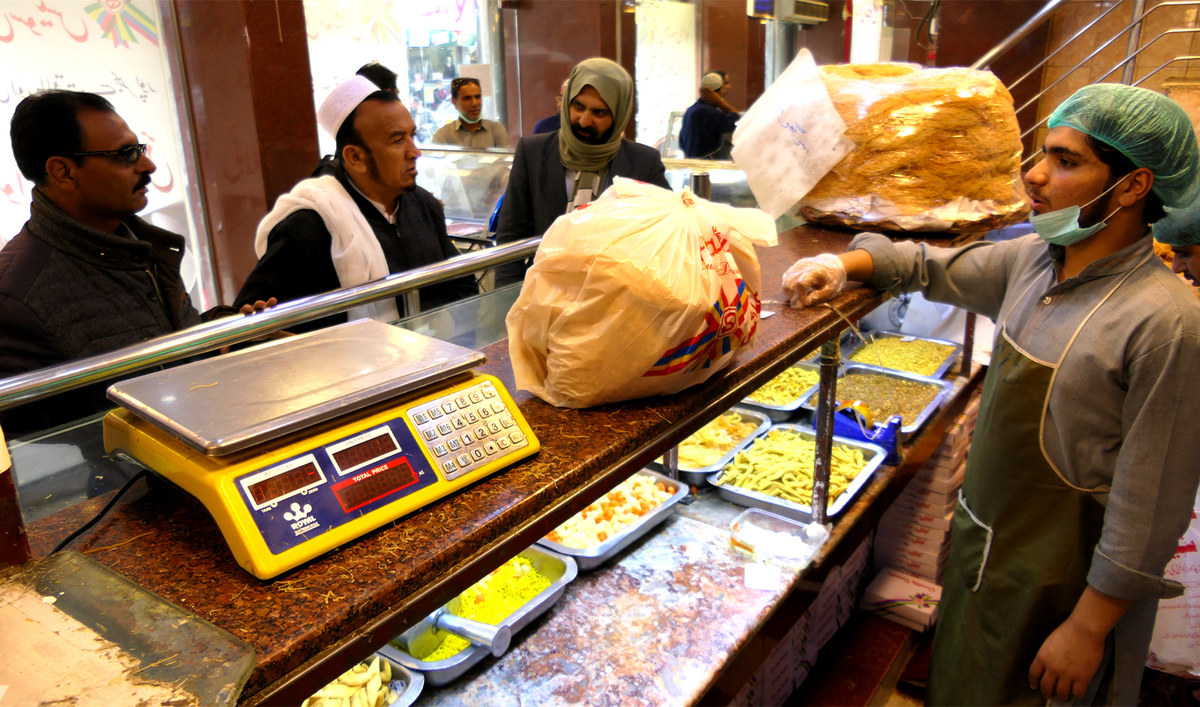


People buy vermicelli at a local sweet shop in the southwestern Pakistani city of Quetta on March 26, 2023. (AN photo)

Mumtaz Ali, 43, has been making vermicelli for the last 20 years at Quality Sweets, a famous sweet shop in Quetta. Ali says his team, which comprises 12 members, works for 15 hours a day during Ramadan to prepare six sacks of vermicelli. 

Each sack weighs 85kg. 

“In Ramadan we hire extra labor who work in the vermicelli section for a month but we stop making pheni after the 23rd of Ramadan,” Ali told Arab News, adding that the focus then shifts toward confectionary items for Eid. 
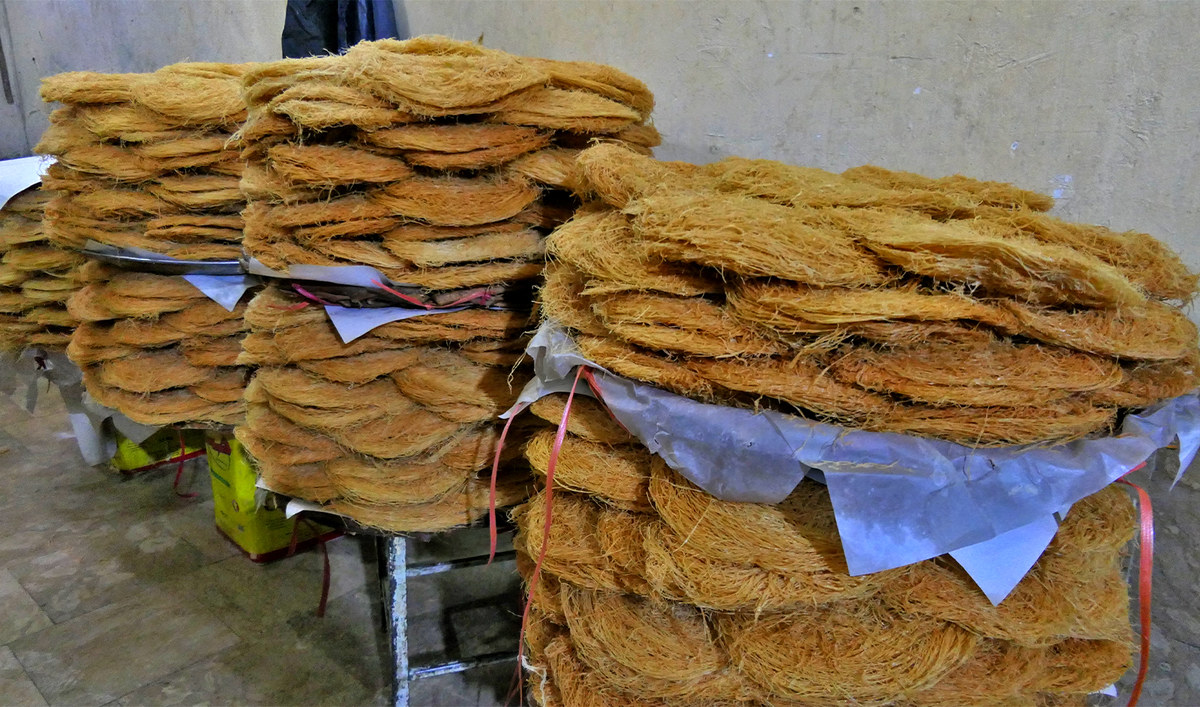


The picture taken on March 26, 2023, shows stacks of fried vermicelli at a local sweet shop in the southwestern Pakistani city of Quetta (AN photo)

Explaining how the snack is prepared, Ali says “high quality” of flour is used to make vermicelli, which his workers knead with their hands and through machines. Next, it is mixed with water and salt. 

“Then we apply ghee to it and later we stretch the dough and make them into dough balls,” he said. “We then bring it here [to the kitchen] and fry it here to bring it into this position.” 

With inflation soaring to a decades-high in the country, bakery owners in Balochistan have also increased the price of pheni this Ramadan season. A kilogram of the round, slender threads has risen to Rs650 ($2.30) from Rs500 ($1.74) last year. 

“Inflation increases day-by-day, previously it increased in a year but now prices jump within a week,” Muhammad Javed Butt, who owns a bakery in Quetta, told Arab News. 

“Flour and oil prices have increased which is why we have to slightly up the [pheni’s] rate to maintain its quality.” 

But it nonetheless remains a part of people’s pre-dawn meals in Balochistan, he added. 

Khalid Hussain, 65, who buys pheni for his family every Ramadan, said they have it in sehr and iftar with milk. 

“Children love it a lot, they mix it with milk and really enjoy it,” he told Arab News. 

Hussain said there may be many baked items for Ramadan but pheni is the “most eatable” one. 


Top Pakistani clerics warn government against sending troops to Gaza to disarm Hamas

Updated 21 sec ago
Follow

Top Pakistani clerics warn government against sending troops to Gaza to disarm Hamas

  • Pakistani clerics raise alarm over reports of pressure on Muslim nations to provide troops for Gaza stabilization force under Trump peace plan
  • Islamabad has previously said that it is willing to join the international stabilization force but ‘not ready’ to play any role in disarming Hamas

ISLAMABAD: A group of Pakistan’s top religious and political leaders on Monday warned the government against sending Pakistani troops to Gaza to disarm Palestinian group Hamas, amid discussions over a proposed International Stabilization Force (ISF) for the Palestinian territory.

The representative gathering, chaired by prominent scholar Mufti Taqi Usmani, brought together leaders from Deobandi, Barelvi, Ahl-e-Hadees and Shia schools of thought, alongside leaders of the country’s main religio-political parties, Jamiat Ulema-e-Islam-Fazl (JUI-F) and Jamaat-e-Islami (JI).

The international stabilization force, which is to be composed of troops from Muslim countries, is the cornerstone of President Donald Trump’s peace plan for Gaza announced in Sept. Islamabad has previously said it is willing to join the ISF but “not ready” to play any role in disarming Hamas. Hamas’s Gaza chief Khalil Al-Hayya said this month the group had a “legitimate right” to hold weapons, while Israel has repeatedly insisted that Hamas be disarmed.

In a joint statement issued after the meeting in the port city of Karachi on Monday, Pakistani clerics raised alarm over reports that international pressure is mounting on Muslim-majority nations to provide troops for the transitional security force in Gaza, following Israel-Hamas ceasefire.

“In such circumstances, demands are being made to Muslim countries that they send their forces there to disarm Hamas,” the statement said. “Several Muslim governments have already refused this, and pressure is being increased on Pakistan.”

Last month, the United Nations Security Council approved Washington’s plan, which called for a yet-to-be-established Board of Peace as a transitional authority that Trump would head, and the stabilization force, which would be empowered to oversee borders, provide security and demilitarize the territory.

The gathering of Pakistani clerics urged Islamabad to resist any diplomatic overtures from Washington regarding troop deployment.

“This gathering, with full emphasis, demands the Government of Pakistan refrain from sending its forces to disarm Hamas and that it should not yield to any pressure in this regard,” the statement said.

The assembly expressed complete support for the liberation of Palestine and described the effort as a “duty of every Muslim.”

It said that Pakistan’s armed forces are “imbued with the spirit of jihad” and that the “notion of placing them against any sacred struggle for the liberation of Baitul Muqaddas or Palestine is impossible for the nation to accept.”

The religious leaders characterized the proposal as a “conspiracy” from which the government must “protect the country.”

Pakistani foreign office spokesperson Tahir Andrabi and the prime minister’s spokesperson for foreign media, Mosharraf Zaidi, did not respond to Arab News requests for comment on the statement.

Washington reportedly views Pakistan as a prime candidate for the ISF, given its experience in high-intensity border conflicts and internal counter-insurgency operations.

Last week, Pakistan’s foreign office said that Islamabad had not taken any decision on joining the proposed stabilization force for Gaza and had received no formal request from the US or any other country in this regard.

“I am not aware of any specific request made to Pakistan. We will inform you about any development if it takes place,” Andrabi told reporters.

He also sought to distance the government from rumors of a pending visit by Pakistan’s defense forces chief, Field Marshal Asim Munir, to the US to meet President Trump.