

US report lists ‘significant human rights’ abuses in India

1 / 3
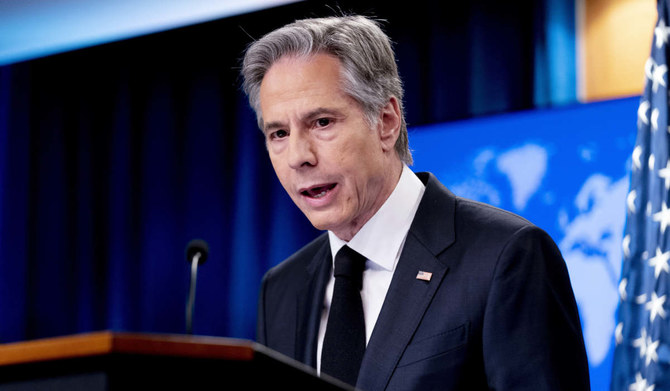
Secretary of State Antony Blinken speaks at a briefing on the 2022 Country Reports on Human Rights Practices at the State Department in Washington, Monday, March 20, 2023. (AP)
2 / 3
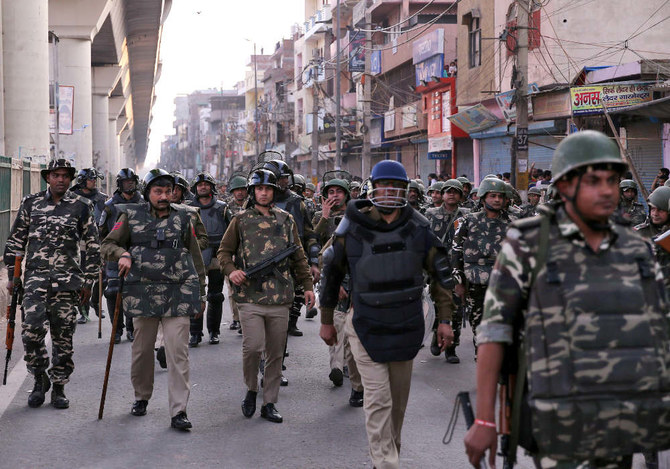
Paramilitary troops patrol in a riot affected area after clashes erupted between people demonstrating for and against a new citizenship law in New Delhi, India, February 25, 2020. (REUTERS)
3 / 3
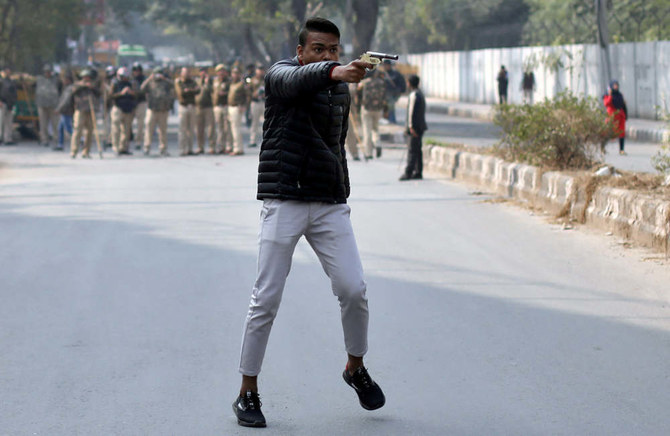
An unidentified RSS activist brandishes a gun during a protest against a new citizenship law outside the Jamia Millia Islamia university in New Delhi, India, January 30, 2020. (REUTERS)
Short Url
Updated 22 March 2023
Follow

US report lists ‘significant human rights’ abuses in India

  • US criticism of India is rare due to close economic ties between the countries
  • Advocacy groups have raised concerns over what they see as a deteriorating human rights situation in India

WASHINGTON: The annual US report on human rights practices released on Monday listed “significant human rights issues” and abuses in India, including reported targeting of religious minorities, dissidents and journalists, the US State Department said.
The findings come nearly a year after Secretary of State Antony Blinken said the US was monitoring what he described as a rise in human rights abuses in India by some government, police and prison officials, in a rare direct rebuke by Washington of the Asian nation’s rights record.
US criticism of India is rare due to close economic ties between the countries and India’s increasing importance for Washington to counter China in the region.


People mourn next to the body of Muddasir Khan, who was wounded on Tuesday in a clash between people demonstrating for and against a new citizenship law, after he succumbed to his injuries, in a riot affected area in New Delhi, India, February 27, 2020. (REUTERS)

Significant human rights issues in India have included credible reports of the government or its agents conducting extrajudicial killings; torture or cruel, inhuman or degrading treatment or punishment by police and prison officials; political prisoners or detainees; and unjustified arrests or prosecutions of journalists, the US report added.
Advocacy groups have raised concerns over what they see as a deteriorating human rights situation in India in recent years under the Hindu nationalist Bharatiya Janata Party of Prime Minister Narendra Modi.
Human Rights Watch has said the Indian government’s policies and actions target Muslims while critics of Modi say his Hindu nationalist ruling party has fostered religious polarization since coming to power in 2014.


A radical Hindu religious flag flutters on the minaret of a burnt-out mosque following sectarian riots over India's new citizenship law, at Mustafabad area in New Delhi on February 28, 2020. Muslims in India's capital held regular on February 28 prayers under the watch of riot police, capping a week which saw 42 killed and hundreds injured during the city's worst sectarian violence in decades. (AFP)

Critics point to a 2019 citizenship law that the United Nations human rights office described as “fundamentally discriminatory” by excluding Muslim migrants from neighboring countries; anti-conversion legislation that challenged the constitutionally protected right to freedom of belief; and revoking Muslim-majority Kashmir’s special status in 2019.
The government dismisses the accusations by saying its policies are aimed at the development of all communities.
In 2022, authorities also demolished what they described as illegal shops and properties, many of them owned by Muslims, in parts of India. Critics say the demolition drive was an attempt to intimidate India’s 200 million Muslims. The government defended the demolitions, saying they were enforcing the law.
“Human rights activists reported the government was allegedly targeting vocal critics from the Muslim community and using the bulldozers to destroy their homes and livelihoods” without due process, the US report released on Monday added.
Since Modi took office in 2014, India has slid from 140th in World Press Freedom Index, an annual ranking by non-profit Reporters Without Borders, to 150th place last year, its lowest ever. India has also topped the list for the highest number of Internet shutdowns in the world for five years in a row, including in 2022, Internet advocacy watchdog Access Now says.
“Civil society organizations expressed concern that the central government sometimes used UAPA (Unlawful Activities Prevention Act) to detain human rights activists and journalists,” the US report said.


Blacklisted naphtha tanker from Russia enters Venezuelan waters while another diverts, ship data shows

Updated 4 sec ago
Follow

Blacklisted naphtha tanker from Russia enters Venezuelan waters while another diverts, ship data shows

  • Under U.S. sanctions related to Russia, the ship has a different sanctions profile than Skipper, the tanker that was seized by the U.S. on December 10

HOUSTON: A tanker subject to U.S. sanctions carrying some 300,000 barrels of naphtha from Russia entered Venezuelan waters late ​on Thursday, while another began redirecting course in the Atlantic Ocean, ship tracking data showed, a reflection of diverging last-minute decisions by ship owners after President Donald Trump ordered a "blockade" of oil tankers under sanctions bound for the OPEC country earlier this week.
The move ramped up pressure on Venezuelan president Nicolas Maduro by targeting the country's main source of income and followed the seizure by the U.S. of an oil tanker off the coast of Venezuela earlier in December.
Vessels that were not subject to sanctions began setting sail on Wednesday from Venezuelan waters after a week's pause, helping drain the country's mounting crude stocks.
Gambia-flagged medium tanker Hyperion docked on Friday at Amuay ‌Bay on Venezuela's ‌western coast, according to LSEG ship tracking data. It loaded near ‌Murmansk ⁠in ​Russia in ‌late November.
Under U.S. sanctions related to Russia, the ship has a different sanctions profile than Skipper, the tanker that was seized by the U.S. on December 10.
The U.S. can only seize vessels outside of its jurisdiction, or vessels that aren't heading to or from the country, if Washington has placed them under sanctions for links to groups it designates as terrorist, said David Tannenbaum, a director at consulting firm Blackstone Compliance Services that specializes in sanctions and anti-money laundering compliance.
Skipper, formerly called the Adisa, was under sanctions for what the U.S. says was involvement in Iranian oil trading that generated ⁠revenue for Iranian groups it has designated as foreign terrorist organizations.
With the Hyperion, though, sanctions were imposed to reduce Russian revenues from energy because of ‌its war with Ukraine.
"The Hyperion doesn't have known ties to ‍terrorism, and therefore unless they can prove it's subject ‍to the jurisdiction of the U.S., Washington can't grab it extraterritorially," said Tannenbaum, who previously worked with the ‍U.S. Treasury's Office of Foreign Assets Control that administers and enforces economic and trade sanctions.

REDIRECTS AND U-TURNS
The Angola-flagged Agate, another medium tanker under sanctions that loaded in Russia and had been sailing toward the Caribbean, was seen redirecting on Friday, according to LSEG ship tracking. The vessel was pointing towards Africa, but had not yet signaled a new destination.
Oman-flagged Garnet, also under sanctions ​and loaded in Russia, continued on its track, signaling the Caribbean as its destination on Friday.
Benin-flagged tanker Boltaris, under sanctions and carrying some 300,000 barrels of Russian naphtha bound for Venezuela, made ⁠a U-turn earlier this month and was heading for Europe without having discharged, according to LSEG vessel monitoring data.
Two very large crude carriers not subject to sanctions set sail for China on Thursday from Venezuela, according to sources familiar with Venezuela's oil export operations, marking only the second and third tankers unrelated to Chevron to depart the country since the U.S. seized Skipper.
The American oil major, which has continued to ship Venezuelan crude under a U.S. authorization, exported a crude cargo on Thursday bound for the U.S., LSEG data showed.
Secretary of State Marco Rubio on Friday said the U.S. was not concerned about the four vessels that sailed from Venezuela on Thursday, as those were not ships under sanctions.
"Sanctioned boats, we have the capabilities necessary to enforce our laws. We'll have a judicial order, we'll execute on those orders and there's nothing that will impede us from being able to do that," Rubio said.
Venezuela's government ‌called Trump's blockade a "grotesque threat" in a statement on Tuesday, saying it violates international law, free commerce and the right of free navigation.
