Who’s Who: Yasir Al-Rumayyan, chairman of the board of directors of Riyadh Air

Yasir Al-Rumayyan
Short Url
Updated 18 March 2023
Follow

Who’s Who: Yasir Al-Rumayyan, chairman of the board of directors of Riyadh Air

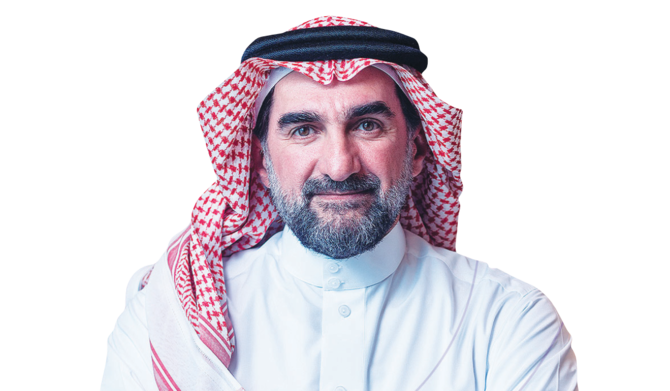
Yasir Al-Rumayyan was recently appointed chairman of the board of directors of Riyadh Air, a new national carrier to promote tourism and diversify the Saudi economy.

Crown Prince Mohammed bin Salman announced the second national carrier on March 12, offering tourists from around the world a chance to visit Saudi Arabia’s resorts and attractions and explore the wider region.

Al-Rumayyan has been the governor of the Saudi Public Investment Fund since 2017.

He is also the nonexecutive chairman of the English football club Newcastle United's board of directors.

In 2019, he was appointed chairman of Saudi Aramco, the world’s biggest oil company. Al-Rumayyan was appointed a member of the company’s board of directors in 2016.

He was appointed an adviser to the Royal Court in 2015 and is a board member at the US transportation network company Uber Technologies Inc. and the Japanese multinational SoftBank Group.

In May 2016, he became an adviser to the Saudi Cabinet, then a board member of the Saudi Industrial Development Fund.

Al-Rumayyan was the CEO of Saudi Fransi Capital LLC between 2011 and 2015 and is a former member of the board of directors of the Saudi Stock Exchange.

He began his career at Saudi Hollandi Bank as head of international brokerage between 1999 and 2004, before joining the Capital Markets Authority as the head of securities listings.

Al-Rumayyan received his undergraduate studies in accounting from King Faisal University in 1993 and completed his general management program at Harvard Business School in 2007.


Deals worth $8bn signed at World Defense Show 2026

Updated 58 min 36 sec ago
Follow

Deals worth $8bn signed at World Defense Show 2026

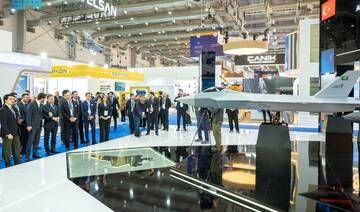
  • Five-day event brought together 1,486 exhibitors from 89 countries and attracted 137,000 visitors
  • Andrew Pearcey: We look at the industry and the trends, and see other new features that we can bring to the show

RIYADH: More than 60 military and defense deals worth SR33 billion ($8.8 billion) were signed at the third edition of the World Defense Show, which ended on Thursday in Riyadh.

The flagship defense exhibition is part of Saudi efforts to expand its military industries sector.

Organized by the General Authority for Military Industries, the five-day event brought together 1,486 exhibitors from 89 countries and attracted 137,000 visitors, according to official figures announced at the closing media briefing on Thursday.

Ahmad Al-Ohali, governor of the General Authority for Military Industries, said the event reflects broader efforts to localize defense spending under Vision 2030.

“When we started in 2018, the percentage of military spending from within the Kingdom of Saudi Arabia was 4 percent of total spending; by the end of 2024, it jumped to 25 percent,” he said.

Al-Ohali added that number of national cadres working in the sector increased from 25,000 male and female employees in 2020 to 34,000 — a rise of 40 percent.

Beyond attendance and displays, the exhibition served as a venue for commercial and government agreements.

The number of agreements signed reached 220, including 93 government-to-government agreements and 127 partnership agreements with companies.

Al-Ohali said the deals include technology transfer and local manufacturing projects aimed at strengthening domestic supply chains.

Aerial and static displays included 63 aircraft, alongside more than 700 pieces of military equipment exhibited across indoor and outdoor platforms. Maritime and unmanned systems were also showcased through dedicated demonstration areas.

Andrew Pearcey, CEO of the World Defense Show, said that planning for the next edition had already begun.

“So, what we do is we take stock of our successes, so we’re now starting to see what worked, and we also learned that some things that didn’t work,” Pearcey told Arab News.

“Over time, one of the key things is to try and grow; the demand for this show is huge, so we want to try and accommodate that.

“So, we need to try and build more space. Then we look at ways we brought new features to this show. So, we look at the industry and the trends, and see other new features that we can bring to the show.”

The event also introduced a “Future Talent Program” during its final two days, inviting students aged 16 to university level to explore career opportunities in the defense sector.

“The future talent program is where we invite youngsters, so from 16 up to university level, to come and look at the show, understand what career opportunities there are in the defense industry, sit and do some content programs, and meet the exhibitors that want to demonstrate some of their things,” Pearcey said.

“So, we bring around 4,000 to 5,000 students to the show. So, that’s bringing that next generation through.”