

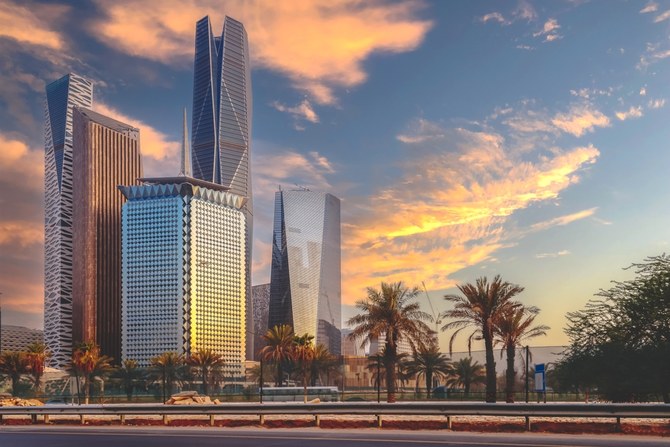

RIYADH: King Abdullah Financial District has signed Memorandums of Understanding with Saudi private enterprises in the fields of digital payments, telecommunications, and entertainment during the Public Investment Fund's Private Sector Forum.
The first MoU was signed with Saudi fintech startup, FOODICS which aims to provide residents with digitally integrated electronic payment solutions to improve accessibility and operations.
KAFD also signed an agreement with Saudi Telecom Company allowing both parties to exchange relevant data, sponsor events, and promote initiatives with sustainability and smart city initiatives.
Speaking to Arab News, Gautam Sashittal, CEO of KAFD, said as partnerships are one of the pillars of the potential success of Vision 2030 iniative, they are very important to his organization as it develops.
Sashittal said: "Partnership is all about cooperation, cohesion, working together, and collaboration. And this is what KAFD is extremely good at."
"Across the spectrum, from contracting to project management consulting to sustainability options to smart city options to technology options, there are lots of areas in which we are working with the private sector in partnership," the CEO added,
A third MoU was signed with Altawahuj Entertainment to build an indoor and outdoor adventure park accessible to visitors and residents in KAFD under the attractions for families and children.
"We signed an MoU today with the Altawahuj Group for an Entertainment for an entertainment option, which is creating an indoor adventure park," the KAFD CEO said.
These agreements aim to promote long-term ties between the public and private sectors in order to create new business opportunities.
"We're constantly signing MoU's these are all to develop partnerships with the private sector because the private sector has to be front and center of what we are doing in order to create local content, in order to create new jobs, in order to give the economy the fillip that it needs and to spread the growth of the economy, to spread the sort of create more jobs for example," he said.
The KAFD CEO also highlighted that there will be 100,000 people living and working in the district by the end of next year, with more than 70 F&B outlets, three hotels, and entertainment options.
"That's only a part of the story, A new journey is just starting because we've built on only about 40% of our landbank. We've got 60% of the landbank. We've got a huge number of projects that we are working on already. So you'll see that rapidly progressing in the next 2 to 3 years," the CEO said.
These MoU signings come after the announcement of Kamco Invest, a regional non-banking financial powerhouse move its Saudi offices to KAFD on Monday.
"Global foreign investment increased by over 75 percent in 2021; in Saudi Arabia alone it more than tripled in the same year. Now is the right time for companies to invest, particularly in growing economies such as the Kingdom. We are glad that Kamco Invest shares this foresight and has joined a growing portfolio of international firms choosing KAFD as their Saudi headquarters," Sashittal said.
King Abdullah Financial District to deliver 1,000 apartments this year
The MoUs come alongside a plan by KAFD build 1,000 apartments by the end of 2023 to transform the area into a perfect destination.
Sashittal said the development would create "the perfect destination to work, to live, and to play" while speaking at the Private Sector Forum.
“Are we done? No, this is just the beginning,” he said
Located in the heart of Riyadh, KAFD has more than 94 buildings, and multiple towers, and combines residential solutions, work, and entertainment.
“We’ve only developed around 40 percent of our land, which is about 1.6 sq. km, and we’re starting our really exciting projects over the next 3 to 5 years,” he told the forum.
Shashittal highlighted the achievements of KAFD and its plans for the future, which included the development of 1 million sq. m of office real estate, 130,000 sq. m of retail, 984 apartments, and around 70 food and beverages outlets.
The CEO added: “We will have a lot of branded residencies, hospitality keys, and more commercial space.”
When asked about the district’s aspirations, the top official stated: “We will create the next benchmark of grade A+ office space.”
Furthermore, “the public realm, what we call the Wadi, sees at least 5,000 visitors every evening, and on special days like Founding Day and National Day we have 15,000-20,000 people,” he said.
The urban design of KACD helps to promote a healthier lifestyle with features such as the Al-Wadi area. “We’re creating multiple experiences for visitors from Riyadh to come into KAFD, as well as to create the retail experiences for the office tenants and the residents,” added the CEO.
KAFD’s CEO also focused on the central role of the private sector, micro, small and medium enterprises in particular, in the district’s growth.
“According to the World Bank, 50 percent of the jobs globally and 90 percent of the enterprises globally, are MSMEs.”
The sector is very vibrant with regard to its process, technologies, and people, and that is why KAFD has already tapped into this resource.
“What KAFD have been able to achieve would never have been possible without the support of our shareholder — the PIF — and of course the country’s leadership behind us, and that is what propels us forward,” added Shashittal.


