

After daylong siege and clashes, police fail to arrest ex-Pakistani PM Khan

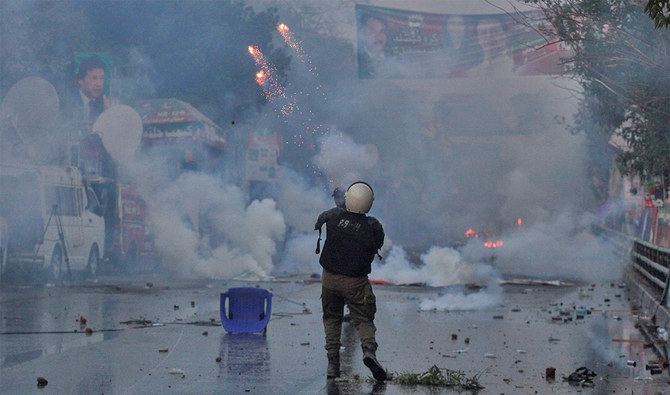
A police officer fires a tear gas shell to disperse the supporters of former Pakistani Prime Minister Imran Khan, during clashes ahead of Khan's possible arrest outside his home, in Lahore, Pakistan, on March 14, 2023. (REUTERS)
Short Url
Updated 15 March 2023
Follow

After daylong siege and clashes, police fail to arrest ex-Pakistani PM Khan

  • Police arrived outside Khan’s Lahore residence at 2pm with a court-issued warrant in case related to sale of state gifts
  • As police surrounded Khan’s house in the afternoon, supporters threw stones, police retaliated with teargas and batons

ISLAMABAD: A police siege of areas around the Lahore residence of former prime minister Imran Khan continued well into the night on Tuesday, after a long day of clashes between police and supporters in which several on both sides were injured.

Police arrived outside Khan’s residence at 2pm in the afternoon to arrest him after an Islamabad court issued a non-bailable arrest warrant in a case related to the sale of state gifts, popularly called the Toshakhana reference. As it neared midnight, police were forced to move to a thoroughfare, The Mall, around 700 meters away from the Zaman Park neighborhood where Khan’s home is located, as tear gas they had shelled earlier in the day hung heavy in the air and more and more supporters gathered.

Afternoon television footage from outside Khan’s residence showed Punjab police in anti-riot gear arriving to back up their Islamabad counterparts as they tried to clear the road of Khan supporters.

Aerial shots showed heavy presence of law enforcement personnel around Khan’s residence and tear gas billowing from shells fired into his home. Charged supporters of Khan’s Pakistan Tehreek-e-Insaf (PTI) party could also be seen throwing bricks and stones at police, as police rounded them up. Police also directed a water cannon at Khan supporters and in some cases baton charged them.

“The police have come to take me [to jail],” Khan said in a video message to supporters in the late afternoon. “If something happens to me or I go to jail or I am killed, you have to prove that this nation will [continue to] struggle even without Imran Khan.”

Amir Mir, caretaker information minister of Punjab, of which Lahore is the capital, told media PTI workers started the violence that injured several police officials.
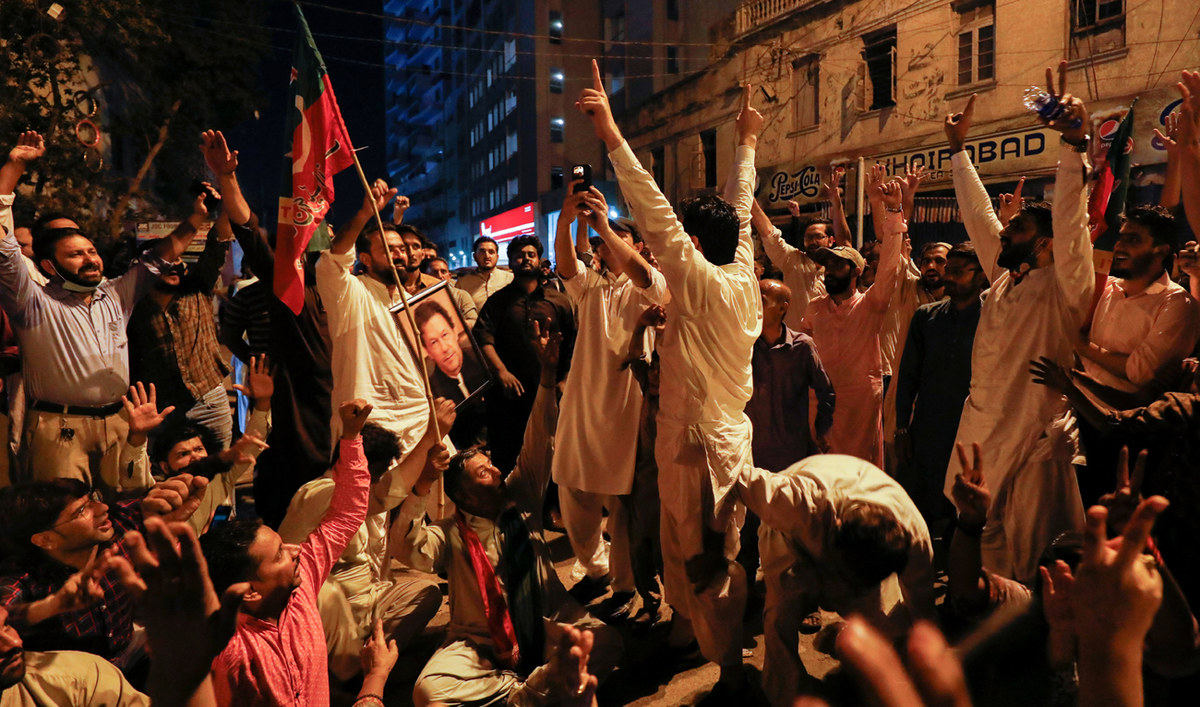


Supporters of former Pakistani Prime Minister Imran Khan chant slogans as they protest, ahead of Khan's possible arrest in Karachi, Pakistan March 14, 2023. (Photo courtesy: REUTERS)

“If Imran Khan ensures his presence in the court, it will be good, otherwise the law will take its course,” Mir said.

In a TV interview broadcast on Tuesday night, Prime Minister Shehbaz Sharif denied his government was behind attempts to arrest Khan.

“The courts have issued the arrest warrants, not me or my government,” Sharif said, when asked if Khan’s arrest would increase political instability. “If the [Punjab] administration does not follow the court’s orders then what will happen?”

Apart from the Toshakhana case, the ex-premier has been booked in over 70 different cases on various charges, including blasphemy, terrorism and sedition. He was ousted from power in a parliamentary vote of no-confidence last April and has since held rallies and protest marches calling for the government to announce snap national elections. Khan says the cases against him are politically motivated, which the government denies.
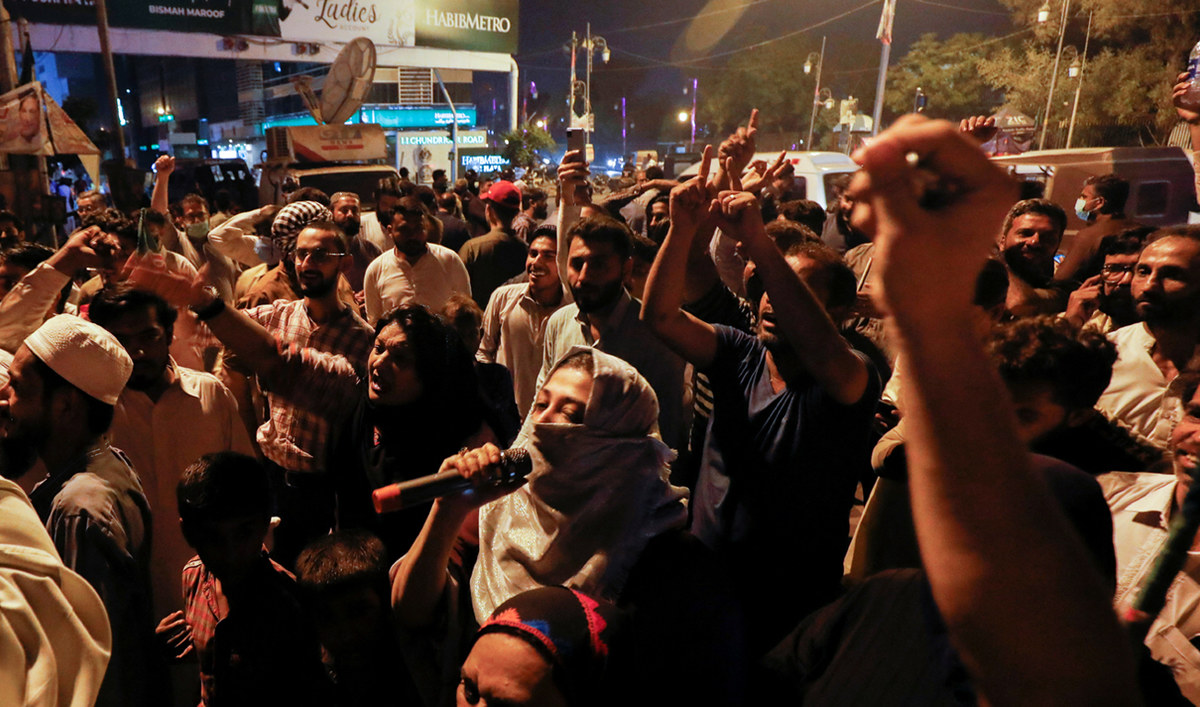


Supporters of former Pakistani Prime Minister Imran Khan chant slogans as they protest, ahead of Khan's possible arrest in Lahore, Pakistan March 14, 2023. (Photo courtesy: REUTERS)
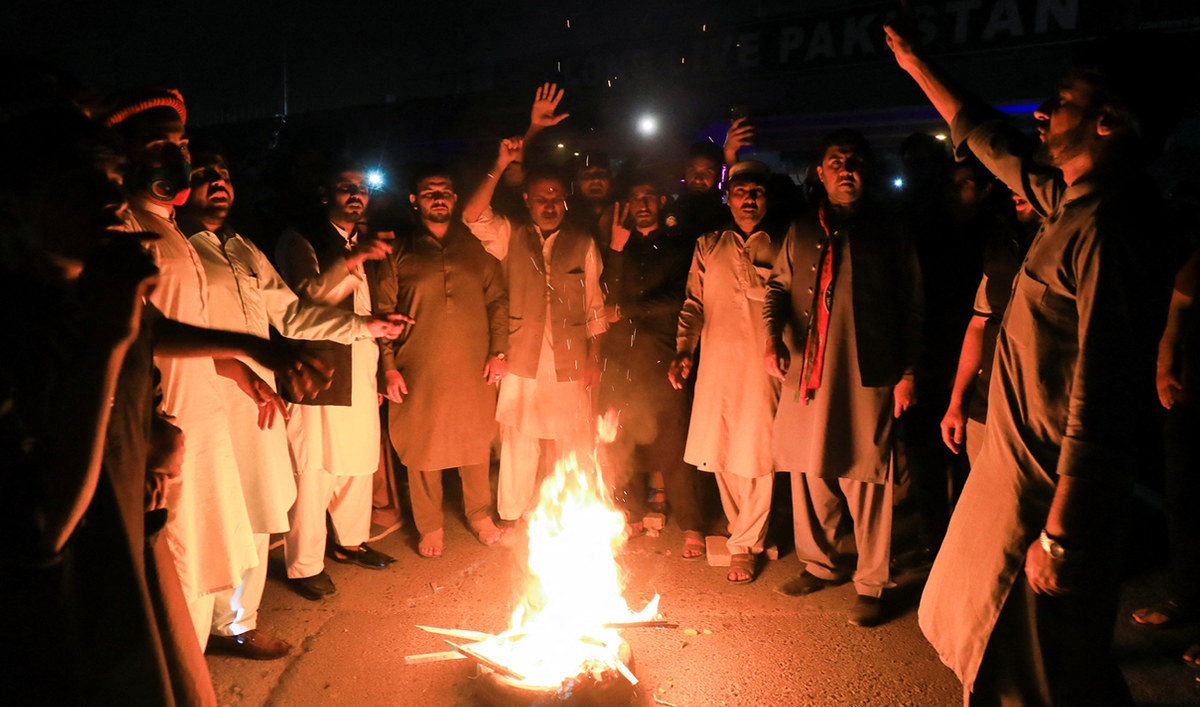


Supporters of former Pakistani Prime Minister Imran Khan chant slogans as they protest, ahead of Khan's possible arrest in Peshawar, Pakistan March 14, 2023. (Photo courtesy: REUTERS)


At ECO meeting, Pakistan proposes ‘Regional Innovation Hub’ to curb natural disasters

Updated 21 January 2026
Follow

At ECO meeting, Pakistan proposes ‘Regional Innovation Hub’ to curb natural disasters

  • Pakistan hosts high-level 10th ECO Ministerial Meeting on Disaster Risk Reduction in Islamabad
  • Innovation hub to focus on early warning technologies, risk informed infrastructure planning

ISLAMABAD: Pakistan has proposed to set up a “Regional Innovation Hub on Disaster Risk Reduction” that focuses on early warning technologies and risk informed infrastructure planning, the Press Information Department (PID) said on Wednesday, as Islamabad hosts a high-level meeting of the Economic Cooperation Organization (ECO).

The ECO’s 10th Ministerial Meeting on Disaster Risk Reduction (DRR) is being held from Jan. 21-22 at the headquarters of the National Disaster Management Authority (NDMA) in Pakistan’s capital. 

The high-level regional forum brings together ministers, and senior officials from ECO member states, representatives of the ECO Secretariat and regional and international partner organizations. The event is aimed to strengthen collective efforts toward enhancing disaster resilience across the ECO region, the PID said. 

“Key agenda items include regional cooperation on early warning systems, disaster risk information management, landslide hazard zoning, inclusive disaster preparedness initiatives, and Pakistan’s proposal to establish a Regional Innovation Hub on Disaster Risk Reduction, focusing on early warning technologies, satellite data utilization, and risk-informed infrastructure planning,” the statement said. 

The meeting was attended by delegations from ECO member states including Pakistan, Türkiye, Azerbaijan, Iran, Kyrgyzstan, Tajikistan, Turkmenistan and Uzbekistan. Representatives of regional and international organizations and development partners were also in attendance.

Discussions focused on enhancing regional coordination, harmonizing disaster risk reduction frameworks, and strengthening collective preparedness against transboundary and climate-induced hazards impacting the ECO region, the PID said. 

ECO members states such as Pakistan, Türkiye, Afghanistan and others have faced natural calamities such as floods and earthquakes in recent years that have killed tens of thousands of people. 

Heavy rains triggered catastrophic floods in Pakistan in 2022 and 2025 that killed thousands of people and caused damages to critical infrastructure, inflicting losses worth billions of dollars. 

Islamabad has since then called on regional countries to join hands to cooperate to avert future climate disasters and promote early warning systems to avoid calamities in future.