Saudi Arabia reports 96 new COVID-19 cases, 1 death

More than 25 million people fully vaccinated. (AP)
Short Url
Updated 11 March 2023
Follow

Saudi Arabia reports 96 new COVID-19 cases, 1 death

  • The authorities confirmed one new COVID-19-related death, raising the total number of fatalities to 9,619

RIYADH: Saudi Arabia reported 96 new cases of COVID-19 on Saturday, according to the Ministry of Health.

As a result, the total number of cases in the Kingdom over the course of the pandemic grew to 830,223.

The authorities also confirmed one new COVID-19-related death, raising the total number of fatalities to 9,619.

Of the new infections, 31 were recorded in Riyadh and 17 in Jeddah. Several other cities recorded fewer than 10 new cases each.

The ministry also announced that 38 patients had recovered from COVID-19, bringing the total number of recoveries in the Kingdom over the course of the pandemic to 817,250.

It said 3,354 COVID-19 cases were still active, adding that 3,590 PCR tests were conducted in the past 24 hours, bringing the total number to more than 45 million.

The ministry said of the current cases, 38 patients were in critical condition.

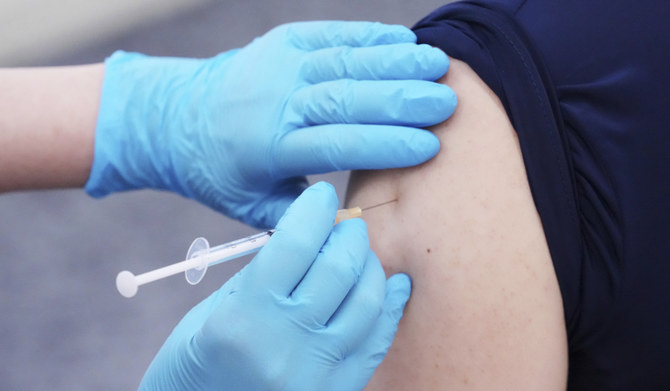
Almost 69.5 million COVID-19 vaccine doses have been administered since the Kingdom’s immunization campaign began, with more than 25 million people fully vaccinated.


Japanese researchers hope to restore coral from Saudi-made structures

Updated 05 January 2026
Follow

Japanese researchers hope to restore coral from Saudi-made structures

  • Coral skeletons made for Saudi Pavilion at Japan expo last year
  • Results of Japanese study to be revealed at Riyadh Expo 2030

TOKYO: Japanese universities are seeking to restore coral reefs and marine ecosystems after receiving artificial structures that Saudi Arabia made and showcased at last year’s Osaka-Kansai Expo.

The coral skeletons were donated to the University of the Ryukyus in Okinawa and Kansai University in Osaka Prefecture, Kyodo News reported at the weekend.

The structures are made from calcium carbonate, a material on which corals are believed to grow more easily compared to artificial alternatives such as concrete or metal.

The skeletal structures were created using 3-D printers, with one piece produced a day during the expo, and displayed across an entire wall in the Saudi Arabia Pavilion, which had an area focusing on sustainable marine environments.

Coral reefs serve as habitats for much marine life, but over 40 percent of the world’s 892 species face possible extinction, according to the International Union for Conservation of Nature.

The University of the Ryukyus, which received about 150 of the artificial coral skeletons, will place them in waters off the eastern coast of Okinawa’s main island and then examine their impact on the ecosystem.

Kansai University has placed theirs in the sea around Kagoshima Prefecture’s Yoron Island to observe their growth after transplanting coral polyps onto the structures.

The results of the research are expected to be revealed at the Riyadh Expo in 2030.

“I had never imagined that Japan and Saudi Arabia would cooperate on coral research,” said Masato Ueda, a professor specializing in regenerative medicine at Kansai University.

Ueda said he wants to demonstrate to children that “humanity is attempting to restore the environment.”