


JEDDAH: Instilling a love for the mosque from an early age is at the heart of “My Masjid,” a community-driven initiative at Al-Rahma Mosque, popularly known as the Floating Mosque.
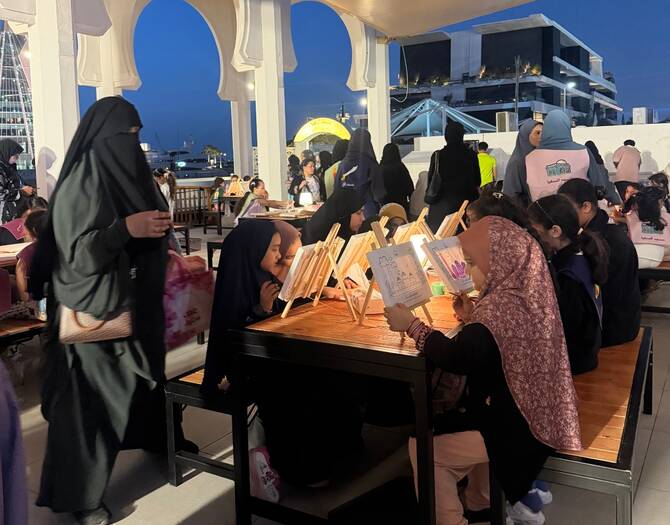
Held on the first Monday of every month, the initiative transforms the mosque’s outdoor space into a hub of learning, creativity and connection, designed especially for children aged 5 to 12.
The entire outside area is used for the gathering, with a dedicated “Masjid Friends Meeting Point” where children are registered and assigned to small groups led by volunteers.
Each group sits together for guided activities that combine arts and crafts with lessons on Islamic values and mosque etiquette. Through painting sessions and interactive discussions, children are guided to the mosque at prayer time and taught what to recite upon entering, how to greet others, and the supplications to say after prayer.
Each month introduces them to an important mosque in Islamic history, with this month focusing on Quba Mosque.
The program is conducted in English and Arabic, ensuring accessibility to a diverse group of participants.
Beyond structured learning, the initiative embraces a festive, community atmosphere. Food and beverage stalls offering juices, chocolate-covered strawberries, hot dogs, baleela, ice cream and coffee line the venue, alongside play areas and electronic games designed to attract children and make the mosque a welcoming space.
Haneen Saleh Kamel, founder of My Masjid, said the initiative is deeply personal.
“My late father built this mosque back in 1986. A unique structure set on water, it stands as more than an architectural landmark it represents a vision of community,” she told Arab News. “However, inspired by my father’s belief that mosques should be vibrant spaces for connection, not just places of prayer, my family and I launched ‘My Masjid.’
“At its core, the initiative aims to create positive, lasting memories that strengthen children’s emotional connection to the mosque,” she added.
She acknowledged the challenges of managing large crowds at a popular landmark visited by residents and pilgrims.
“It’s very difficult to stop people. I can’t tell them it’s not for you, it’s for the kids,” she said. “So we’ve been trying to find creative ways to serve all of them.”
To ensure children are prioritized, organizers introduced a dedicated system.
“We have a buffet at the end of the “Masjid Friends Meeting Point” section, and my volunteers pick up the food for them from the stalls instead of having them stand in line,” she said. “We try to serve about 500 people, but sometimes it finishes in 10 minutes. So I reserve around 100 items from each stall specifically for the kids.”
The initiative, which has been running for more than a year and a half, follows a structured learning approach.
“We started with the etiquette of entering a mosque, like stepping in with the right foot. These values are taught month after month, reviewed and practiced regularly,” Kamel said. “Anything you learn in an interactive and practical way sticks differently, especially with this age group.”
Each session accommodates up to 112 children, with eight children assigned per table under the guidance of a volunteer leader who helps them transition between activities and prayers.
Volunteers play a central role in shaping the experience. Noor Bajnaid, a lead teacher, said: “Volunteering every month comes from a place of love, and I always support such initiatives, as we’re also learning with them the values are instilled within us too.”
She said that the effect is already visible. “I love seeing the same children come back every month. They build friendships here and genuinely look forward to it.”
Laila Ghuraib, who oversees the food section said: “Food is often the first to run out, and serving adults and children together can be tricky. Still, each month we make sure the children get their refreshments and enjoy the snacks meant for them. But while the food is part of the gathering, the main purpose is to help them learn, connect, and create lasting memories at the mosque.”
The initiative has also drawn attention from community leaders and visitors.
Samuel Shropshire, founder and director of Muslim Voice for Peace & Reconciliation and a consultant at Rise Association, said: “The most important thing in Islam today is to reach our youth and young teenagers. They are the future of Islam and of the world.
“This program is perfect for training them in leadership, as we start with the very young and continue guiding them as they grow into adulthood.”
Parents, too, have seen meaningful changes in their children.
Sarah Hisham, who has been attending for the past three months with her three sons aged 6, 7 and 10, said: “They enjoy it completely, and I’m very thankful for such an initiative. They’ve learned mosque etiquette, what to recite after salah, and the history of different mosques. They always look forward to it and love meeting their ‘masjid friends.’”


