

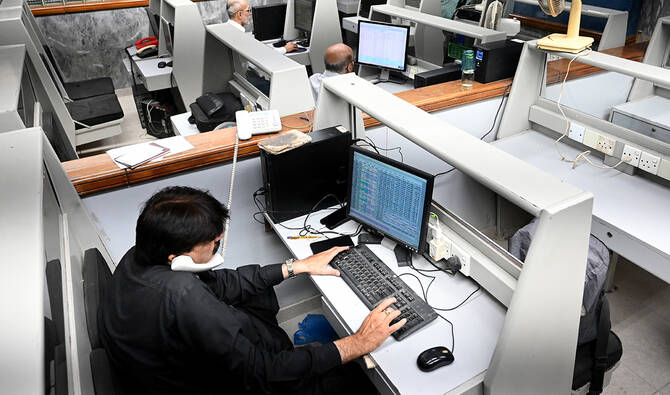

KARACHI: Pakistan’s benchmark KSE-100 Index surged more than 9 percent on Wednesday, logging its largest-ever single-day gain, as investor sentiment flipped sharply after the US and Iran announced a two-week ceasefire.
The rally came as markets rapidly repriced geopolitical risk following news of easing tensions between United States and Iran, alongside a sharp drop in global oil prices that eased pressure on Pakistan’s external account and inflation outlook.
“The equity market roared back in spectacular fashion, as news of a US-Iran ceasefire sparked a surge of optimism across trading floors. With Islamabad set to host peace talks on April 10, investors rapidly repriced geopolitical risk, shifting sentiment from caution to conviction within hours,” brokerage Topline Securities said in a market note.
The KSE-100 Index climbed 14,138 points, or 9.32 percent, to close at 165,811 after hitting an intraday high of 14,250 points, as aggressive buying swept across cyclical sectors.
Trading was briefly halted early in the session due to intense buying pressure before resuming with stronger momentum, reflecting what analysts described as a decisive shift to “risk-on” positioning.
Heavily weighted stocks including United Bank Limited, Fauji Fertilizer Company, Engro Holdings, Hub Power Company, Oil and Gas Development Company and Meezan Bank Limited led the advance, collectively contributing more than 4,500 points to the index.
“The rally gained further traction as international oil prices declined sharply, easing macro concerns and fueling a strong risk-on sentiment,” Topline added.
Market activity remained elevated, with volumes reaching 1.245 billion shares and turnover clocking in at 54.4 billion Pakistani rupees ($195 million). First National Equities Limited topped the volume chart with over 212 million shares traded.
Analysts said the surge reflected a convergence of improving geopolitical signals and macroeconomic relief, which has long been cited as a key trigger for sustained upside in Pakistan’s equities.
In recent months, investors had remained cautious due to regional tensions and energy price volatility, but Tuesday’s move suggested a renewed appetite for risk as those pressures began to ease.


