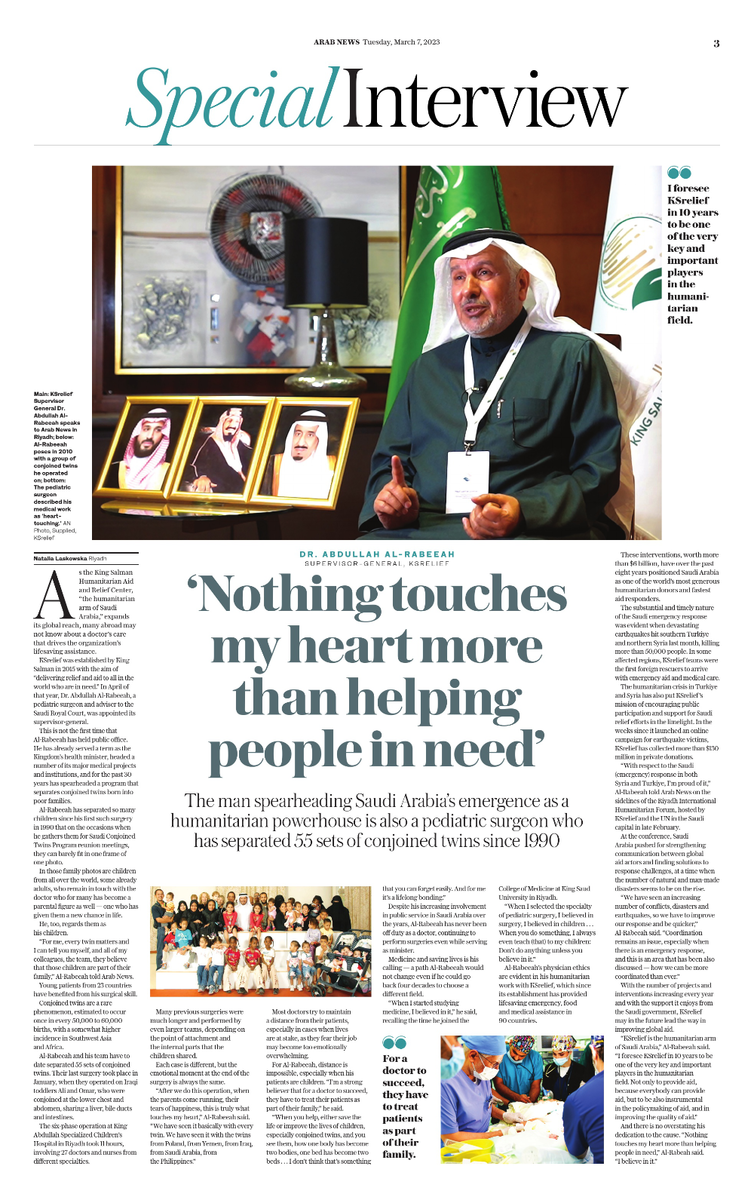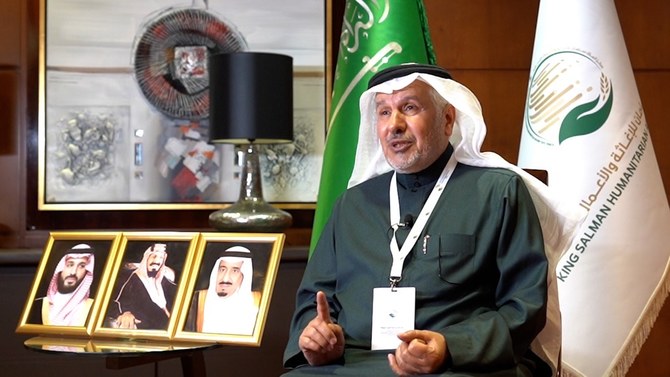

RIYADH: As the King Salman Humanitarian Aid and Relief Center, “the humanitarian arm of Saudi Arabia,” expands its global reach, many abroad may not know about a doctor’s care that drives the organization’s lifesaving assistance.
KSrelief was established by King Salman in 2015 with the aim of “delivering relief and aid to all in the world who are in need.” In April of that year, Dr. Abdullah Al-Rabeeah, a pediatric surgeon and adviser to the Saudi Royal Court, was appointed its supervisor-general.
This is not the first time that Al-Rabeeah has held public office. He has already served a term as the Kingdom’s health minister, headed a number of its major medical projects and institutions, and for the past 30 years has spearheaded a program that separates conjoined twins born into poor families.
Al-Rabeeah has separated so many children since his first such surgery in 1990 that on the occasions when he gathers them for Saudi Conjoined Twins Program reunion meetings, they can barely fit in one frame of one photo.
In those family photos are children from all over the world, some already adults, who remain in touch with the doctor who for many has become a parental figure as well — one who has given them a new chance in life.
He, too, regards them as his children.

“For me, every twin matters and I can tell you myself, and all of my colleagues, the team, they believe that those children are part of their family,” Al-Rabeeah told Arab News.
Young patients from 23 countries have benefited from his surgical skill.
Conjoined twins are a rare phenomenon, estimated to occur once in every 50,000 to 60,000 births, with a somewhat higher incidence in Southwest Asia and Africa.
Al-Rabeeah and his team have to date separated 55 sets of conjoined twins. Their last surgery took place in January, when they operated on Iraqi toddlers Ali and Omar, who were conjoined at the lower chest and abdomen, sharing a liver, bile ducts and intestines.
The six-phase operation at King Abdullah Specialized Children’s Hospital in Riyadh took 11 hours, involving 27 doctors and nurses from different specialties.
Many previous surgeries were much longer and performed by even larger teams, depending on the point of attachment and the internal parts that the children shared.
Each case is different, but the emotional moment at the end of the surgery is always the same.
“After we do this operation, when the parents come running, their tears of happiness, this is truly what touches my heart,” Al-Rabeeah said. “We have seen it basically with every twin. We have seen it with the twins from Poland, from Yemen, from Iraq, from Saudi Arabia, from the Philippines.”
Most doctors try to maintain a distance from their patients, especially in cases when lives are at stake, as they fear their job may become too emotionally overwhelming.
For Al-Rabeeah, distance is impossible, especially when his patients are children. “I’m a strong believer that for a doctor to succeed, they have to treat their patients as part of their family,” he said.
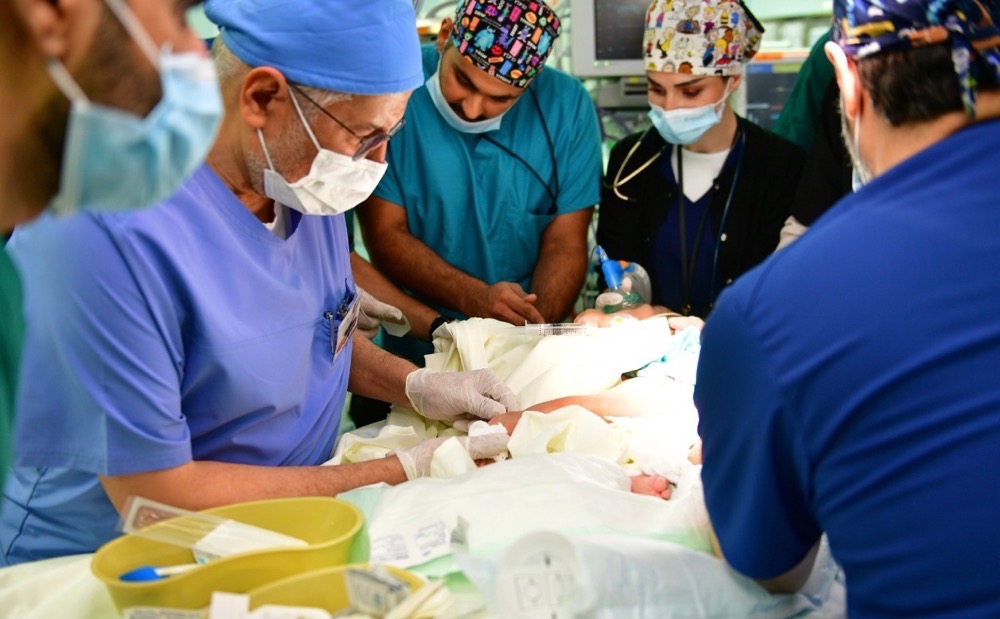
Dr. Abdullah Al-Rabeeah performs separation surgery on conjoined twins at King Abdullah Specialized Children’s Hospital in Riyadh in 2022. (KSRelief)
“When you help, either save the life or improve the lives of children, especially conjoined twins, and you see them, how one body has become two bodies, one bed has become two beds ... I don’t think that’s something that you can forget easily. And for me it’s a lifelong bonding.”
Despite his increasing involvement in public service in Saudi Arabia over the years, Al-Rabeeah has never been off duty as a doctor, continuing to perform surgery even while serving as minister.
Medicine and saving lives is his calling — a path Al-Rabeeah would not change even if he could go back four decades to choose a different field.
“When I started studying medicine, I believed in it,” he said, recalling the time he joined the College of Medicine at King Saud University in Riyadh.
“When I selected the specialty of pediatric surgery, I believed in surgery, I believed in children ... When you do something, I always even teach (that) to my children: Don’t do anything unless you believe in it.”
His physician ethics are evident in Al-Rabeeah’s humanitarian work with KSrelief, which since its establishment has provided lifesaving emergency, food and medical assistance in 90 countries.
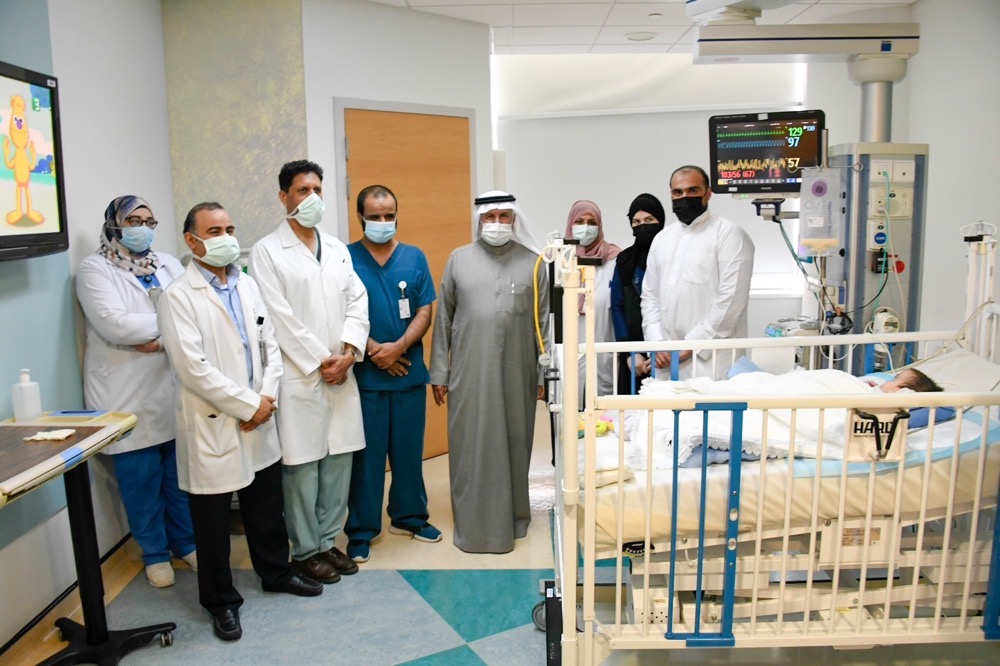
Dr. Abdullah Al-Rabeeah and his team at King Abdullah Specialized Children’s Hospital in Riyadh in 2022. (KSRelief)
These interventions, worth more than $6 billion, have over the past eight years positioned Saudi Arabia as one of the world’s most generous humanitarian donors and fastest aid responders.
The substantial and timely nature of the Saudi emergency response was evident when devastating earthquakes hit southern Turkiye and northern Syria last month, killing more than 50,000 people. In some of the affected regions, KSrelief teams were the first foreign rescuers to arrive with emergency aid and medical care.
The humanitarian crisis in Turkiye and Syria has also put KSrelief’s mission of encouraging public participation and support for Saudi relief efforts in the limelight. In the weeks since it launched an online campaign for earthquake victims, KSrelief has collected more than $130 million in private donations.
“With respect to the Saudi (emergency) response in both Syria and Turkiye, I’m proud of it,” Al-Rabeeah told Arab News on the sidelines of the Riyadh International Humanitarian Forum, hosted by KSrelief and the UN in the Saudi capital in late February.
At the conference, Saudi Arabia pushed for strengthening communication between global aid actors and finding solutions to response challenges, at a time when the number of natural and man-made disasters seems to be on the rise.
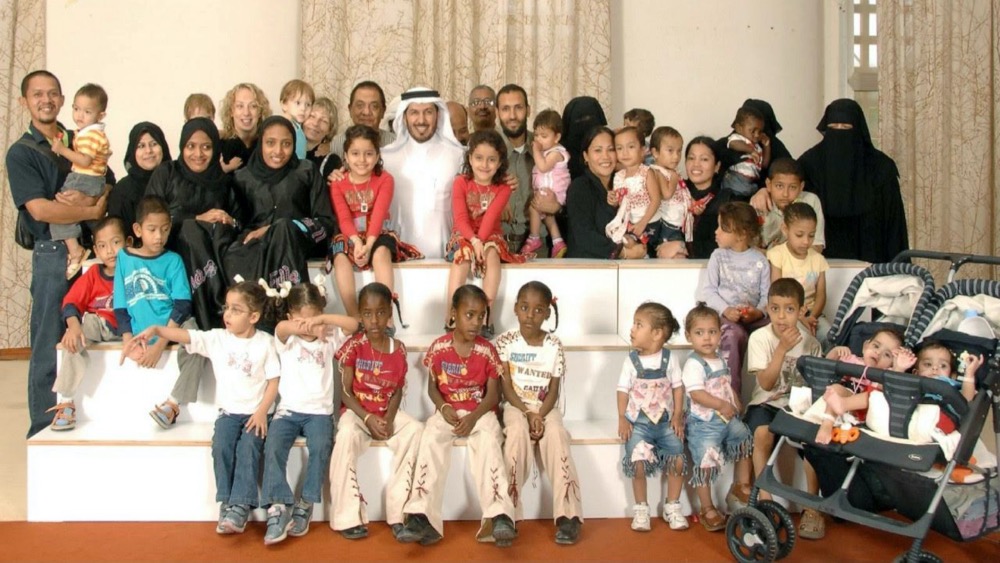
Dr. Abdullah Al-Rabeeah poses in 2010 with a group of conjoined twins he has operated on. (Supplied)
“We have seen an increasing number of conflicts, disasters and earthquakes, so we have to improve our response and be quicker,” Al-Rabeah said. “Coordination remains an issue, especially when there is an emergency response, and this is an area that has been also discussed — how we can be more coordinated than ever.”
With the number of projects and interventions increasing every year and with the support it enjoys from the Saudi government, KSRelief may in the future lead the way in improving global aid.
“KSRelief is the humanitarian arm of Saudi Arabia,” Al-Rabeeah said. “I foresee KSRelief in 10 years to be one of the very key and important players in the humanitarian field. Not only to provide aid, because everybody can provide aid, but to be also instrumental in the policymaking of aid, and in improving the quality of aid.”
And there is no overstating his dedication to the cause. “Nothing touches my heart more than helping people in need,” Al-Rabeah said. “I believe in it.”