LONDON: The British government said Monday it will introduce legislation to ban anyone who arrives in the UK in small boats across the English Channel from ever settling in the country.
The government said a bill — expected to be announced Tuesday — will bar asylum claims by anyone who reaches Britain by unauthorized means, and will compel the government to detain and then deport them “to their home country or a safe third country.”
Prime Minister Rishi Sunak said the law would stop the “immoral” business of smuggling gangs who send desperate people on hazardous journeys across one of the world’s busiest shipping lanes.
Critics say the plan is unethical and unworkable, since people fleeing war and persecution can’t be sent home, and is likely to be the latest in a series of unfulfilled immigration pledges by successive UK governments.
Britain receives fewer asylum-seekers than some European nations — nine per 100,000 people in 2021, compared to a European Union average of 16 per 100,000. But thousands of migrants from around the world travel to northern France each year in hopes of reaching the UK
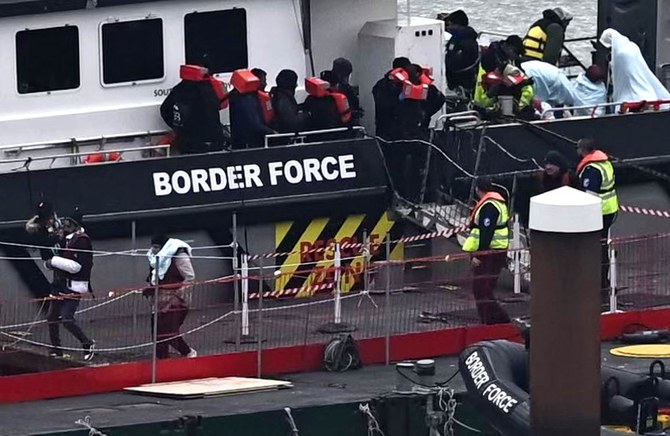
Most attempt the journey in dinghies and other small craft now that authorities have clamped down on other routes such as stowing away on buses or trucks.
More than 45,000 people arrived in Britain by boat in 2022, up from 28,000 in 2021 and 8,500 in 2020. Most went on to claim asylum, but a backlog of more than 160,000 cases has led to many languishing in overcrowded processing centers or hotels, without the right to work.
Protesters, some aligned with far-right groups, have demonstrated outside hotels housing asylum-seekers. One protest near Liverpool last month descended into violence, with demonstrators setting a police van on fire.
The channel journey can be as little as 30 miles (42 kilometers), and is less dangerous than migration routes across the Mediterranean, where at least 70 people died in a shipwreck on Feb. 26 off Italy’s southern coast. But dozens of people have died in the channel, including at least 27 in a November 2021 sinking of an overcrowded boat.
The British government says many of those making the journey are economic migrants rather than refugees, and points to an upswing last year in arrivals from Albania, a European country that the UK considers safe.
Refugee groups say most of the channel arrivals are fleeing war, persecution or famine in countries including Afghanistan, Iran and Iraq. A majority of those whose claims have been processed were granted asylum in the UK
Sunak has made stopping the boats one of his “five pledges” to voters, alongside halving inflation, kickstarting economic growth, slashing the national debt and cutting health care waiting lists.
But previous headline-grabbing immigration policies have run into opposition. A plan announced last year to send migrants arriving in Britain on a one-way trip to Rwanda is mired in legal challenges.
Cooperation with France on stopping the boats stalled amid Britain’s acrimonious split from the European Union, though UK-EU relations have improved since Sunak took office in October. The UK and France signed an agreement in November to increase police patrols on beaches in northern France, and Sunak hopes to cement further cooperation when he meets Macron at a UK-France summit on Friday.
Sunak also faces pressure from right-wingers inside his Conservative Party, who have called for tougher measures, including pulling Britain out of the European Convention on Human Rights. The government says it has no plan to leave the convention.
Refugee charities and human rights groups say many migrants risk the cross-channel journey because there are few safe, legal ways to reach the UK The government says it will establish more legal asylum — adding to those set up for Afghanistan, Hong Kong and Ukraine — but has yet to give details.
“The government’s flawed legislation will not stop the boats but result in tens of thousands locked up in detention at huge cost, permanently in limbo and being treated as criminals simply for seeking refuge,” said Enver Solomon, chief executive of the Refugee Council. “It’s unworkable, costly and won’t stop the boats.”


![]()

UK aims to deport Channel migrants, but critics skeptical
Short Url
https://arab.news/83ycy
UK aims to deport Channel migrants, but critics skeptical
- Critics say the plan is unethical and unworkable, since people fleeing war and persecution can’t be sent home
- Dozens of people have died in the channel, including at least 27 in a November 2021 sinking of overcrowded boat


Latest updates


© 2026 SAUDI RESEARCH & PUBLISHING COMPANY, All Rights Reserved And subject to Terms of Use Agreement.