

RIYADH: Saudi Arabia is accelerating efforts to restore degraded land, expand vegetation cover, and strengthen ecological balance as part of its long-term environmental strategy.
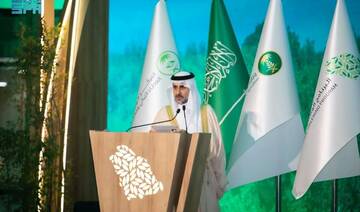
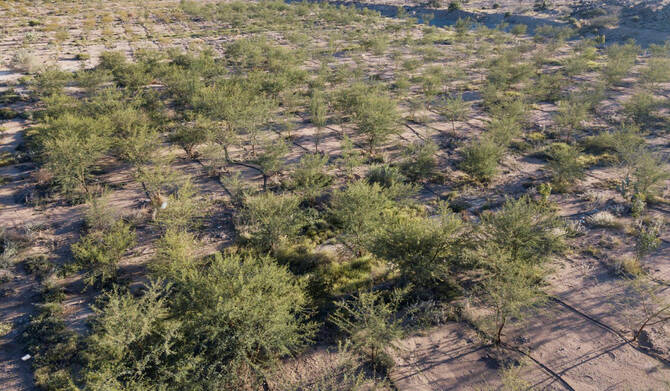
Minister of Environment, Water and Agriculture Abdulrahman Al-Fadhli recently announced the restoration of the first 1 million hectares of degraded land, a milestone under the Saudi Green Initiative.
The achievement reflects coordinated efforts across government entities, the private sector, and nonprofit organizations.

The rehabilitation of 1 million hectares has delivered wide-ranging environmental, social, and economic benefits. (SPA)
These partnerships have supported afforestation and land restoration projects, enabling resource sharing and technical collaboration across the Kingdom, Saudi Press Agency reported.
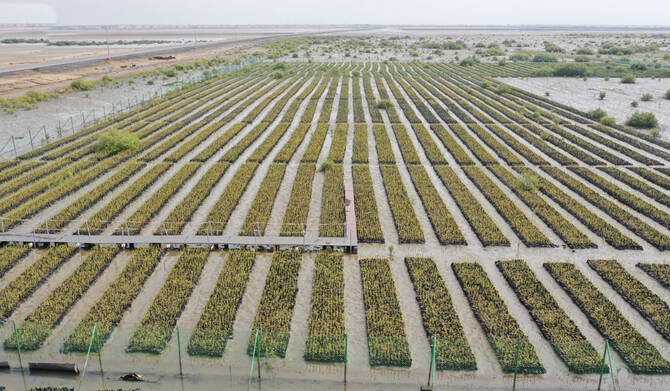
In recent years, Saudi Arabia has adopted an integrated approach grounded in sustainability and innovation, contributing to the restoration of degraded land and the planting of more than 159 million trees.
The National Greening Program leads these efforts as the executive arm of the Saudi Green Initiative, overseeing targets that include rehabilitating 40 million hectares and planting 10 billion trees through 155 initiatives across 11 operational zones.
FASTFACT
Improved air quality is due to a nearly 50 percent reduction in dust storms across the Kingdom in 2025 compared with historical averages.
Working alongside the National Center for Vegetation Cover Development and Combating Desertification, the program uses technologies such as remote sensing, satellite imagery, drones, and geographic information systems to monitor environmental indicators, soil conditions, and land productivity, the SPA said.
The rehabilitation of 1 million hectares has delivered wide-ranging environmental, social, and economic benefits.
Environmentally, the projects have restored native vegetation, enhanced biodiversity, and achieved cumulative carbon sequestration exceeding 2.2 million tons of carbon dioxide. Improved air quality has also contributed to a nearly 50 percent reduction in dust storms across the Kingdom in 2025 compared with historical averages.
On the social front, the projects created more than 68,000 jobs in rangeland management, nurseries, and environmental services.
Economically, the initiative supports sustainable agriculture and fosters eco-economy sectors such as ecotourism and native plant production.
It also underscores that environmental protection is a shared responsibility and reflects Saudi Arabia’s commitment to strengthening its global leadership in addressing the challenges of land degradation and climate change.