



KARACHI: British rom-com ‘What’s Love Got To Do With It’ opens in Pakistani cinemas today, Friday, with the writer and co-producer of the film, Jemima Goldsmith, calling it a “rare achievement” for a film to bring together Pakistani, Indian and British musical and acting talent.
Starring Lily James, Shazad Latif, Shabana Azmi, Emma Thompson and Sajal Aly, among others, the film is directed by award-winning Indian director Shekhar Kapur and focuses on an arranged marriage plotline. It released in the UK on Feb. 24. Before that, the film opened at the Red Sea Film Festival in Jeddah in December, with Aly, Azmi, and director Kapur in attendance.
In an interview to Arab News on Thursday night, Goldsmith, when asked about the “rare achievement” of making a film that mixed Pakistani and Indian actors and musicians, said the movie was “definitely a South Asian mix of talent, and British talent.”
“Even the music is a collaboration,” she said during the Zoom interview, naming British DJ Naughty Boy, British-Indian composer Nitin Sawhney and Pakistani singer Rahat Fateh Ali Khan, who are all part of the film.
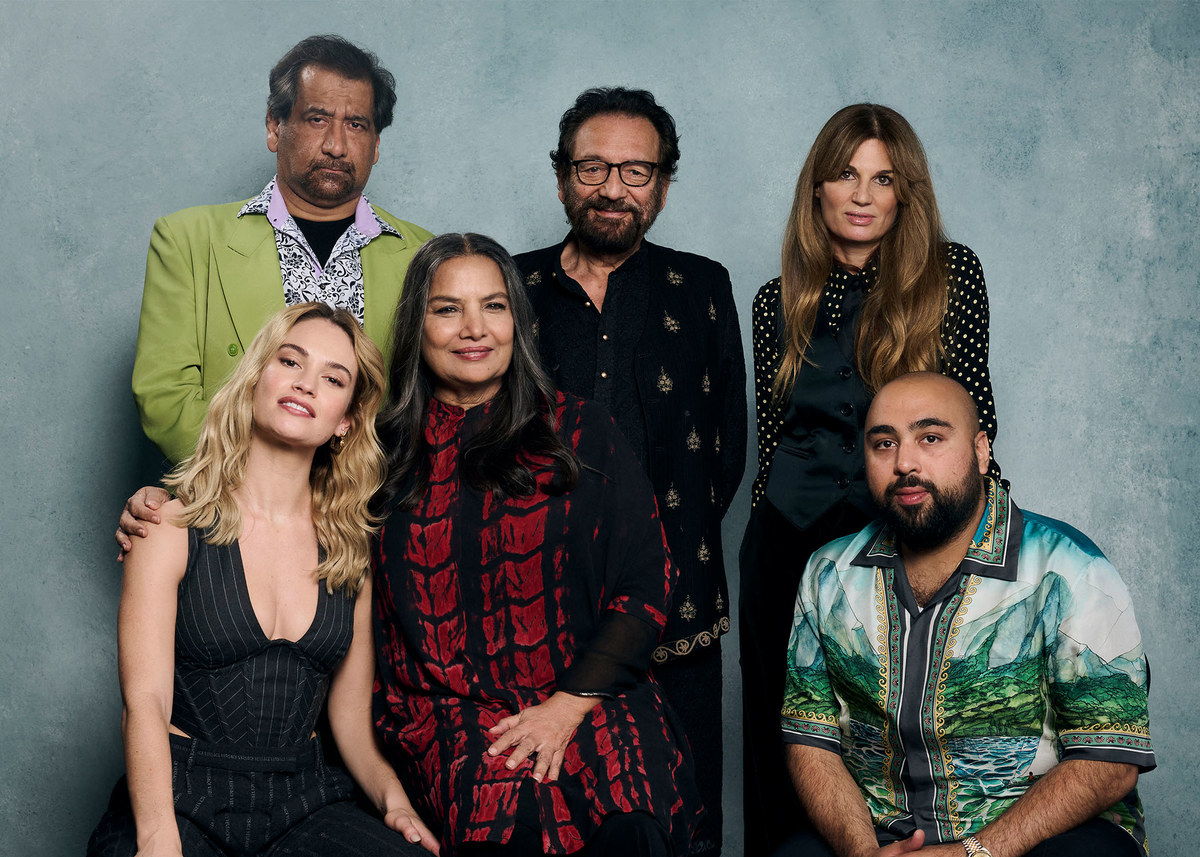
(L-R) Lily James, Jeff Mirza, Shabana Azmi, Shekhar Kapur, Asim Chaudhry and Jemima Goldsmith of "What's Love Got to Do with It?" pose in the Getty Images Portrait Studio Presented by IMDb and IMDbPro at Bisha Hotel & Residences on September 10, 2022 in Toronto, Ontario. (AFP/FILE)
Speaking about the actors in the film, Goldsmith called it “an amazing treat” to work with Aly, one of the most popular soap stars in Pakistan.
“I think she is a really talented actress. I think that she is a brilliant match for Lily James, who is the British female lead in the film who plays opposite her,” the film’s writer said. “And I wanted a Pakistani actress who’d be really easy for the British audience to see why a lead man falls in love with her, why he wants to marry her.”
Aly plays the role of the Pakistani girl the family of the male lead, played by Pakistan-British actor Latit, chooses for him to marry.
“I asked around and she [Sajal Aly] was the person that was recommended and she was the only person we auditioned,” Goldsmith said. “And Shekhar [Kapur] fell in love with her and thought she was brilliant. And we all did, we all fell in love with her.”
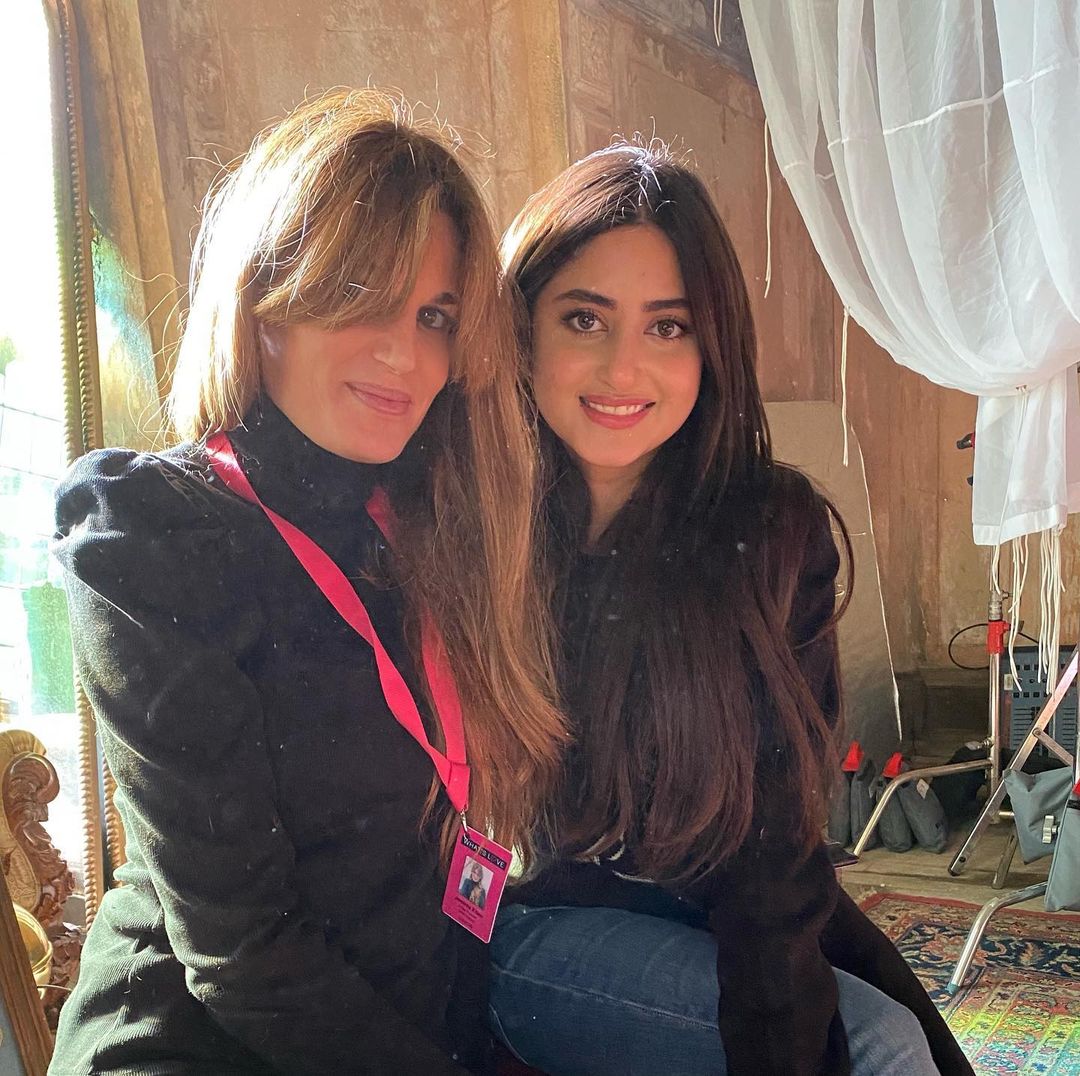
In this picture shared by Jemima Goldsmith on her instagram on February 16, 2022 shows Jemima and Sajal Aly sitting together. (Courtesy: khanjemima/Instagram)
“When we cast Emma Thompson, we were thinking, who has the gravitas and the acting skills and the talent and the beauty to play opposite Emma Thompson, and it was just so obvious that it was Shabana Azmi,” Goldsmith added, referring to a veteran Indian actress known for both her work in Bollywood and independent and neorealist parallel productions.
Speaking about the plot of the film, Goldsmith said she chose the rom-com genre to speak about a serious topic like arranged marriage as a way to convey a “meaningful message … in a light-hearted way.”
“Sometimes, it can be more impactful that way,” Goldsmith said.
Arranged marriages — where a couple is matched by family members — are common in South Asia. While it is different from forced marriage, many young people face intense pressure to wed and start a family shortly after reaching adulthood.
But Goldsmith said she wanted to use the film to redress Western judgments about Pakistan, and the practice of arranged marriages itself.
“The message that I was trying to convey with this film was that Pakistan isn’t only the scary place you see on the news, it’s also colorful, and fun, and has beautiful music and beautiful food, and architecture and people,” she said.
“And it is a vibrant, techni-color place. Not this kind of frightening black and white place we’re really used to seeing on our screens in the West.”
Indeed, Goldsmith has had an insider’s view on Pakistan, where she lived between 1995 and 2004 when she was married to retired cricketer Imran Khan, who later went on to become the prime minister of Pakistan in 2018. The couple have two sons and remain on good terms.
So, would she ever use her “insider status” to make a film about Pakistan’s many political dramas and intrigues?
Goldsmith laughed:
“Definitely, not!”


