

Saudi Arabia tackles global food insecurity by investing in innovation   

The Kingdom’s ministry signed a cooperation agreement with UpLink in May of 2022. (File)
Short Url
Updated 28 February 2023
Follow

Saudi Arabia tackles global food insecurity by investing in innovation   

RIYADH: Saudi Arabia aims to tackle global food insecurity by supporting the government’s investment in innovation, revealed a top official of the Ministry of Economy and Planning.  

Hosam Rowaihy, the head of the Decision Support Unit and Senior Advisor to the Minister of Economy and Planning, addressed this at the national launch of the Food Ecosystems in Arid Climates Challenge at King Abdullah University of Science and Technology. 

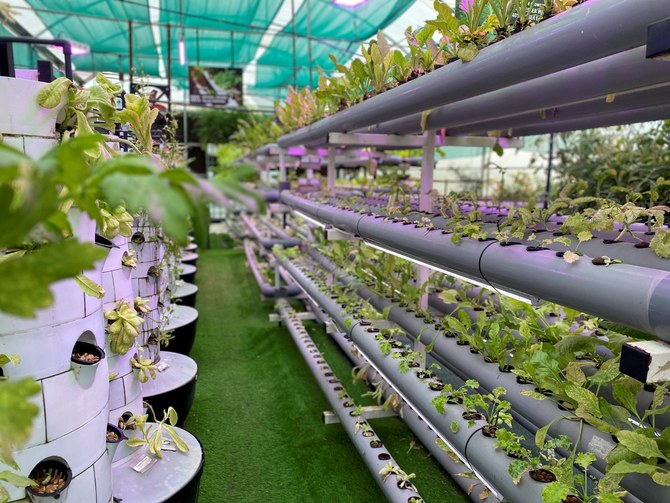
Run by UpLink, an open innovation platform of the World Economic Forum, the challenge is a global call for food entrepreneurs who are generating innovative solutions to achieve food security amidst intensified droughts and desertification. 

“The Ministry of Economy and Planning's partnership with UpLink is an opportunity to create and support a network of innovators that will build unique solutions,” said Rowaihy.   

The Kingdom’s ministry signed a cooperation agreement with UpLink in May of 2022 to “expand the scope of the most innovative solutions which address sustainable development challenges,” the ministry said at the time.   

Rowaihy noted that as the pandemic takes a toll on global hunger, the Kingdom redirects its focus on tackling the issue of food insecurity and malnutrition around the world.   

“As of 2022, 828 million people are affected by hunger worldwide, 2.3 billion are food insecure, and 3.1 billion people cannot afford a healthy diet,” said Rowaihy.   

Given Saudi Arabia's climate context and the challenges that come with it, he stressed that the Kingdom holds its position as a major innovation accelerator, dedicating resources to empower and support entrepreneurs who are determined to tackle the global challenge of food insecurity.  

For the world to reach Zero Hunger, Rowaihy pointed out that “innovative approaches must be implemented along with the investment in today’s youth, who are able to bring novel solutions with agility and speed.”   

Meanwhile, the Minister of Environment, Water and Agriculture Abdulrahman Al-Fadley reviewed the latest developments in the food sector.  

This comes as Saudi Arabia’s private sector also has a vital role in providing the stocks and availability of supply in the markets, which led to overcoming the implications of the Russian-Ukrainian crisis on global food markets. 

Al-Fadley addressed the private sector’s role in developing local stocks of feed inputs like maize, soybeans and barley, as well as the sector’s stimulation mechanisms.   

The minister underlined the vitality of consistency and cooperation between the involved entities to ensure the continuance of availability and quality of food commodities.   


Lebanese social entrepreneur Omar Itani recognized by Schwab Foundation

Updated 9 sec ago
Follow

Lebanese social entrepreneur Omar Itani recognized by Schwab Foundation

  • FabricAID co-founder among 21 global recipients recognized for social innovation

DAVOS: Lebanon’s Omar Itani is one of 21 recipients of the Social Entrepreneurs and Innovators of the Year Award by the Schwab Foundation for Social Entrepreneurship.

Itani is the co-founder of social enterprise FabricAID, which aims to “eradicate symptoms of poverty” by collecting and sanitizing secondhand clothing before placing items in stores in “extremely marginalized areas,” he told Arab News on the sidelines of the World Economic Forum in Davos, Switzerland.

With prices ranging from $0.25 to $4, the goal is for people to have a “dignified shopping experience” at affordable prices, he added.

FabricAID operates a network of clothing collection bins across key locations in Lebanon and Jordan, allowing people to donate pre-loved items. The garments are cleaned and sorted before being sold through the organization’s stores, while items that cannot be resold due to damage or heavy wear are repurposed for other uses, including corporate merchandise.

Since its launch, FabricAID has sold more than 1 million items, reached 200,000 beneficiaries and is preparing to expand into the Egyptian market.

Amid uncertainty in the Middle East, Itani advised young entrepreneurs to reframe challenges as opportunities.

“In Lebanon and the Arab world, we complain a lot,” he said. Understandably so, as “there are a lot of issues” in the region, resulting in people feeling frustrated and wanting to move away. But, he added, “a good portion of the challenges” facing the Middle East are “great economic and commercial opportunities.”

Over the past year, social innovators raised a combined $970 million in funding and secured a further $89 million in non-cash contributions, according to the Schwab Foundation’s recent report, “Built to Last: Social Innovation in Transition.”

This is particularly significant in an environment of geopolitical uncertainty and at a time when 82 percent report being affected by shrinking resources, triggering delays in program rollout (70 percent) and disruptions to scaling plans (72 percent).

Francois Bonnici, director of the Schwab Foundation for Social Entrepreneurship and a member of the World Economic Forum’s Executive Committee, said: “The next decade must move the models of social innovation decisively from the margins to the mainstream, transforming not only markets but mindsets.”

Award recipients take part in a structured three-year engagement with the Schwab Foundation, after which they join its global network as lifelong members. The program connects social entrepreneurs with international peers, collaborative initiatives, and capacity-building support aimed at strengthening and scaling their work.