

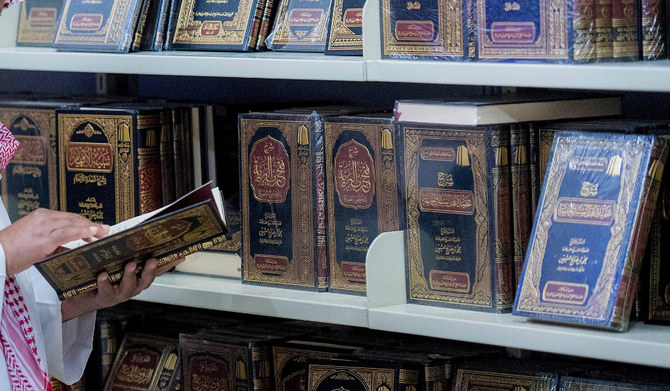
Experts discuss the art of translating Arabic poetry

Anyone wishing to become a translator should begin by translating short works. (SPA)
Short Url
Updated 27 February 2023
Follow

Experts discuss the art of translating Arabic poetry

  • Event held as part of celebrations to mark Year of Arabic Poetry

RIYADH: The Saudi Literature, Publishing and Translation Commission recently hosted a virtual meeting to discuss the history and art of translating poetry.

Titled “Strategies for Translating Poetry,” the event was held as part of the Year of Arabic Poetry celebrations. It was attended by a number of experts, including writers Bandar Al-Harbi and Waad Al-Otaibi, and poet Sharif Baqna.

The meeting began by establishing the general history of Arabic poetry translation, its evolution and impact. The experts discussed how the essence of poems can be translated beyond the literal text and highlighted the challenges that process involved.

They made reference to the attempts by a group of experts to translate the 10 “Mu’allaqat,” or “The Hanging Poems.” The panelists focused on the different methods used to reflect historical developments, and present new and lively content that aligned with the language of the times.

The meeting aimed to create awareness of the craft of translation, which is an essential medium in transmitting culture, knowledge, creativity and art. The panel agreed that translators must have a deep understanding of the source language, fluency in the target language, and extensive knowledge of a variety of literary tools and artistic techniques to ensure each poem is accurately reproduced.

Anyone wishing to become a translator should begin by translating short works or excerpts of longer pieces and present their efforts for review by experts or on social media, they said.


Saudi Arabia welcomes ceasefire agreement between Syrian Democratic Forces and Syria state

Updated 19 January 2026
Follow

Saudi Arabia welcomes ceasefire agreement between Syrian Democratic Forces and Syria state

RIYADH: Saudi Arabia has welcomed an agreement between the Syrian state and Syrian Democratic Forces.
In a foreign ministry statement early on Monday, the Kingdom said it had welcomed an deal between Damascus and Kurdish Syrian Democratic Forces that was announced by the Syrian government on Sunday.
The agreement entails merging all SDF forces into the defense and interior ministries and means that Kurdish forces will redeploy to east of the Euphrates river.
The 14-point deal would also see the immediate administrative and military handover of Deir Ezzor and Raqqa governorates.
The Syrian state would regain control of all border crossings, oil fields, and gas fields in the region, with protection secured by regular forces to ensure the return of resources to the Syrian government, while considering the special case of Kurdish areas, the state news agency SANA reported.
The ceasefire comes after intense fighting between the SDF and government troops in Aleppo. But SDF troops have now pulled back from there and the Syrian army now controls most areas east of Aleppo.
The Saudi foreign ministry statement also thanked the US for the agreement. Washington is believed to have supported brokering the ceasefire between allies SDF and the Syrian government, who they have also backed diplomatically since the fall of long-time dictator Bashar Assad.
The Syrian state announced on Friday a raft of new directives to recognize Syrian Kurds, including making their language official and bolstering other rights for the minority group.