BEIRUT: Lebanon’s caretaker Prime Minister Najib Mikati reminded cabinet ministers on Monday of their duty “to facilitate the necessary matters of the citizens and maintain the functioning of public facilities,” as the government met for a third time amid the ongoing failure to select a new president.
He stressed that “the election of a new president remains a priority, as it will be the beginning of the regularization of public work and will grant the country a grace period to rebuild.”
The office of president has been vacant since Michel Aoun’s term concluded at the end of October. The legitimacy of the cabinet meetings has been rejected by Maronite Christian party the Free Patriotic Movement, on the grounds that they violate the role of the president while the office is vacant.
During his Sunday sermon, Maronite Patriarch Bechara Al-Rahi said that all the indications are that there will be “a prolonged presidential vacuum” and spoke of a “danger threatening the Lebanese nationality and entity” as a result of “the refusal of the parliament to elect a president for individual and partisan interests.”
Cabinet members authorized an allowance of five liters of gasoline for public school teachers who have been on strike for more than two months because their salaries can no longer cover transportation costs amid the financial crisis in the country and the massive decline in the value of its currency.
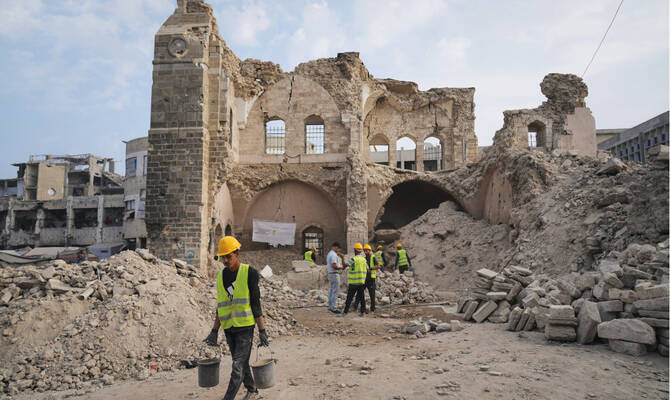
They approved a request by the Higher Relief Committee to continue the assessment of buildings in Lebanon left damaged or uninhabitable as a result the earthquakes that hit Syria and Turkiye this month and other natural factors. They also allocated 100 billion Lebanese pounds ($1.2 million) in accommodation allowance for the occupants of buildings recommended for evacuation by inspection committees.
In addition, ministers approved a $50 million loan, with an interest rate of 4 percent, for the payment of debts owed to international organizations.
However, the cabinet did not address an extension of the mandate for Director of General Security Maj. Gen. Abbas Ibrahim, which is due to expire within days. Ministers are of the opinion that such a decision requires a law to be passed but the current parliament is an electoral body only and does not have the authority to pass legislation. A legal solution for extending the term, bypassing the government and parliament, is being investigated, which would allow for him to be reappointed under the mobilization of reserves law.
Many other official and military posts will become vacant in the coming weeks and months, including the office of governor of the country’s central bank in July. The current governor, Riad Salameh, who is facing money laundering and corruption charges, has said he will not seek another term.
Minister of Information Ziad Makary said cabinet members did not approve an “increase to the transportation allowance of military personnel, pending a study to be conducted by the ministry of finance, so the increase would include all public sector workers.”
After the meeting, Mikati said efforts to “alleviate people’s suffering needs everyone’s cooperation. During the meeting, we asked to postpone some decisions for a short period of time as we are waiting to receive accurate figures and the volume of imports from the Ministry of Finance.
“I promise employees that we will follow up the matters within two weeks, maximum, so we can take the right decisions, since we can’t grant allowances and increases for certain categories only and without taking into consideration retired military personnel and other retirees.”
Bechara Al-Asmar, the head of Lebanon’s General Labor Union, previously told Arab News that poverty levels in the country are rising and “if 30 percent of the Lebanese people were in acute poverty in 2019, this percentage is increasing day by day now because people are losing their jobs.”
He added: “Institutions are closing their doors, the value of the Lebanese currency keeps decreasing, the purchasing power of the people is going down every day, the middle class is shrinking and 20 percent of the people are living on another planet,” in a reference to the wealthy elite.
Meanwhile the archive server of the state-run National News Agency was stolen on Monday from a Ministry of Information building in Hamra, Beirut, that reportedly lacked appropriate security.
Minister of Information Ziad Makary described the theft as a crime the size of a country and said: “Ministry staff were surprised this morning to find the door to the room broken down and the contents stolen. Security and judicial investigations were launched immediately.”
Also on Monday, service resumed at Lebanese banks after a strike lasting for more than two weeks. They reopened after the Ministry of Interior took steps to prevent any judicial action being taken against them by Mount Lebanon’s state prosecutor, Judge Ghada Aoun, who is investigating financial crimes.